







What Does Arabica Coffee Mean Next to Robusta?
Arabica coffee refers to one of only two coffee species with real commercial value, named in the eighteenth century under Linnaeus's binomial system. It covers many varieties, including Geisha, Typica and Bourbon, and accounts for roughly 70 to 80 percent of global coffee production. The phrase "100% Arabica" on packaging simply means no other species is blended in.
The comparison is Robusta, the only commercially valuable variety under Canephora. Arabica carries floral and fruity aromas, while Robusta reads as bitter, burnt and heavier, with notes of wood and barley tea. Because Robusta is cheaper and adds body and crema, many blends include it, which is why brands stress 100 percent as a claim rather than a full quality guarantee.
In the advertisements of major coffee chains, "100% Arabica coffee beans" has almost become synonymous with high quality. But what exactly does this phrase mean? What is the difference between Arabica and Robusta? Why do businesses specifically emphasize "100%"? Starting from plant taxonomy, this article will introduce you to the characteristics, historical origins, and commercial value of the two major coffee species, Arabica and Robusta, analyze the true meaning behind this advertising slogan, and explain that it is not an absolute guarantee of good coffee.
To understand what this advertising slogan is really saying, we first need to clarify what "Arabica" actually is.
What is Arabica?
In the eighteenth century, the famous Swedish scientist Carl Linnaeus established binomial nomenclature for naming plants and animals and published Species Plantarum. In this work, Linnaeus systematically classified and named plants around the world, and coffee was among them. So far, more than 130 coffee-related species have been discovered, but only two coffee species truly have commercial value, and Arabica is one of them.
"Arabica" is a broad category that contains many subdivided varieties, such as the well-known Geisha, Typica, and Bourbon, all of which belong to the Arabica family. These varieties carry excellent flavor genes and, after processing and roasting, can present delicious coffee. For this reason, Arabica is widely cultivated. At present, 70% to 80% of total global coffee production is Arabica, and its commercial value is extremely high. However, at this point many readers may wonder: since Arabica itself represents quality, wouldn't it be enough to simply say Arabica? Why add "100%"?
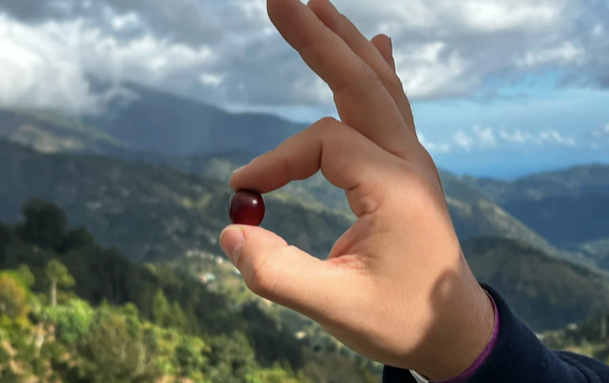
This brings us to another coffee that also has commercial value—"Robusta."
What is Robusta?
Robusta is a variety under the broader Canephora category. Strictly speaking, the category that should be compared with Arabica is Canephora, but because Robusta is the only variety under Canephora with commercial value, over time Robusta has come to be treated as a major category parallel to Arabica.
Robusta's flavor performance is not as outstanding as Arabica's. Compared with Arabica, which is rich in floral and fruity aromas, Robusta coffee beans leave a deeper impression of strong bitter burnt notes, along with relatively dull scents such as wood and barley tea. The reason people choose to grow it is also very straightforward: it is easy to cultivate and high-yielding.
Although Arabica coffee beans have outstanding flavor, they have extremely demanding requirements for the growing environment, and altitude, sunshine duration, and rainfall are all things it is particular about. These conditional limitations, combined with its inherently low-yield genetics, make Arabica's growth cycle longer, so its selling price is often higher. By contrast, Robusta is much simpler. It is not only undemanding about the growing environment, but also yields considerably more than Arabica. More importantly, its caffeine content is higher. Under the combined effect of these factors, Robusta's price is much more affordable than Arabica's. Therefore, since the first coffee wave, Robusta has always been a main raw material for instant coffee and blended coffee beans.
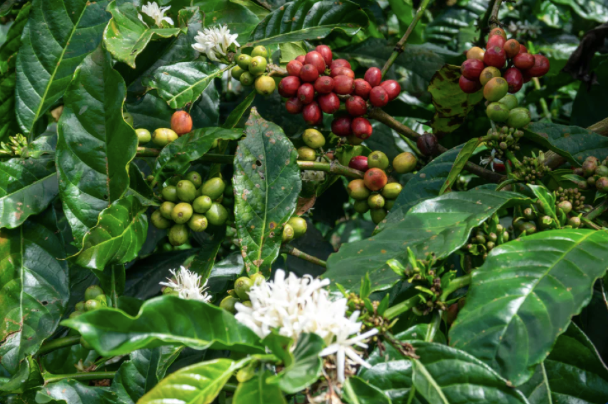
The period when Robusta was most widely used was the twentieth century, when most cafes used Robusta as the main component of their blends because it had a strong taste and was cheap. But the coffee extracted as a result was also unbearably bitter. Thus, when the second coffee wave arose and people began to place importance on coffee bean quality, Robusta was gradually eliminated from the production of freshly ground coffee. In order to highlight the high quality of the coffee beans used, advertising slogans such as "100% Arabica coffee beans" came into being.
However, it should be noted that Robusta does not equal inferior quality. Its poor flavor is mainly caused by the growing environment and improper usage. Today, some places have begun cultivating Robusta in the way Arabica is grown, producing Robusta coffee with excellent flavor.
In addition, adding Robusta to a blend can also give extracted espresso a richer golden crema, so lattes, cappuccinos, and other milk coffees can achieve better latte art patterns. Therefore, many businesses have developed espresso blends containing a small amount of Robusta beans, providing coffee shops with a higher-quality choice.
Finally, Front Street still wants to emphasize a famous saying, because people are often misled by the advertising slogan "100% Arabica coffee beans": although the vast majority of good-tasting coffee on the market is Arabica, this does not mean that as long as it is Arabica, it is necessarily good coffee.
The above content is compiled by CoffeeHunters, a coffee news website.


