








How Do You Tell Over-Extraction From Over-Roasting in Coffee?
Bitterness in pour-over coffee does not come only from the tail end of extraction. Sour and sweet compounds are small molecules that dissolve early, while bitter compounds such as chlorogenic acid, caffeine and trigonelline are larger and release slowly throughout the brew, so cutting the tail end removes liquid after the critical point rather than removing the bitterness itself.
Over-extraction responds to grind size, water temperature and brew time, so a coarser grind, cooler water or a shorter pour can pull the cup back into balance. Bitterness tied to the roasting process behaves differently: a darker development level creates bitter compounds in the bean before brewing starts, so no pour-over adjustment fully removes it and the fix lies in the roast.
Many coffee enthusiasts, when encountering bitterness during pour-over brewing, instinctively cut off the tail end of the extraction. But does bitterness really only come from the tail end? In fact, the sources of coffee bitterness are complex—it's related not only to the order in which substances dissolve during extraction, but also to the degree of roast. Front Street Coffee will take you deep into the true causes of coffee bitterness, teach you to distinguish between the bitterness from over-extraction and that from over-roasting, and share how to avoid unnecessary bitterness by adjusting pour-over parameters such as grind size, water temperature, and time, bringing every cup closer to the ideal flavor.

Once again, a friend has been misled by the saying "cutting off the tail end avoids bitterness"~ Actually, the principle isn't that complicated—the tail end of extraction is not the main release zone for bitterness. Moreover, bitterness itself comes in many types, and the bitterness from different sources feels quite different. Today, Front Street will talk about why coffee brews bitter, and the corresponding adjustment methods~
Bitterness components inherent in coffee beans
In most cases, when we say "coffee tastes bitter," we're basically pointing to over-extraction. As an agricultural product, coffee beans naturally contain bitter substances—chlorogenic acid, caffeine, and trigonelline are the main contributors to bitterness. But the beans also contain acids, sweetness, saltiness, and other flavor compounds, so bitterness doesn't all come out right at the start of extraction.
Sour and sweet substances are small molecules that dissolve quickly, releasing in large amounts early in extraction; bitter substances are larger molecules that dissolve much more slowly. Though slow, they release continuously from start to finish. When the sour and sweet substances have basically dissolved, bitterness is still being extracted. If extraction hasn't stopped by then, astringency and off-flavors enter the coffee liquid along with it—this is what we call "over-extraction." It just so happens that this critical point occurs at the end of extraction, so the tail end is often misunderstood as the main source of bitterness.
So the purpose of cutting off the tail end isn't because the tail end extracts bitterness, but because extraction has reached its critical point—continuing would only bring astringency and off-flavors, so it needs to be cut off. There are usually two scenarios for cutting off: one is a sudden blockage causing extraction efficiency to spike abnormally, and the other is reaching the preset extracted liquid weight, with no need to continue extracting—only then is the cut-off performed.
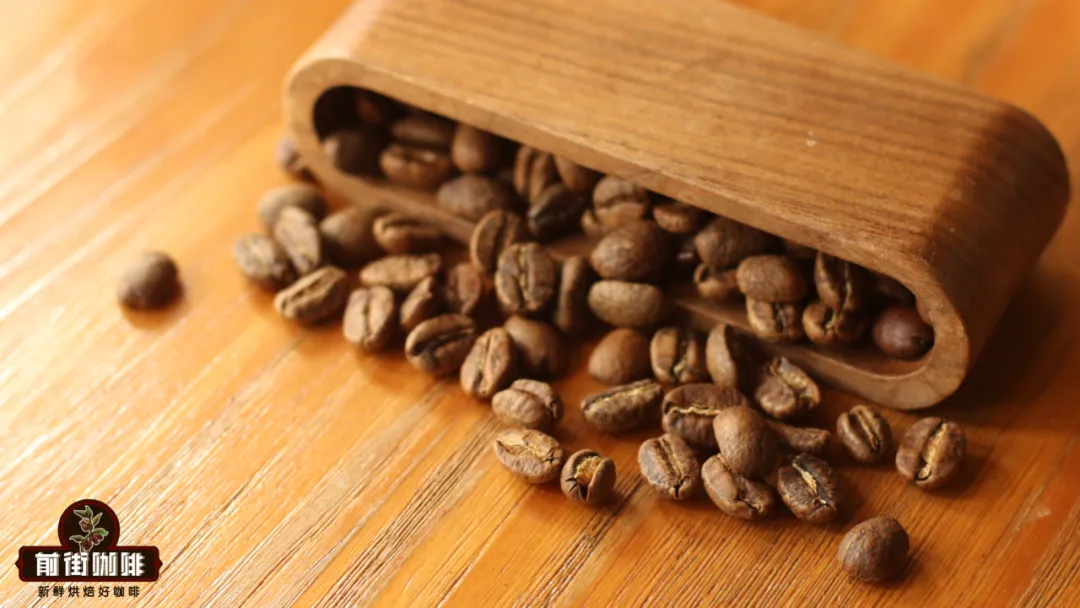
At this point, everyone should understand the root of coffee bitterness—"over-extraction" is the culprit. Grinding too fine, too many fines, water temperature too high, extraction time too long—all significantly increase extraction efficiency. If your brewed coffee frequently shows obvious bitterness, check your brewing parameters and appropriately reduce extraction efficiency to lessen the bitterness.
The "bitterness" brought by roasting
Besides the bitterness the beans themselves carry, the roasting process also adds bitter substances to the beans. Currently, roasted beans on the market come mainly in dark roast and light roast. The lighter the roast, the more sour substances the beans retain, with a high proportion of acidity, so the coffee is dominated by rich acidity; the darker the roast, the more sour substances decrease as roasting deepens, while bitter substances keep increasing—less sour, more bitter—and bitterness becomes the dominant flavor.
The above content is compiled by CoffeeHunters, a coffee news website.


