








How does a moka pot differ from an espresso machine?
Moka pot coffee is not espresso. A moka pot brews at roughly 1 to 2 bar of pressure, while a true espresso machine runs near 9 bar. That pressure gap explains the moka pot's thicker, less concentrated cup and its thin, fleeting layer of crema compared with the dense crema pulled at 9 bar.
The espresso machine itself took shape over decades: Angelo Moriondo's 1884 prototype only gained a real pressurization function around 1905, working at just 1.5 bar. The moka pot arrived in 1933 and gained a dual-valve version in 2020, so the two devices share a pressurized approach but not the same result.
Both moka pots and espresso machines use pressurized extraction, so many people regard the moka pot as a home version of the espresso machine, and some even believe that what it makes is espresso. But can the two really be equated? This article starts with the birth of the coffee machine and the evolution of pressure, sorting out the establishment of the definition of Espresso, as well as the evolution of the moka pot from its introduction in 1933 to the dual-valve version in 2020. You will discover that the pressure gap between 1~2bar and 9bar determines the essential difference in coffee concentration and Crema thickness. At the same time, it will also explain what kind of beans to choose if you want moka pot coffee to be richer and have more oils, and why the Front Street Coffee espresso bean series is suitable for home beginners.

The extraction method of the moka pot is the same as that of an espresso machine, both following the pressurized route, so for a long time it has been regarded as a home-version substitute for the espresso machine. Precisely because the extraction principle is similar, the coffee brewed by a moka pot is not low in concentration, and a layer of golden Crema floats on the surface. This easily makes people ask: does what the moka pot makes actually count as espresso? In fact, this association is not surprising; from a historical perspective, there is indeed a period of connection between the two.
Espresso Machines and Moka Pots
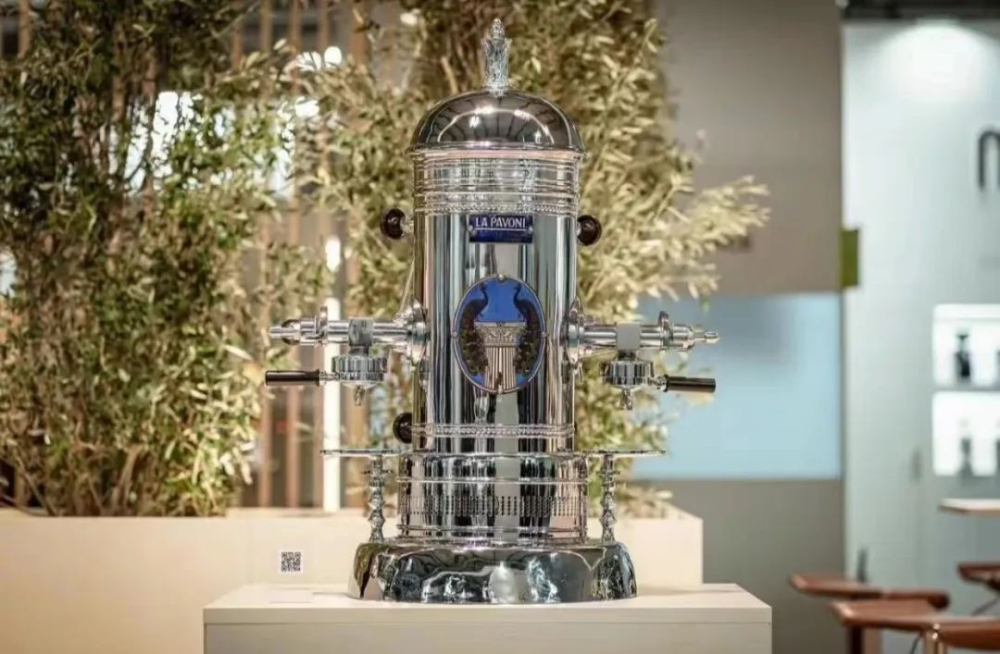
The story of the birth of the coffee machine is probably already familiar to many people. Mr. Angelo Moriondo could not bear the long wait of traditional coffee preparation, so he devoted himself to related research. In 1884, a machine that could quickly produce coffee was introduced, but it was only an initial prototype and could not yet be called the pressure-based espresso machine we understand today.
It was not until 1905, after repeated iterations, that the machine finally had a pressurization function. Only then did it truly become the first "espresso machine" in the strict sense.

With the aid of pressure, the speed at which a coffee machine extracted a cup of coffee increased greatly, and it also produced a signature substance——Crema (small in amount and sparse). Although the pressure at that time was only 1.5bar, far from comparable to today's machines, in that era, being able to make a cup of coffee within one minute was already an unimaginable speed. Thus in 1920, the Italian dictionary included a new word: Espresso. Its definition is "concentrated coffee made with a pressurized machine or filter," and it also carries the meaning of "fast." It was precisely against this background that the moka pot came into being.
In 1933, Bialetti launched a small and exquisite coffee device——the "moka pot." Everyone is familiar with its working principle: it uses the pressure generated by steam to extract coffee substances. Therefore, the moka pot also belongs to pressurized extraction. Its extraction pressure can reach 1~2bar, so the coffee it makes is very close to the espresso of that time.
To make moka pot coffee richer and bring out the oils, two conditions need to be met: first, fresh medium- to dark-roasted coffee beans; second, extraction must rely on pressure. During heating, coffee beans accumulate a large amount of carbon dioxide, which is released when they encounter water during extraction. The darker the roast, the more gas; at this point, light-roasted beans should be avoided first, because the oils they release are limited. If home beginners seek higher cost-effectiveness, they can prioritize purchasing the Front Street Coffee espresso bean series, including Front Street Black Cocoa Blend, Front Street Classic Blend, Front Street Commercial Blend, and Front Street Specialty Blend. They are all medium-dark roasts, naturally carrying caramelized aromas, and the strong coffee made from them is rich in oils.
For this reason, most people treat the moka pot as a small espresso machine. Affordable and good, it quickly entered thousands of households in Italy and became a coffee-making device that almost everyone had.
But in 1961, Faema released a high-pressure coffee machine with an extraction pressure as high as 9bar, completely refreshing people's understanding of espresso. Under high pressure, coffee was made faster, more concentrated, and with fuller Crema. It not only widened the gap with old coffee machines, but also drew a clear line between itself and the moka pot. From then on, the image of espresso in people's minds was redefined, and moka pot coffee could hardly be mentioned in the same breath as espresso.
The extraction pressure of the moka pot is not high, and more hot water is needed for the coffee to reach a suitable extraction rate, which makes the overall concentration relatively low, clearly different from espresso extracted under 9bar high pressure.
Of course, the moka pot itself is also progressing. In 2020, Bialetti launched a brand-new dual-valve version, and the extraction pressure was somewhat increased. The coffee made by the new dual-valve moka pot is richer, and the Crema is thicker, already very close to today's espresso. Therefore, some friends who are just starting out will think that the coffee extracted by the moka pot is espresso in a different form but with the same underlying principle.
But since the birth of the 9bar coffee machine, people have already realized the difference between espresso and moka pot coffee. Therefore, the coffee extracted by the moka pot is not espresso, nor can it be called mocha coffee; it can only be called moka pot coffee.
The above content is compiled by CoffeeHunters, a coffee news website.


