








How does staged extraction shape flavor in pour-over coffee?
A four-pour test using a light-roast Kenya Kirinyaga AA and a medium-roast Yunnan sun-dried Typica shows that each stage of a pour-over extracts different compounds. Front Street Coffee brewed 16g of coffee with 240ml of 90C water on a Hario V60#01, collected the liquid from every pour into separate carafes, and tasted each one to map which flavors the bloom, middle pours, and final pour release.
The two beans differed in how they responded: the fruit-acid-forward Kenya and the nutty sun-dried Typica released sweetness and acidity at different points in the brew. Knowing which stage carries which compounds lets a brewer adjust pour size, timing, and water distribution to push sweetness forward or build a juicier mouthfeel instead of guessing.
There are many different pour-over brewing techniques, and staged pouring is widely recognized as an effective way to enhance a coffee's complexity. But have you ever wondered exactly which flavor compounds each pour extracts? Front Street Coffee conducted a comparative experiment using a light-roast, fruit-acid-forward Kenya Kirinyaga AA and a medium-roast, nutty Yunnan sun-dried Typica, employing a four-pour method and collecting the coffee liquid from each pour separately. After tasting each one, they revealed which flavor components are handled by the bloom, the middle pours, and the final pour. Building on that, this article further summarizes how to apply these extraction patterns to practical brewing—how to adjust parameters to highlight sweetness, and how to distribute water to achieve a juicy mouthfeel, with concrete, actionable suggestions for each.

There's a saying circulating in coffee circles: brewing techniques are endlessly varied, but staged extraction is the most reliable. If you're practicing pour-over right now, have you ever had this question—everyone says staged extraction effectively enhances a coffee's complexity, but when it comes down to each individual pour, what flavors is it actually extracting from the coffee?
Rather than guessing, it's better to verify by doing. Next, Front Street will break down each extraction stage of a single pour-over brew, observing the flavor performance at each stage through comparative tasting.
To make the flavor differences between stages clearer and more distinguishable, Front Street selected a light-roast, fruit-acid-forward bean and a medium-roast, nutty bean as the experimental subjects, used a four-pour scheme, and collected the coffee liquid flowing out at each stage into four pre-warmed sharing carafes.
Coffee beans: Kenya·Kirinyaga AA & Front Street Yunnan Sun-Dried Typica Dose: 16g Total water: 240ml (30ml, 70ml, 70ml, 70ml) Grind: EK43 setting 10 (80% passing a No. 20 sieve) Water temperature: 90℃ Dripper: Hario V60#01
Pouring technique: four-pour method
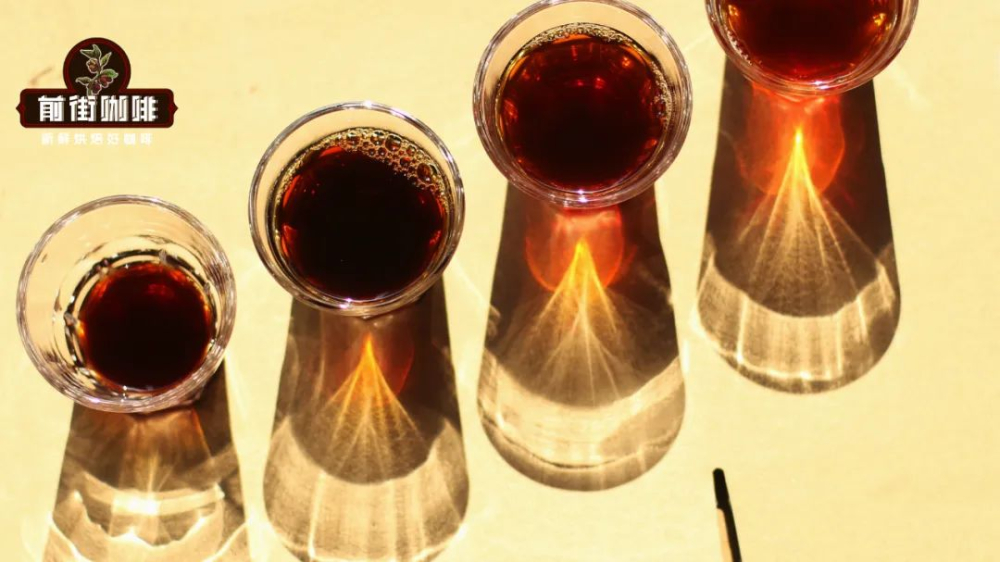
The procedure is as follows: first pour 30ml of hot water for a 30-second bloom, and at about the 25-second mark quickly swap in the second sharing carafe and tare the scale.
After the bloom, pour the second stage in circles from the center outward while gradually raising the coffee bed, with a target of 70ml. When the water in the dripper is almost drained, immediately switch to the third sharing carafe, tare it, and continue pouring the third stage, then wait for the coffee to drip through… Repeat this 3 times until all the target water has been poured, yielding two sets of 4 coffee liquids from different stages.
Because of the extra carafe swaps and taring operations in between, the overall extraction time is somewhat extended. The total brew time for the Kenya bean was 2 minutes 18 seconds, and for the Front Street Yunnan Typica, 2 minutes 26 seconds. Next, Front Street first tastes and records the flavor of each cup, then mixes them together for a trial tasting.
What does each pour mainly extract?
In staged extraction, concentration is certainly an important variable, but the soluble substances that provide flavor also undergo subtle changes over time.
Combining the above comparative experiment, it can be seen that the first bloom stage serves two functions: first, it lets the coffee grounds degas and absorb water, laying the foundation for subsequent even extraction; second, it is the first step in obtaining acidity. However, because the amount of water poured is very small, this stage's coffee liquid is extremely concentrated, with a muddy flavor and a salty-sour taste.
The hot water poured in the second and third stages is mainly responsible for extracting fruit acids and core aroma compounds. Fruit-acid-forward beans release a large amount of floral and fruity acidity at this stage, while medium-roast coffees tend to preferentially dissolve caramelized aromas and some fruit acids at this point.
By the final rinse stage, the coffee releases more concentrated soluble substances dominated by body and a sweet aftertaste. But as extraction continues, once it exceeds the ideal time range (over 2 minutes 30 seconds), late-stage components such as woody notes, off-flavors, bitterness, and astringency begin to appear—this is what we commonly call over-extraction.
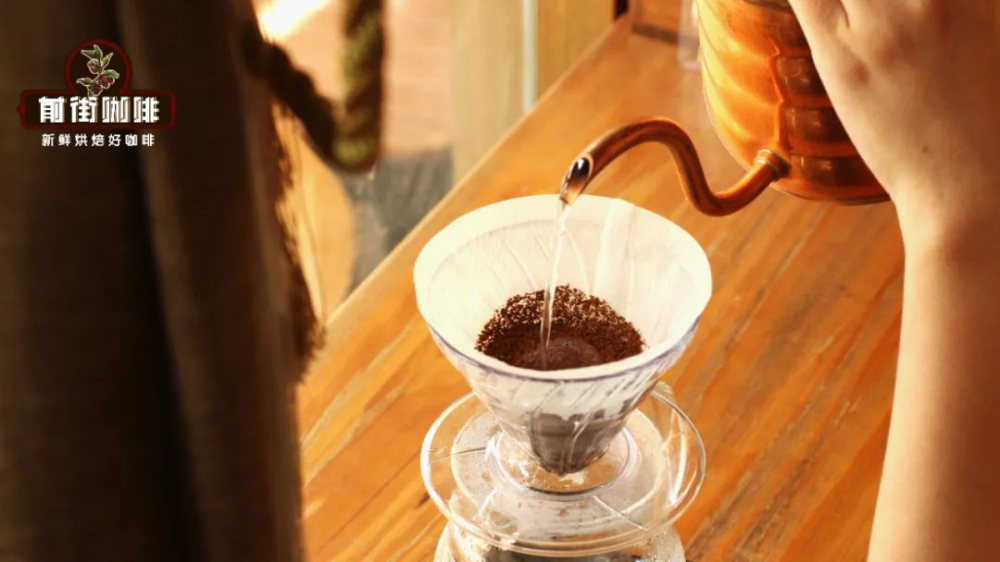
Practical application of brewing logic
Now that we've clarified which flavor substances each stage is responsible for, the next task is to apply these extraction patterns to everyday brewing.
For example, if you have a coffee bean whose flavor description leans sweet and you want to fully extract that sweetness, you need to appropriately increase the extraction yield while avoiding over-extraction—this can be achieved by raising the water temperature, tightening the grind, extending the brew time, or increasing the water volume in the final rinse stage.
If the goal is to brew a bean with a juicy mouthfeel, then on top of the usual light-roast brewing parameters, you can shift the extraction focus to the early-to-middle stages where fruit acids are released in concentration. Taking Front Street's commonly used three-pour method, 15g dose, and 1:15 coffee-to-water ratio as an example, try a water distribution of "30ml, 130ml, 65ml," paired with a high-flow, circular pouring motion.
- END - Front Street Coffee
No. 10 Baoqian Street, Yandun Road, Dongshankou, Yuexiu District, Guangzhou, Guangdong Province
The above content is compiled by CoffeeHunters, a coffee news website.


