







What does Ethiopia's security crisis mean for the coffee industry?
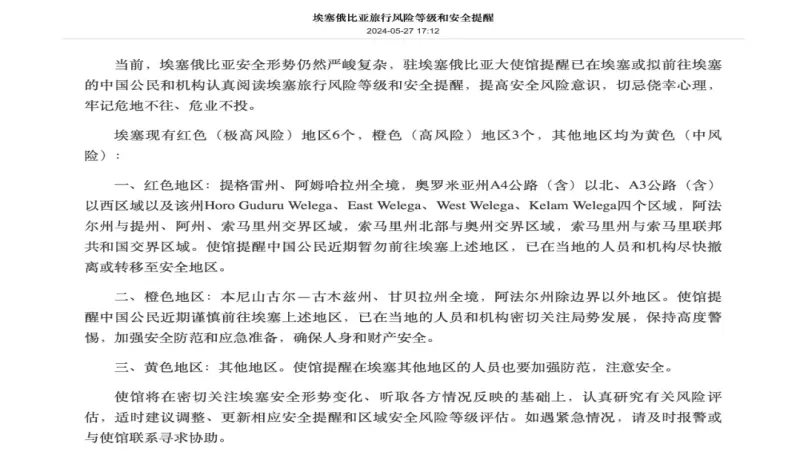
Ethiopia's security situation has stayed tense, prompting the Chinese consulate to renew a travel risk advisory. The country is split into 6 red extremely high-risk zones, 3 orange high-risk zones, and yellow medium-risk areas. Because several coffee-producing regions sit inside the highest-risk zones, clashes between the federal government and local armed groups threaten coffee production, the supply chain, and exports.
The conflict centers on Amhara region, where federal plans to absorb regional forces into a national army triggered clashes with Fano forces starting in August 2023. Reports say up to 90,000 new recruits are being deployed there, and a large-scale operation may follow within days. Transport blockades and a possible Cup of Excellence cancellation add further pressure on the coffee industry.
Ethiopia's security situation has recently remained tense, and the Chinese consulate has issued a travel risk advisory. Several of the country's coffee-producing regions are located in high-risk zones, and clashes between the federal government and local armed groups could deal a severe blow to coffee production, the supply chain, and exports. Although coffee exports hit a record high in the first nine months of this fiscal year, the looming civil war, transport blockades, and the possible cancellation of the Cup of Excellence all cast a shadow over the country's coffee industry. This article will outline the current risk areas, the background of the conflict, and its potential impact on the coffee sector.
Recently, the Chinese Consulate in Ethiopia issued another notice, pointing out that the country's security situation remains severe and reminding citizens and institutions already there or planning to travel there to pay close attention to travel risk levels and safety advisories.
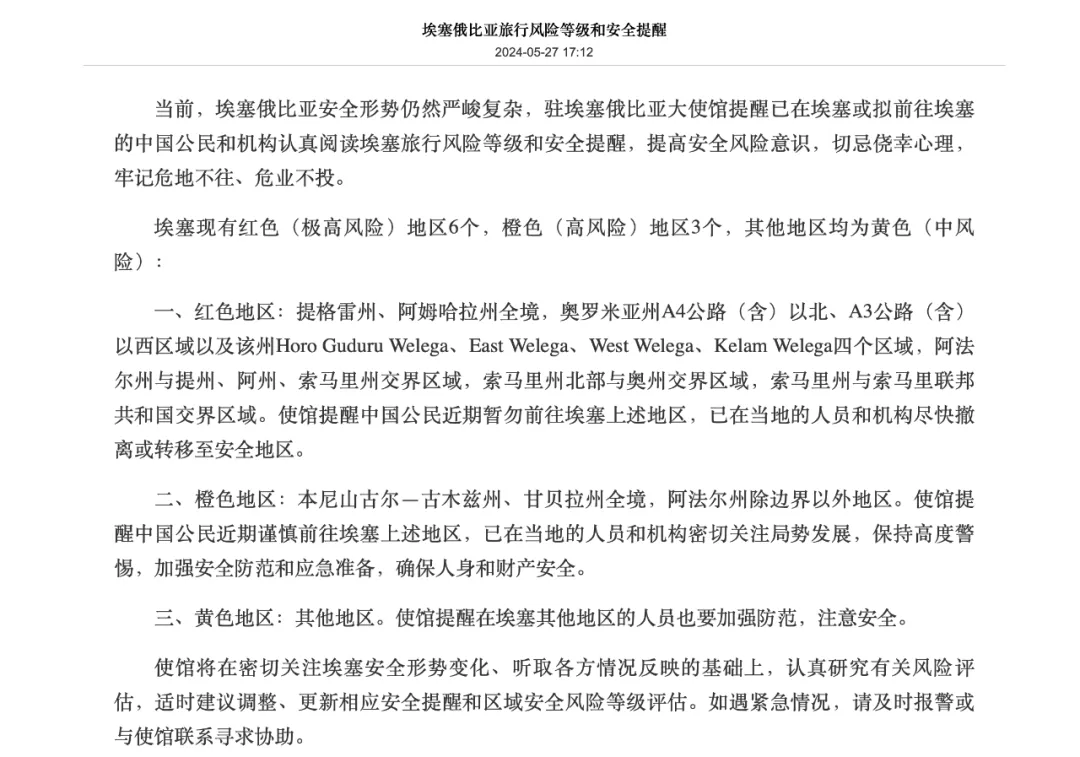
At present, the whole of Ethiopia is divided into 6 red (extremely high risk) areas, 3 orange (high risk) areas, and the rest are yellow (medium risk) areas.
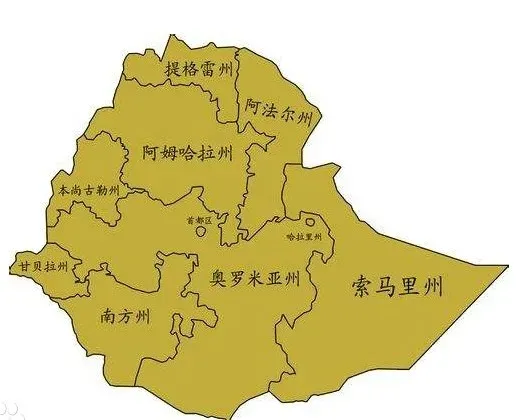
The red extremely high-risk areas cover the entire Tigray and Amhara regions, the area of Oromia north of the A4 highway and west of the A3 highway plus four zones in that region, as well as the border areas between multiple regions.
The orange high-risk areas include the entire Benishangul-Gumuz and Gambella regions, as well as Afar region except for the border areas. All remaining parts of the country are classified as yellow medium risk.
It is understood that, in order to prevent local armed conflicts, Ethiopia's federal government decided to build a strong federal army and incorporate the local armed forces of the country's 11 regions into the federal forces. However, this move triggered strong opposition from nationalists in Amhara region, who believed the government intended to weaken the region's power and undermine regional security. As a result, clashes broke out between the region's Fano forces and the federal government in August 2023 and have continued to this day.
According to local media reports, the Ethiopian government is deploying as many as 90,000 new recruits to Amhara region. Sources have revealed that the government plans to launch a large-scale military operation in the area within the next ten days, aiming to eliminate the Fano forces within two weeks.
Although data from the Ethiopian Coffee and Tea Authority (ECTA) show that in the first nine months of this fiscal year (since July 2023) the country exported 174,000 tons of coffee, earning a total of US$835.2 million, a record high for the same period in history, the impending civil war is bound to deal a severe blow to the country's economy. It is understood that quite a few coffee-producing areas are located within the currently designated red extremely high-risk and orange high-risk zones. Once fighting begins, it could damage the country's infrastructure, production capacity, and supply chain, restrict production and business activities, and harm multiple industries including coffee and tourism.
In addition, as a landlocked country, Ethiopia relies on the port of neighboring Djibouti for both imports and exports, but the roads leading to the port happen to lie in high-risk areas, and with the war drawing near, route blockades will be imposed in some areas.
This will severely hit the country's transportation industry, and a decline in imports and exports will significantly drag down the economy, potentially triggering inflation and economic recession.
It is also understood that Ethiopia had earlier officially confirmed that it would host the Cup of Excellence (COE) in July this year, and more than 600 samples have already arrived at regional warehouses awaiting evaluation. In 2023, the country was unable to hold the COE due to the civil war. If this civil war cannot be quelled within two weeks, this year's COE event may face cancellation or termination.
At the same time, the whole of Ethiopia is currently at medium risk or above, which has deterred many coffee traders and bean hunters and hindered the normal development of the country's coffee industry.
For domestic coffee enthusiasts, Front Street Coffee suggests continuing to monitor changes in the situation in Ethiopia and carefully assess recent fluctuations in the supply and quality of the country's coffee beans.
The above content is compiled by CoffeeHunters, a coffee news website.


