







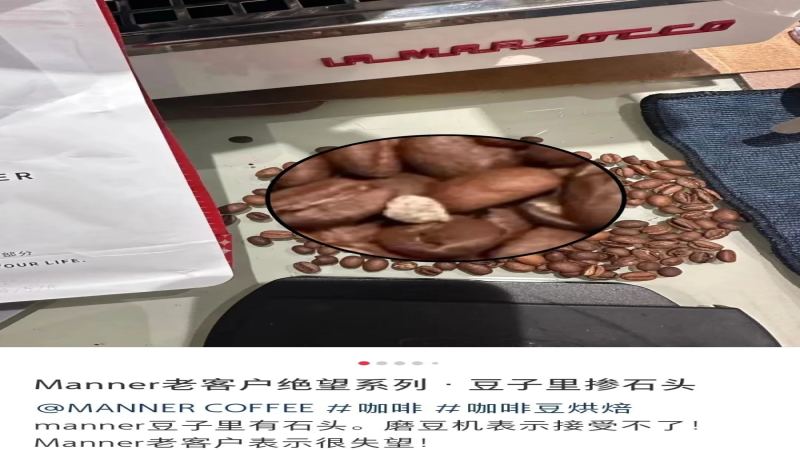
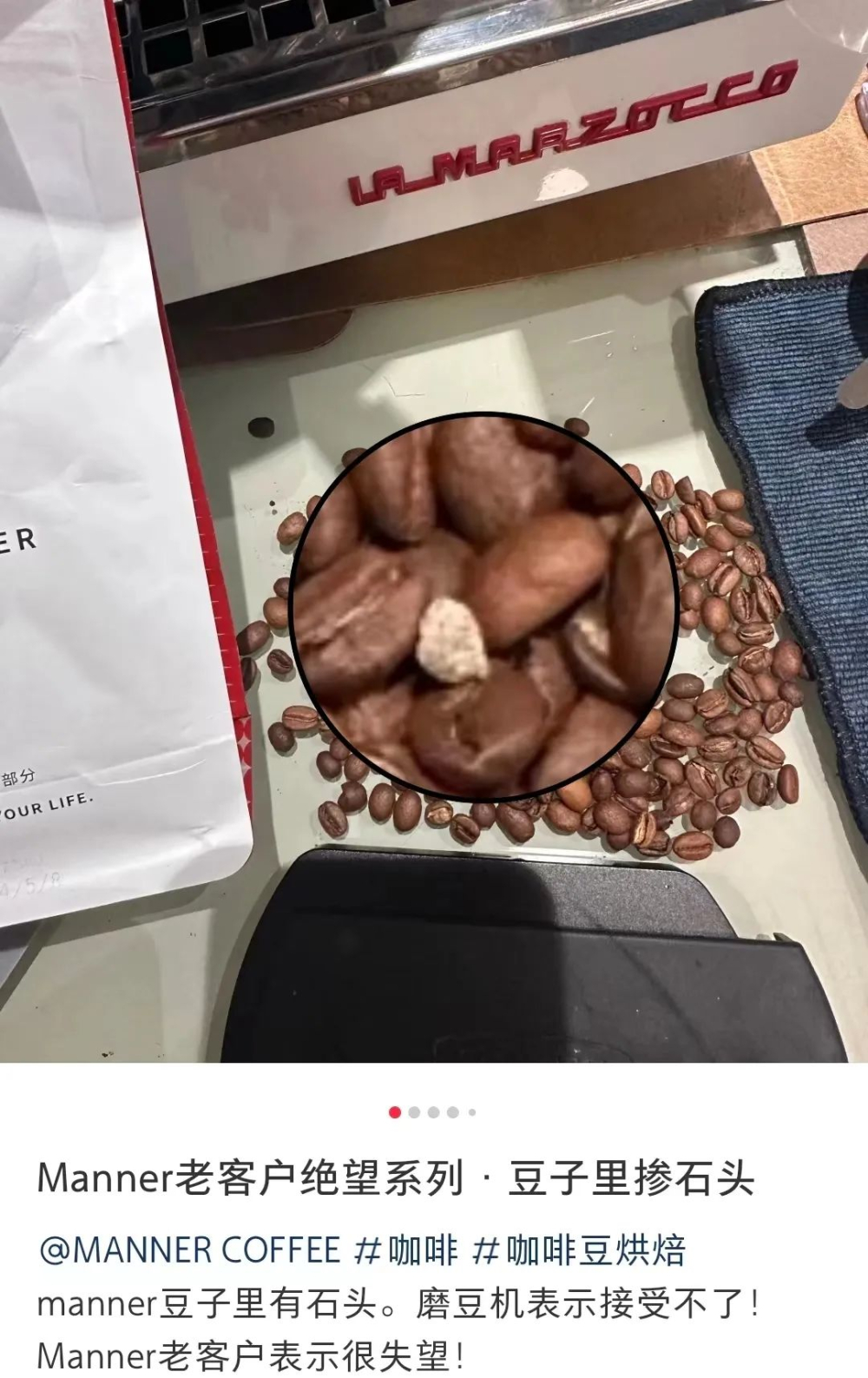
How does coffee beans processing let small stones through?
A consumer found a small stone among Manner coffee beans and spotted it before the beans went into the grinder. Manner customer service said coffee is an agricultural product, that stones can appear depending on processing method, and that screening equipment is used before packaging without a full guarantee.
The incident points to every stage from green bean to roasted bag, since dense debris survives washing, drying, and roasting. Many coffee bean roaster setups add destoning and density sorting, but no line removes every defect. A stone that reaches a grinder can damage the burrs as well as the cup.
Recently, a consumer reported on social media that the Manner coffee beans they purchased actually contained a small stone. Fortunately, they spotted it in time while pouring the beans, preventing it from entering the grinder and causing damage. Although Manner customer service explained that coffee beans are an agricultural product and imperfections are unavoidable during processing, and emphasized that professional equipment is used to screen out foreign objects during production, this response did not fully satisfy the customer. This incident has also drawn the attention of coffee enthusiasts to the safety of grinders—small stones are not only a food safety concern but can also cause serious damage to the burrs. So, from green beans to roasted beans, how many rounds of screening does coffee actually go through? And how do brands like Front Street Coffee control quality?
▲
Click to follow | Daily specialty coffee culture magazine Coffee Workshop
Recently, a customer posted online a photo of the Manner coffee beans they had just bought, with a small stone clearly mixed in among the beans.
This customer noticed the stone before pouring the coffee beans into the grinder, and she felt very fortunate to have found it early—if the stone had gone into the grinder along with the beans, the consequences would have been unimaginable. Still shaken, she immediately contacted Manner customer service to report the situation.
In response, Manner customer service initially stated that "coffee beans are an agricultural product, and due to differences in processing methods, stones occasionally appear," and explained that the beans are screened before leaving the factory but that it is impossible to guarantee they are 100% free of defects. The customer service representative then checked with the production department and took photos of the professional equipment on the production line to show the customer that there is indeed a step to remove foreign objects during production.
However, this explanation did not satisfy the consumer.
In the eyes of many consumers, choosing to buy coffee beans from a chain brand is about the quality endorsement that comes with a well-known brand. Now that a stone has actually appeared in the beans, the customer service response seemed to them more like an excuse for a lapse in the production process, and the attitude toward customer feedback also seemed perfunctory.
Objectively speaking, coffee beans are indeed an agricultural byproduct, as customer service said—just like vegetables and fruits bought at a market, they inevitably come with some imperfections. Therefore, from picking coffee cherries to finally producing bags of roasted coffee beans, multiple rounds of machine or manual screening are required. Even so, situations like this still seem difficult to completely eliminate.
Taking this bag of Manner coffee beans as an example, when they were still green beans and had not yet entered the roasting stage, they first had to go through a round of screening. Roasters use professional equipment to sort out defective beans, small stones, burlap threads, and other impurities from the green beans before roasting them into roasted beans.
And after roasting,
some people might think the next step is portioning and packaging. Actually, that is not the case. The roasted coffee beans still need to go through another round of screening.
It can be said that before becoming a product, coffee cherries must "pass through five gates and defeat six generals"—the entire production process involves multiple rounds of manual and machine screening, and only then are they sealed into packaging bags and delivered to consumers. But no matter how many times they are screened or how strict the standards are, it is still hard to guarantee that every bag of coffee beans is flawless, so some people pick through the beans once more before formally brewing.
However, in the view of experienced coffee enthusiasts, this inconspicuous little stone is actually more dangerous than defective beans. Because once it enters the grinder, it will damage the burrs, and in serious cases it may chip the burrs, which means the grinder has to be sent for repair or even have its burrs replaced.

Although no bag of coffee beans can be guaranteed to be perfect and completely free of defects, the presence of small stones is not only a food safety issue but may also cause accidental machine damage for some grinders that lack bean-jam safety protection. Therefore, before grinding, it is essential to carefully check once more.
As of press time, this customer stated that Manner has arranged for an after-sales technician to inspect her machine, and the issue she reported has also been properly resolved.
Image source: Internet
Disclaimer: Some images in this article are from the Internet. For some content on the website, such as images, we will respect the original author's copyright and indicate the source. However, due to the large volume, some images and texts may not have been credited in time. Please forgive us. If the original author has any disputes, they can contact the website for handling. Once verified, we will correct it immediately. Compiled and edited by "Coffee Workshop." Please indicate the source when reprinting. If there is any infringement, please inform us for deletion. Thank you~!
The above content is compiled by CoffeeHunters, a coffee news website.


