







Is coffee from a pour-over suitable as a milk drink base?
A pour-over can work as a milk coffee base, but it differs from an espresso latte. Café au lait uses a weaker brew, so milk dilutes much of the flavor and body. By raising the coffee-to-water ratio, tightening the grind, adjusting water temperature and stirring during the pour, the cup reaches a high enough concentration that adding milk in a suitable ratio gets close to a latte.
Medium-dark roasted beans suit milk pairing because the longer roast time develops sweetness that carries through the drink. The method comes from a store-visit video by a Korean coffee blogger whose champion barista used the pour-over approach, and the article also lists brewing parameters and operating steps, plus specific products for testing. The result is a milk coffee that approximates a latte rather than matching it, which is coffee in practice.
When it comes to combining pour-over coffee with milk, most people think of café au lait, but café au lait has a relatively low coffee concentration, and its flavor is easily diluted once milk is added, making it clearly different from an espresso-based latte. Front Street Coffee recently came across a store-visit video by a well-known Korean coffee blogger, in which a champion barista used the pour-over method to make a milk coffee with both excellent flavor and mouthfeel. This article will focus on the extraction logic of espresso and share how to obtain a very high-concentration pour-over coffee as a base by adjusting the coffee-to-water ratio, grind size, water temperature, and stirring technique, then add milk in an appropriate ratio to create a drink that comes infinitely close to a latte. It will also recommend medium-dark roasted beans suitable for pairing with milk and specific Front Street Coffee products, along with complete brewing parameters and operating steps.
When it comes to pour-over with milk, the first thing many people think of should be café au lait. However, the coffee used for café au lait is not very concentrated, and after milk is added, a large amount of flavor and mouthfeel is diluted, so the gap between it and a latte under the espresso system is still quite obvious.
While browsing online recently, Front Street Coffee saw a store-visit video posted by a well-known Korean coffee blogger. In the video, that champion barista used pour-over coffee to make a "latte" with quite outstanding flavor and mouthfeel. How exactly did he do it? Today Front Street Coffee will talk about how to make a "latte" that is as close as possible to a latte through the pour-over method. Ready?
How to make a "latte" with pour-over?
Why does this latte have double quotation marks? There are two reasons. First, what we now call latte coffee specifically refers to a milk coffee made with espresso as the base and milk added in a certain ratio; second, a milk coffee made by pour-over can only come close and cannot fully reproduce the taste and mouthfeel of a real latte, while it is also different from traditional café au lait. Therefore, the "latte" made by pour-over in this article will always keep the double quotation marks.
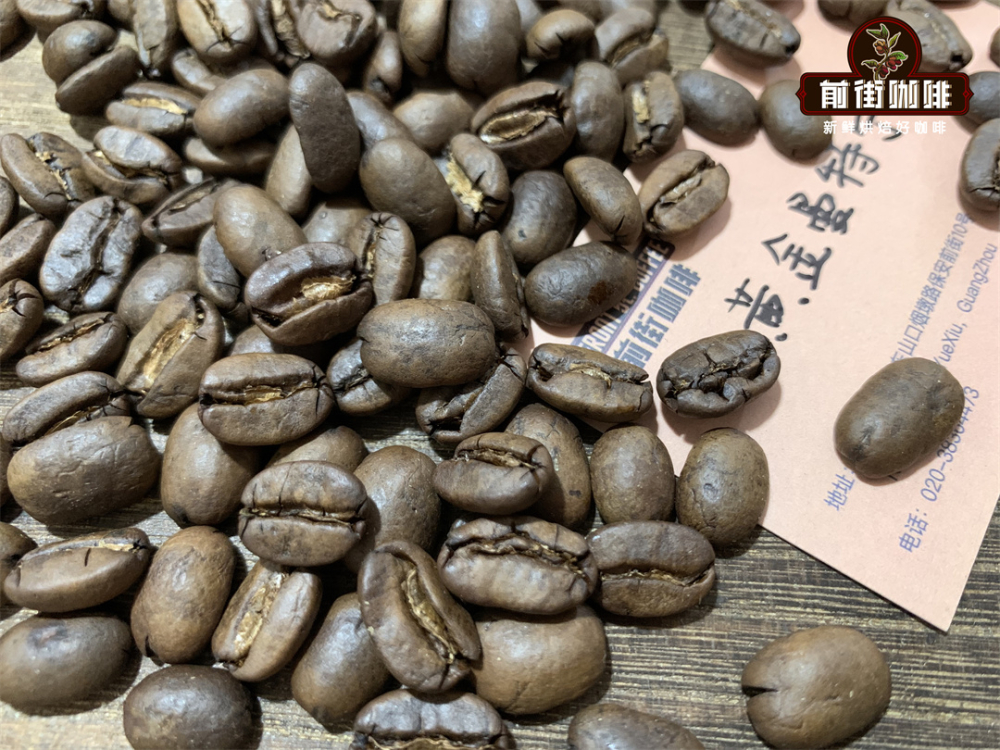
For coffee used to pair with milk, it is best to choose medium-dark roasted beans. These beans are heated for a longer time, and the caramelization reaction and Maillard reaction bring abundant roasting aromas, which can form a richer and more mellow mouthfeel when blended with milk. If making milk coffee at home, you can prioritize Front Street Coffee Queen's Manor, Front Street Coffee Brazil Cerrado, and Front Street Coffee PWN Golden Mandheling. They have low acidity and a mellow taste, suitable for friends who prefer strong coffee.
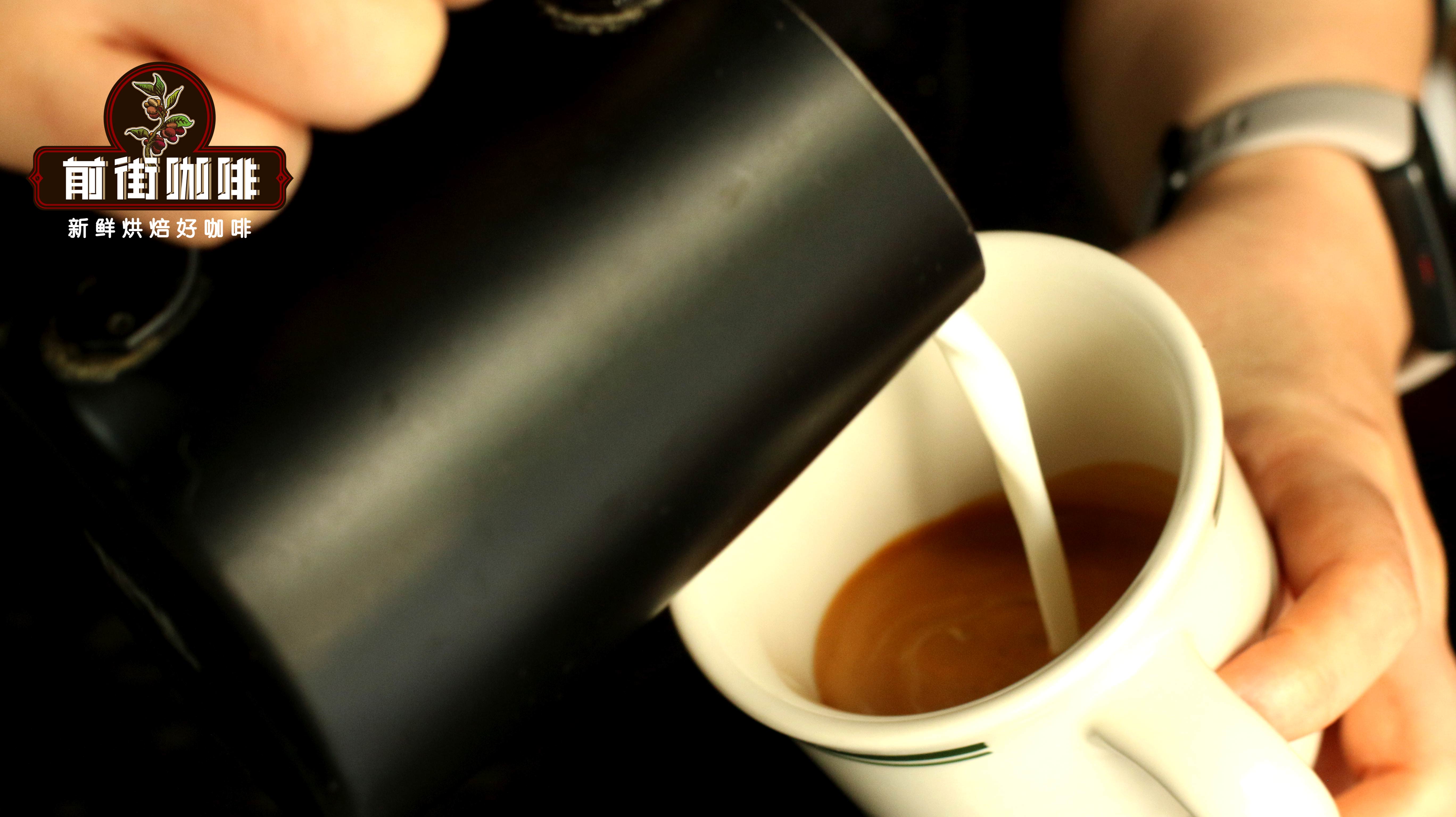
Back to the point: how do you use pour-over coffee to make a "latte"? It sounds a bit absurd, but the actual operation is not complicated. We only need to follow the extraction principles of espresso, make a very high-concentration pour-over coffee as the base, and then add milk in an appropriate ratio to imitate latte coffee.
So the core requirement for this cup of pour-over coffee is: high concentration. To make a cup of pour-over coffee reach a relatively high concentration, it is necessary to adjust the coffee-to-water ratio in the extraction plan. Because when making a cup of coffee, the less water used, the more coffee substances the water carries under the same extraction yield, and the concentration will naturally be higher.
However, it should be understood that the coffee-to-water ratio and other extraction parameters are interconnected within the same plan. Increasing the coffee-to-water ratio means less water is available to extract the coffee grounds; when other parameters remain unchanged, the overall extraction time will be compressed. Therefore, if only the coffee-to-water ratio is changed while the other parameters stay the same, the final result will almost inevitably be a cup of pour-over coffee that is under-extracted and not concentrated enough.
Take espresso extraction as an example. Although its coffee-to-liquid ratio is as high as 1:2, it uses a higher water temperature, a finer grind, and pressure assistance, so that a small amount of hot water can extract a sufficiently high coffee concentration in a short time. So when we want to use a high coffee-to-water ratio to obtain a pour-over coffee with a concentration close to espresso, we should also follow the same idea: simultaneously improve the extraction efficiency of all other parameters. Next, Front Street Coffee will share the extraction approach for making a "latte" with pour-over.
The approach to making a "latte" with pour-over
To make a high-concentration pour-over coffee, first determine the coffee-to-liquid ratio. Here Front Street Coffee follows the commonly used espresso coffee-to-liquid ratio — "1:2". Converted to a coffee-to-water ratio, that is 1:4, because coffee grounds absorb twice their own weight in water. A cup of milk coffee needs at least 40 ml of coffee liquid as the base. Calculated at a coffee-to-liquid ratio of 1:2, the amount of coffee grounds used this time is 20 g.
But pour-over coffee has no pressure assistance, so in addition to grinding finer and raising the water temperature, it is also necessary to improve extraction efficiency by extending the extraction time and increasing the number of stirrings. After multiple rounds of experiments, Front Street Coffee obtained a relatively suitable extraction plan:
The coffee beans used in this experiment are Front Street Coffee Colombia Pink Bourbon, an anaerobic natural bean with flavors of blackcurrant, dried fruit, floral notes, and blueberry. The coffee-to-water ratio is 1:4 (that is, 80 ml hot water, which converts to a coffee-to-liquid ratio of 1:2), the water temperature is 96°C–98°C, and the grind size uses the finest setting of a pour-over grinder, with particles close to flour-like consistency (if using a hand grinder, a second grinding can be done if it is not fine enough; the finer the better). The dripper is a Kono or infinite dripper (which can slow the flow rate and lengthen the extraction time). In addition, prepare a small stick for stirring, because with so little water, stirring is needed to "force out" the substances in the coffee grounds. Now let's start brewing.
(The left side of the image shows the finest grind produced by an electric pour-over grinder, and the right side shows espresso grind.)
First wet the filter paper, then pour the ground coffee into the dripper. Here is the key point: pour all 80 ml of hot water in at once, then immediately stir quickly with a stirring stick, and stop once the entire coffee bed has been stirred evenly (about 1 minute), then wait for extraction to finish.
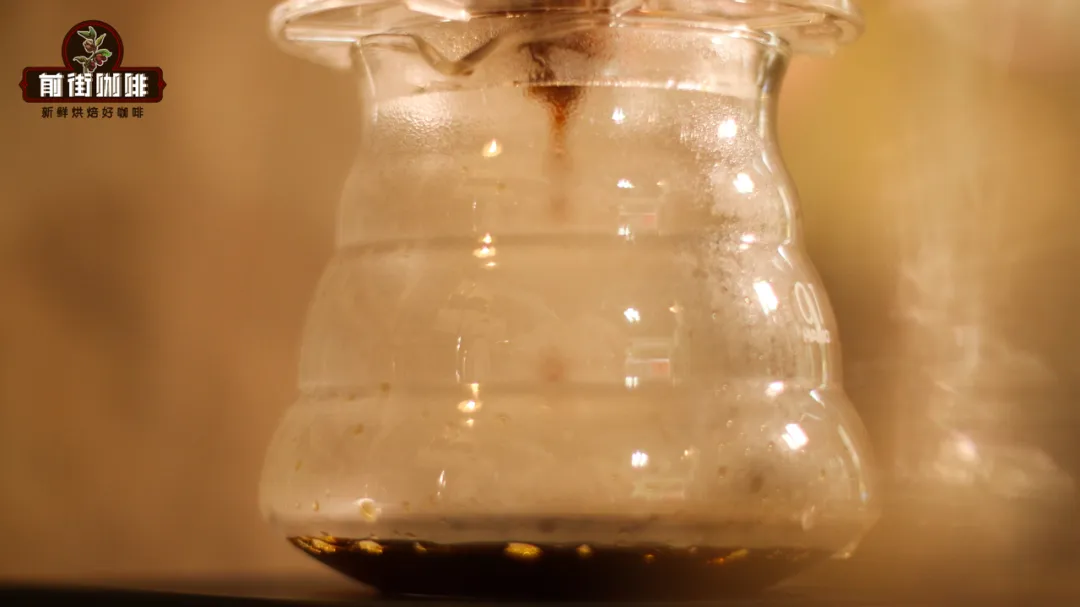
Although there is only 80 ml of hot water, under the combined effect of extremely fine grinding, stirred extraction, and a slow dripper, the extraction time will still reach about 2 minutes. Extraction is completed at 2 minutes 05 seconds. Remove the dripper, and the liquid weight is 45 ml. From the color of this coffee liquid, you can tell that it is very concentrated.
(The left side of the image shows espresso, and the right side shows high-concentration pour-over coffee.)
Front Street Coffee wants to emphasize again that because the concentration of this coffee liquid cannot compare with espresso, too much milk cannot be added, otherwise it will be overly diluted. Keeping the ratio at 1:3 is sufficient. Converted, that is 45 ml pour-over coffee with 135 ml milk.
Steam the milk to 65°C, then simply make a latte art pattern (ordinary hot milk is also fine; there are not many requirements).
Once completed, the mouthfeel is very close to a regular latte. Because Pink Bourbon itself is an anaerobically processed bean, the first sip has a hint of fermentation, followed by the berry notes of blueberry and grape. Compared with café au lait, this "latte" has a fuller mouthfeel and a richer taste. Compared with a regular latte, although it is not as outstanding, it has more options; after all, different coffee beans can be substituted, and it is indeed quite good.
Now everyone should know how to make a "latte" with pour-over coffee, right? If you have an espresso grinder at home, it is even more convenient. You can directly grind with the espresso grinder, so you do not have to rely on a slow dripper to extend the extraction time, and a V60 will also work.
The above content is compiled by CoffeeHunters, a coffee news website.


