







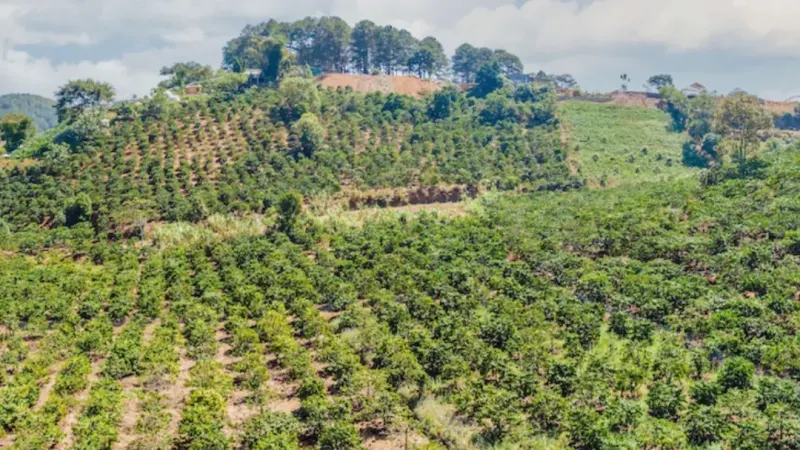
How Vietnam Coffee Production Is Shifting in the New Crop Year
Vietnam's coffee production for the 2024/25 crop year is projected at 29 million bags of 60 kilograms each, a slight downward revision from 29.1 million, according to a U.S. Department of Agriculture report. Higher coffee prices have given farmers more funds to invest in irrigation and intercropping, which has partly offset damage from earlier drought and high temperatures.
Vietnam's planted area is expected to stay broadly stable at around 600,000 hectares, but growers in the Central Highlands are turning to higher-return crops such as durian and passion fruit, where durian income can be twice that of coffee. Exports fell 7 percent year on year in the first half of the 2023/24 fiscal year, and La Niña remains a key variable.
The latest report from the U.S. Department of Agriculture shows that Vietnam's coffee production in the 2024/25 crop year is expected to reach 29 million bags, a slight adjustment from previous forecasts, but rising coffee prices are incentivizing farmers to invest more. Although drought and high temperatures have hit production, measures such as irrigation and intercropping have somewhat alleviated the pressure of reduced output. Meanwhile, the planting structure in the Central Highlands is quietly changing, with high-return crops such as durian and passion fruit diverting some coffee acreage. On the export front, Vietnam's coffee exports in the first half of the 2023/24 fiscal year fell 7% year-on-year, domestic purchase prices remain persistently high, and traders are cautious about signing contracts. The market is skeptical of official production data, and La Niña may become the biggest variable going forward; the new crop harvest will not be known until October.
Recently, the U.S. Department of Agriculture released an assessment report on Vietnam's coffee industry. The report estimates that Vietnam's coffee production in the 2024/25 crop year will reach 29 million bags (60 kg per bag), a slight downward revision from the previous estimate of 29.1 million bags. This adjustment comes against the backdrop of higher coffee prices, which have left growers with more ample funds and thus the ability to increase production inputs.
Although Vietnam has frequently encountered unfavorable weather in recent years, the rise in international coffee prices has provided support to the local industry. At present, many farmers are using irrigation, intercropping, and other methods to try to mitigate the damage caused by earlier drought and high temperatures, which to some extent helps curb the downward trend in Vietnam's coffee production.
In the long run, however, Vietnam's coffee planting area is expected to remain broadly stable at around 600,000 hectares. The reason is that some farmers in the Central Highlands are gradually adjusting their planting structure, no longer relying solely on coffee but turning to higher-return crops such as durian and passion fruit—currently, income from growing durian can be twice that from growing coffee.
Of course, the current high coffee prices have also helped some producing areas hold their ground. In places such as Dak Lak and Lam Dong provinces in the Central Highlands, coffee remains a critically important crop.
On the export front, customs data show that Vietnam's coffee exports in the first half of the 2023/24 fiscal year were 15.94 million bags, down 7% from the same period in the 2022/23 fiscal year. Major importing countries include Germany, Italy, and Spain.
Combining trade statistics and persistently rising coffee prices, Vietnam's total coffee exports in the 2023/24 fiscal year are estimated at 26.85 million bags. At the same time, domestic coffee prices in Vietnam remain high, with local purchase prices currently around 118 million to 123 million Vietnamese dong per ton, putting considerable pressure on some traders in the purchasing stage.
Because some coffee farmers still hold inventory and are waiting for prices to rise further before selling, and because traders worry about the difficulty of balancing domestic purchase prices with export prices, as well as previous incidents of coffee farmers defaulting, exporters are generally hesitant to sign forward contracts.
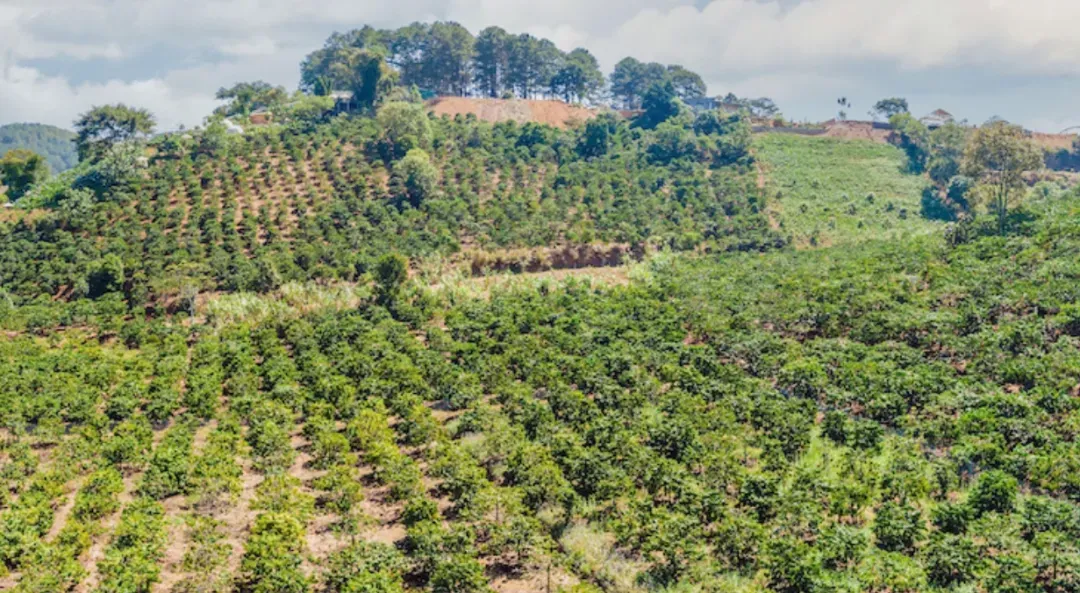
High temperatures and drought have already adversely affected coffee production in the 2023/24 crop year, and over time such weather events are expected to become more frequent.
To this end, the provincial Department of Agriculture and Rural Development (DARD) and the Western Highlands Agriculture and Forestry Science Institute (WASI) have jointly developed strategies to maintain and improve sustainable coffee production, including replacing old trees with new varieties, encouraging intercropping to increase shade and water retention, promoting water-saving irrigation systems, and helping coffee farmers complete relevant certifications.
Although the U.S. Department of Agriculture believes Vietnam's production is expected to reach 29 million bags, the market is generally reserved about this. Previously, international trader Volcafe predicted that Vietnam's robusta production in the 2024/25 crop year would be only 24 million bags, which would be the lowest level in nearly 13 years.
Market views hold that Vietnam's current weather conditions remain unfavorable, and a likely subsequent La Niña phenomenon may further threaten coffee production. In addition, Vietnam's new crop harvest will not begin until October, and future weather changes still need to be continuously tracked.
The above content is compiled by CoffeeHunters, a coffee news website.


