








What causes espresso splatter at barista levels of extraction?
Espresso sprays sideways when channeling occurs: hot water under pressure follows the path of least resistance through the puck. If any part of the bed is not evenly dense, water rushes toward the weakest spot and bursts out at a corner of the basket. A bottomless portafilter shows the stream turning pale and violent, and the real damage is uneven extraction.
Uneven extraction shows up as weak aroma, thin body, sharp acidity, watery mouthfeel, burnt bitterness and astringency, with residual water or small holes left in the puck. Common triggers include uneven distribution, over-fine grinding and static clumping. The article gives a time formula for judging grind setting so home brewers can reach even extraction, a skill barista levels are often judged on.
When making espresso at home, many coffee enthusiasts encounter the situation where the coffee liquid suddenly sprays out in all directions—this is actually caused by "channeling." Based on Front Street Coffee's hands-on experience, this article explains in detail the formation principle of espresso spraying, the uneven extraction problem caused by channeling, and the common causes of this phenomenon, including uneven distribution, over-fine grinding, static clumping, etc. It also provides a time formula for judging whether the grind setting is appropriate, helping readers make a standard espresso with even extraction and full flavor at home.

When Front Street first came into contact with an espresso machine, it was using a bottomless portafilter. Following the teacher's example, I pressed the extraction button, watched the first drop of espresso slowly fall into the cup, and secretly felt pleased, thinking this time it would definitely be fine. Who knew that the vertical stream suddenly shot out a thin, very light-colored flow to the side, and the flow rate became fast and slow... The teacher next to me only said one sentence: Spraying again, huh~
Why does the espresso suddenly spray out?
Just as people instinctively choose to escape when facing enormous pressure, hot water under high pressure will also preferentially flow in the direction of least resistance. As long as some part inside the puck is not uniformly dense, the pressurized hot water will rush straight toward the weakest area and then rapidly burst out from some corner at the bottom of the filter basket.
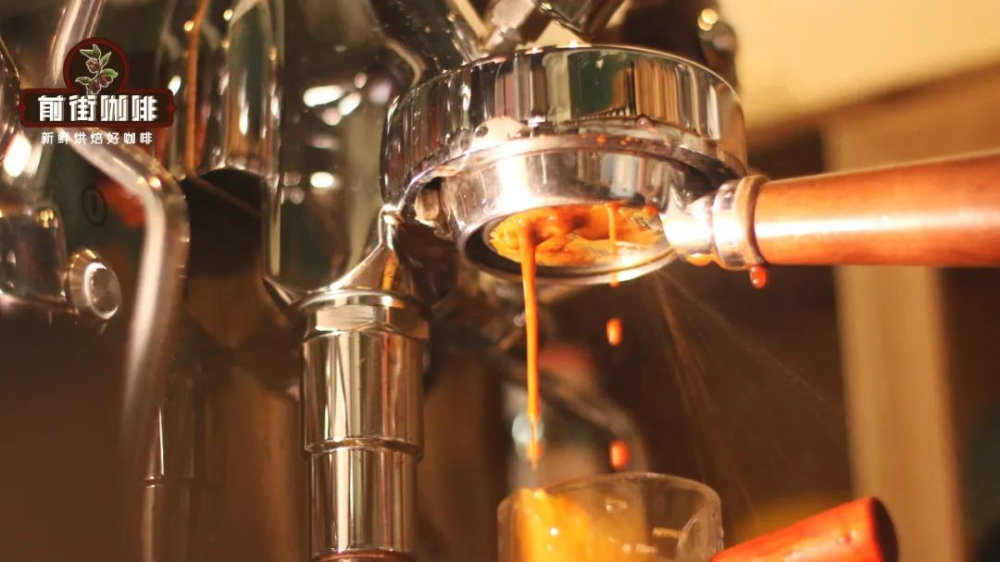
(The coffee liquid "escaping"~)
At this point, if you are using a bottomless portafilter, you will clearly see this part of the coffee liquid quickly become lighter and whiter, and the later the release, the more violent the state becomes, even splashing everywhere. This is what baristas often call "channeling."
Spraying is only the surface phenomenon. The real problem caused by channeling is uneven extraction. After removing the portafilter, you sometimes see residual water in the filter basket, or small holes on the surface of the coffee grounds. In terms of taste, it shows as insufficient aroma, low body, miscellaneous flavors, and unpleasant sensations such as sharp acidity, watery mouthfeel, burnt bitterness, and astringency.
What factors trigger channeling?
Whether watching video tutorials or reading popular science articles, the importance of distribution is always repeatedly emphasized. The purpose of distribution is actually not complicated: to spread the coffee grounds flat and evenly in the filter basket so that hot water can pass evenly through every coffee particle and allow their extraction levels to be as synchronized as possible. But the more seemingly simple a step is, the easier it is to overlook in actual operation.
It should be noted that channeling does not only appear as holes in the puck; gaps between the puck and the inner wall of the filter basket also count as channeling. If you knock the portafilter after distribution, that is often the culprit causing "holes."
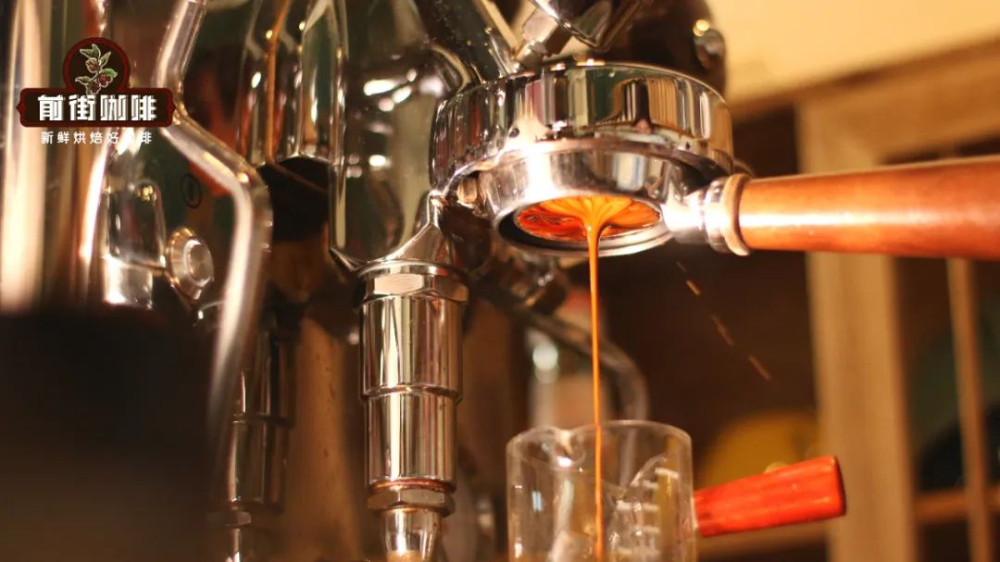
In principle, assuming even distribution, the greater the resistance encountered by the water flow, the slower the flow rate, and the extracted flavor is usually richer. However, when the coffee is ground too fine, the density of the coffee bed after tamping becomes very high, creating great resistance to the water flow. During actual extraction, the high-pressure hot water is eager to find an outlet, so it penetrates through the relatively fragile positions in the puck, or secretly slips out along the edge of the filter basket.
If you are unsure whether the grind setting is appropriate, you can use the espresso extraction formula to help judge: a 1:2 coffee-to-liquid ratio, with time controlled at 25-30 seconds, and the dose determined by the filter basket capacity. For example, the reasonable capacity of the filter basket used by Front Street is 20g, so use 20g of coffee grounds to extract 40g of coffee liquid, keeping the time between 25-30 seconds. If the coffee liquid is slow to drip out (more than 7 seconds), the final extraction time also exceeds 35 seconds, and the latter stage of the espresso is obviously pale, then it indicates that the grind is too fine, causing the flow rate to be too slow, and the coffee needs to be ground coarser.
When grinding espresso coffee, intense friction generates static electricity (the grinding quality of the grinder also has an effect), and the result is that lighter coffee particles attract each other and clump together, forming lumps. This is especially common on rainy days with higher humidity, and when grinding dark-roasted beans rich in oils.
Reading this, some people may think: since using a bottomless portafilter to make espresso is more prone to spraying, if I switch to a spouted portafilter, won't everything be fine?
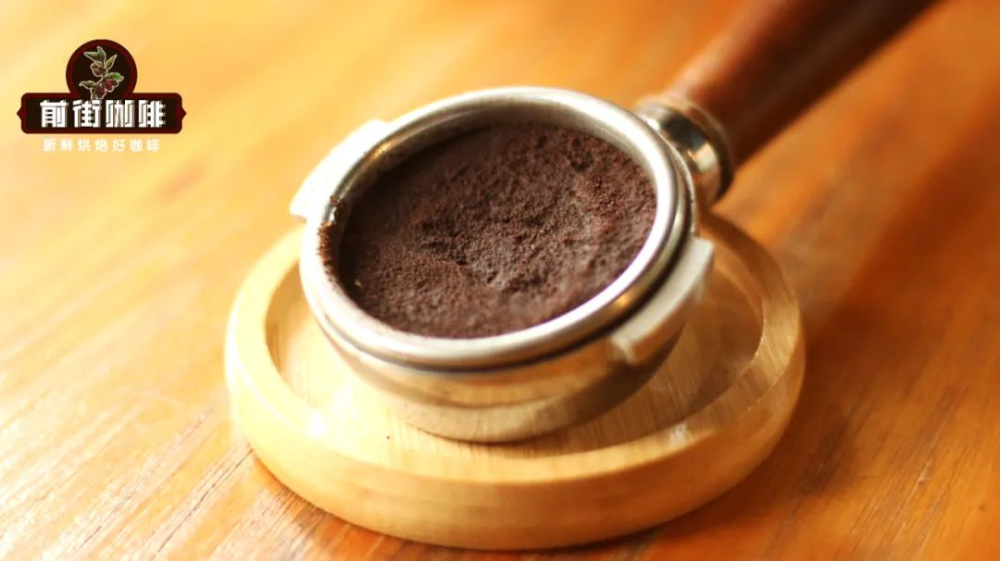
Therefore, "switching to a spouted portafilter to avoid channeling" is essentially just burying one's head in the sand~
Front Street Coffee
No. 10 Bao'an Qian Street, Yandun Road, Dongshankou, Yuexiu District, Guangzhou, Guangdong Province
The above content is compiled by CoffeeHunters, a coffee news website.


