








Why Do Blooming Bubbles Cause Channeling in Pour-Over Coffee
Bubbles rising from the coffee bed during blooming often point to clumped fine particles, or fines, that release carbon dioxide too quickly when hot water touches them. The bubbles push upward and leave deep holes behind. Water then follows those paths of larger gaps, creating channeling and an uneven extraction rather than an even saturation of the grounds.
How long to grind coffee beans matters as much as the setting itself. Pour-over and espresso differ in how channeling plays out, but the fix overlaps. Spraying water on the beans before grinding reduces static, and a distribution needle breaks up the coffee bed before brewing. Both steps lower the chance of clumping and channeling, giving more consistent results from one brew to the next.
Bloom is the key step in pour-over coffee that allows the coffee grounds to degas and expand, but sometimes we see bubbles continuously rising from the surface of the coffee bed, even leaving deep holes behind. This phenomenon is often related to clumping of fines and uneven pouring, and it can trigger channeling, leading to uneven extraction. This article will analyze in detail the causes of bubbling during blooming, the specific impact of channeling on extraction, and the differences between pour-over and espresso in this regard. At the same time, we will also share two practical tips—spraying water before grinding to eliminate static, and using a distribution needle to break up the coffee bed before brewing—to help everyone reduce channeling and improve brewing consistency. If you also pursue more even extraction, read on.
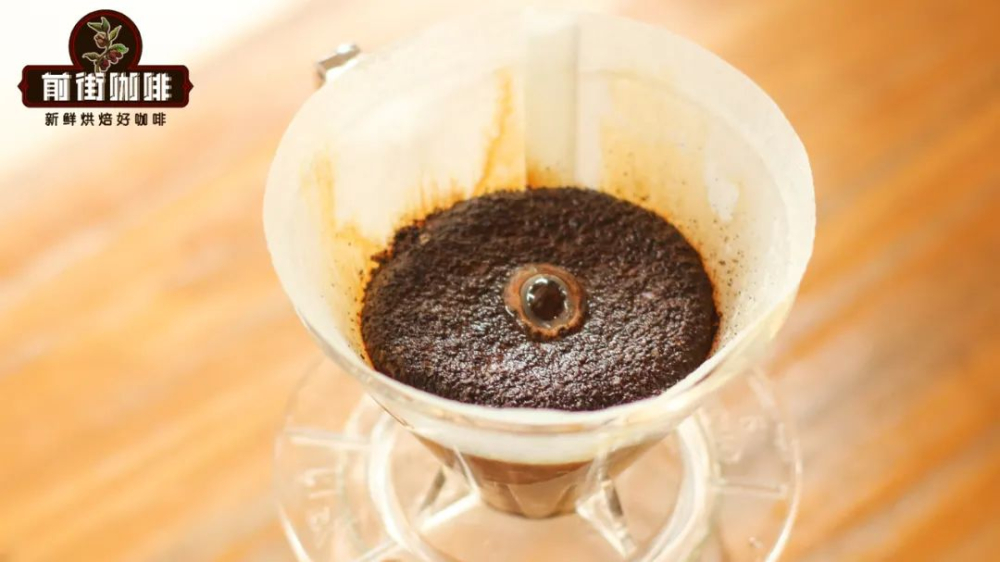
People often talk about "blooming," which is actually the step of pouring a small amount of hot water into the coffee bed so that the coffee grounds release gas and expand. The "hamburger" formed after blooming is exactly the shape created by the expanded coffee grounds together with carbon dioxide holding it up.
Because the amount of water poured is not large and the contact time with the coffee grounds is relatively short, most of the carbon dioxide can only be released slowly, which is also why blooming usually needs to last about thirty seconds.
However, this rule only applies to coffee grounds with a normal particle size.
If there happens to be some extremely fine particles at the bottom of the coffee bed that have clustered together, then they are like "sensitive skin"—the moment they touch hot water, they react immediately, expanding rapidly and releasing a large amount of internal carbon dioxide, even if what they are touching is hot water that has already cooled down (in reality, it is already coffee liquid).
Because the amount of carbon dioxide released is too large, under the wrapping of oils, small bubbles form one after another. These bubbles keep rising, floating to the surface where we can see them: one, two, three, appearing in succession. After that, the path along which the bubbles rise becomes a channel. Once the bubbles burst, we can see a deep hole on the surface of the coffee bed.
Why is this situation unwelcome?
Because water is naturally lazy—it will preferentially choose the place with larger gaps that is easier to pass through.
Once such holes appear during blooming, they can lead to uneven extraction. A large part of the hot water poured during blooming may flow away through this gap, because the space here is larger and the water flow is smoother. As a result, the other coffee grounds that have not been fully saturated with water cannot fully degas, and during subsequent pouring, due to differences in the degree of blooming, extraction efficiency will also vary. This is what we often call channeling.
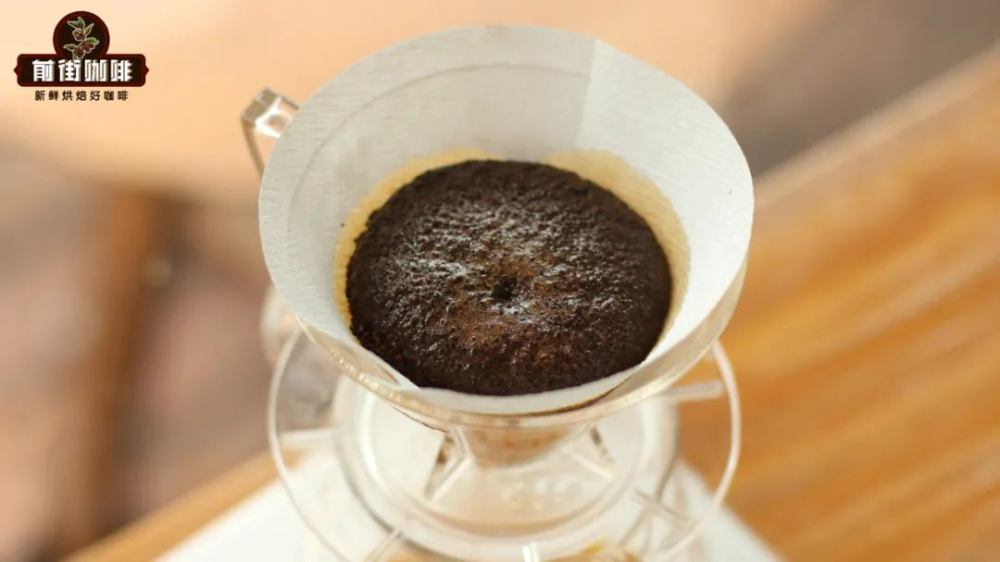
In addition to clumping of fines, uneven pouring during blooming and uneven distribution of coffee grounds can also cause channeling. There is a saying that sums it up very well: places that bubble do not necessarily have channeling, but places that continuously bubble will definitely form channels. Once a channel forms, the degassing of the coffee bed will differ, which in turn leads to uneven extraction. So many friends do not want to see a large number of bubbles after blooming.
However, for pour-over coffee, although the impact of channeling exists, it is not that serious. Because pour-over extraction takes a longer time, it can to some extent soften the extraction differences caused by channeling. What we often call "channeling has a serious impact" refers more to espresso extraction. Because the coffee machine needs to quickly extract substances from the coffee grounds in a very short time, the extraction efficiency is extremely high, so it is very sensitive to channeling.
Of course, many friends strive for perfection. To reduce the impact of channeling on brewing, we can start from the following aspects.
1. Spray a small amount of water before grinding
If the cause is that the grind is too fine, or the weather is dry and there is too much static, causing fine particles to clump, then what we need to do is eliminate static and not give the fines a chance to clump. The method is simple: spray a small amount of water before grinding the coffee beans, and it can reduce the clumping of fines during grinding.

But note, do not spray too much water, to avoid the grinder burrs rusting due to residual moisture, which would not be worth the loss.
2. Make the coffee grounds evenly distributed before brewing
If the channeling is caused by uneven distribution of coffee grounds, then before brewing we can use a distribution needle or other needle-like tool to break up the coffee bed and make the coffee grounds evenly distributed. This can reduce the formation of channels.
The above content is compiled by CoffeeHunters, a coffee news website.


