







Why Robusta Coffee Beans Are Facing a Fourth Year of Shortage
July-delivery robusta coffee futures have climbed to about $3,917 per tonne, close to the $4,000 mark, after reaching a record $4,399 in April and then falling back to $3,440. Drought in Vietnam and four consecutive rainless weeks in Brazil's main growing regions are tightening supply, with new beans running small.
A Volcafe report projects Vietnam's 2024/25 robusta production at 24 million bags, the lowest in 13 years. Vietnam's coffee association expects a 20 percent output decline for the season. Combined with concerns about La Niña, global robusta beans are headed for a fourth straight year of supply shortage.
In April this year, robusta coffee futures soared to a historic peak of $4,399 per tonne, then briefly fell back to $3,440 per tonne as export data from Brazil and Vietnam improved and ICE inventories recovered. Recently, however, weather problems in Brazil and Vietnam have shown no sign of easing, and July-delivery robusta futures have once again climbed sharply, currently quoted at $3,917 per tonne, just a step away from the $4,000 mark. A Volcafe report predicts that Vietnam's 2024/25 robusta production may fall to 24 million bags, the lowest in 13 years; Brazil's main producing regions have gone four consecutive weeks without rain, and new beans are on the small side; the market is also worried about the return of La Niña. With multiple factors overlapping, global robusta beans are expected to face a supply shortage for the fourth consecutive year.
In April this year, the coffee futures market experienced a sharp rally, with robusta coffee beans setting a new all-time record, reaching as high as $4,399 per tonne.
The reason robusta futures prices kept climbing at that time was rooted in drought in Vietnam leading to reduced production. According to a report by the Vietnam Coffee and Cocoa Association, the country's coffee output in 2024/25 will decline by 20%, and exports will shrink accordingly.
By early May, however, Brazil and Vietnam, the two major coffee-producing countries, released April export data showing growth in both production and exports, and coupled with a rebound in coffee inventories published by the Intercontinental Exchange (ICE), market tensions eased somewhat, and robusta coffee futures prices fell back to $3,440 per tonne.
But recently, because weather conditions in Brazil and Vietnam have still not improved substantially, coffee prices have once again risen sharply. At present, the price of July-delivery robusta futures has risen to $3,917 per tonne, approaching the $4,000 mark.
Coffee trader Volcafe pointed out in a report that Vietnam's 2024/25 robusta coffee production may be only 24 million bags, the lowest level in 13 years, mainly due to earlier drought and insufficient rainfall in Vietnam.
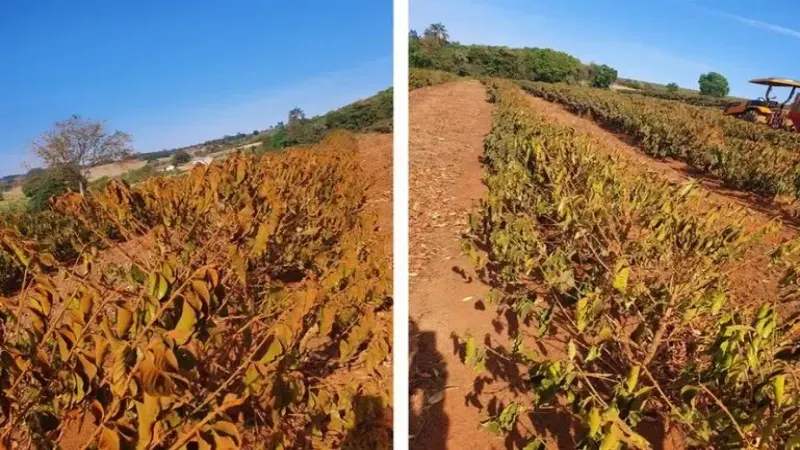
Although there was rain in early May, the drought has not been effectively alleviated. Data from Vietnam's meteorological bureau shows that in the past 10 days, rainfall in Vietnam's Central Highlands was 195.6 millimeters, 41% below average, causing serious damage to coffee trees that are in the flowering stage, with phenomena such as wilting, which in turn drags down coffee production for the next season.
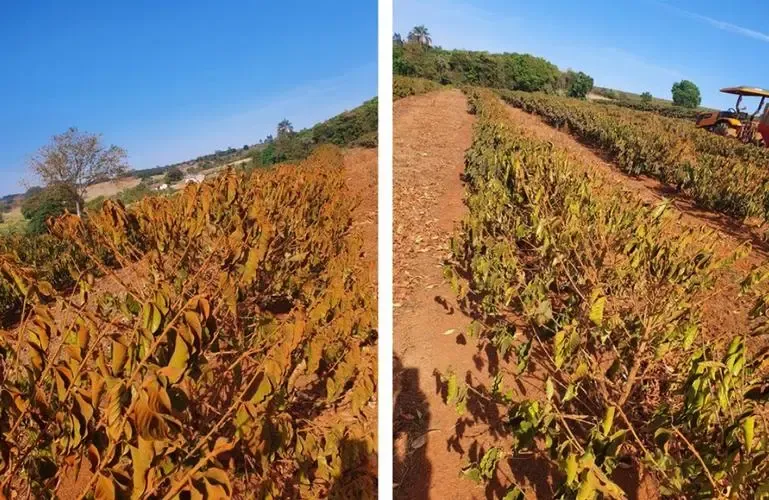
Meanwhile, in Brazil, according to meteorological authorities, Minas Gerais state, the main coffee-producing region, has had not a drop of rain in the past week, marking the fourth consecutive week without rainfall in the area.
Although Brazilian robusta has entered the harvest period, local coffee farmers report that the coffee beans currently harvested are smaller than last year. To fill a 60-kilogram sack requires more coffee beans, so robusta production is expected to be 5%-10% lower than market expectations.
In addition, the market is also worried that La Niña will return in summer (June to August). This phenomenon causes widespread and sustained abnormally cold sea surface temperatures in the eastern and central equatorial Pacific, which may cause severe weather in many countries and ultimately affect coffee production.
Based on the above factors, Volcafe also predicts that the global robusta bean supply shortage in 2024/25 will reach 4.6 million bags. Although this figure is narrower than the 9 million bags in 2023/24, robusta has seen a supply shortage for the fourth consecutive year. Driven by various factors, robusta futures prices have now entered an upward channel and will continue to maintain an upward trend in the future.
Robusta is the base bean for instant coffee and blended coffee. Although professional baristas do not seem to favor it, it truly affects the price trend of coffee beans every year.
The above content is compiled by CoffeeHunters, a coffee news website.


