







How Do Filter Cone Materials Shape Coffee Extraction?
Filter cone material changes coffee extraction mainly through temperature control, not price. Thermal conductivity sets how fast heat moves, while specific heat capacity sets how much heat a material stores. Metal transfers heat fastest and also loses it fastest, ceramic holds more heat but needs thorough preheating, and glass sits in between.
Resin absorbs heat slowly, so it barely shifts water temperature during brewing. Because of these differences, V60 versions in different materials also pour at different flow rates. Front Street Coffee advises adjusting the coffee formula and brewing strategy to the cone in hand instead of copying online recipes.
Coffee filter cup materials on the market are diverse, with resin, glass, ceramic, and metal each having their own adherents, but what substantial impact do different materials actually have on brewing? Many people's first reaction is the price difference, but setting aside the selling price, the most core difference between materials lies in their ability to control temperature. Thermal conductivity determines the speed of heat transfer, while specific heat capacity relates to how much heat an object can store. These two physical parameters work together to directly change the temperature performance of hot water during the extraction process. Metal conducts heat fastest but also dissipates heat quickly, ceramic has high specific heat capacity but requires sufficient preheating, glass performs moderately, and resin, due to its slow heat absorption, hardly affects water temperature. In this article, Front Street Coffee will break down the characteristics of four common filter cup materials one by one, and combine the actual differences in flow rate among different material versions of the V60, to help everyone understand why you cannot simply copy extraction formulas from the internet, but should flexibly adjust your brewing strategy according to the material of the filter cup in your hands.
What difference do filter cups of different materials make? It must be the price~ Setting aside price for now, the biggest difference between filter cups of different materials is their temperature control. After all, each material has different thermal conductivity and specific heat capacity. What is thermal conductivity? Simply put, it is the speed at which heat energy is transferred (carried away) between objects. Two objects that collide with each other will eventually reach the same temperature. The higher the thermal conductivity, the faster they reach the same temperature! For example, when we touch something in daily life and feel its warmth or coldness, it is not because of the object's actual temperature, but because it absorbs heat energy from us or transfers heat energy to us. When the object's thermal conductivity is higher, the faster it can absorb or carry away heat energy. We can imagine touching a piece of 100°C metal and a piece of 100°C rubber. Although both will burn your hand, the metal will definitely make us feel the burn faster because its thermal conductivity is higher. Applying this principle to brewing is the same!
During brewing, we use hot water to extract the aromatic substances from the coffee grounds, and the hot water flows along the coffee grounds to contact the filter cup. At this time, because the temperature difference between the filter cup and the hot water is too large, the filter cup will absorb heat energy from the hot water! The higher the thermal conductivity of the filter cup, the faster it absorbs heat energy from the hot water. What is specific heat capacity? Specific heat capacity is easy to understand—it is the heat capacity of an object. When we want to raise an object to a certain temperature, the higher the object's heat capacity, the more heat it needs to reach that temperature. For example, preheating coffee cups made of different materials, ceramic and metal: a metal coffee cup often reaches the target temperature the moment it contacts heat energy, while ceramic must be heated for a long time before it can reach the target temperature. This is because their specific heat capacities are different. Secondly, the level of specific heat capacity also determines heat storage capacity. The lower the specific heat capacity of an object, the stronger its heat dissipation ability—in other words, the worse its insulation ability.
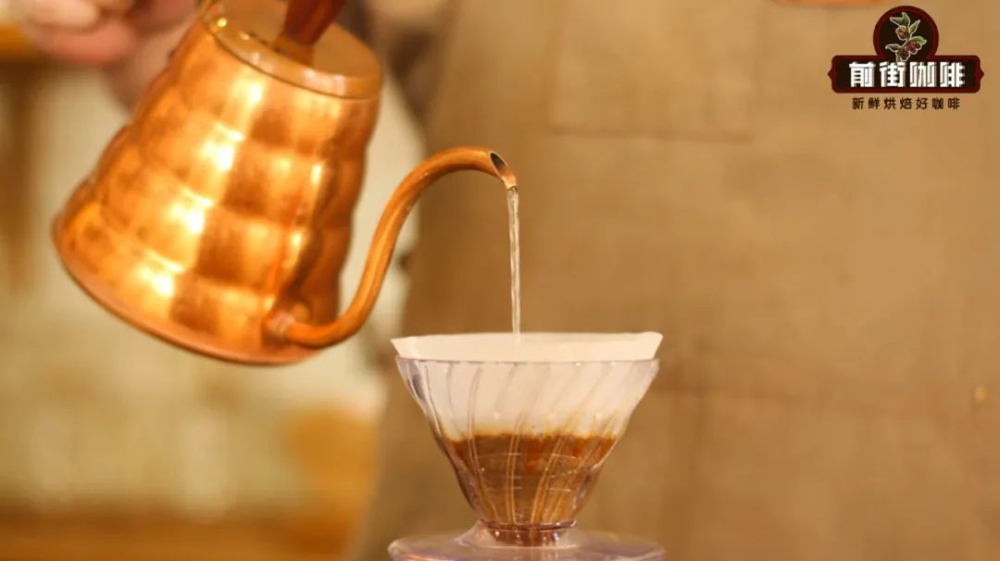
Once we understand the above two points, we can understand how the material of the filter cup affects extraction! When hot water travels from the coffee grounds to the filter cup, the filter cup begins to absorb heat from the hot water until the filter cup itself reaches the same temperature as the hot water, and this mainly depends on the filter cup's thermal conductivity and specific heat capacity. When the filter cup's heat capacity is higher, it will absorb more heat energy; relatively, the hot water's heat energy will decrease accordingly, which is equivalent to the hot water's extraction efficiency also decreasing, ultimately affecting extraction. Currently, the more commonly used materials for filter cups on the market are: resin, glass, ceramic, and metal. Their ranking by heat conduction speed is: metal > ceramic > glass > resin, and their ranking by specific heat capacity is: resin > ceramic > glass > metal (this is also related to their volume). Based on the above theory combined with this formula, we can derive the characteristics of filter cups of different materials: Metal filter cups have fast heat conduction and low specific heat capacity, so even if brewing without preheating, they will not take away too much heat energy—that is, they will not greatly affect the hot water's extraction efficiency. But if you preheat it, because of its fast heat dissipation, the preheating effect will quickly fade. Therefore, if you need to preheat it, then you should start brewing as soon as possible after preheating.
Ceramic filter cups also conduct heat relatively quickly, but because their specific heat capacity is higher, without preheating they will absorb a large amount of heat energy from the hot water, reducing the hot water's extraction efficiency and thus causing differences in the overall extraction. However, if they are fully preheated before brewing, then due to slow heat dissipation, they can maintain good insulation throughout the entire process, giving the whole brew higher extraction efficiency. Of course, this can easily lead to over-extraction.
Glass filter cups, because of their slower thermal conductivity and low heat capacity, do not have too great an impact on the hot water's extraction efficiency.
Resin filter cups are quite special! Although their heat capacity is relatively high, because they absorb heat extremely slowly, they do not affect water temperature much. Even without preheating, they will not have much impact on the brewing water temperature.
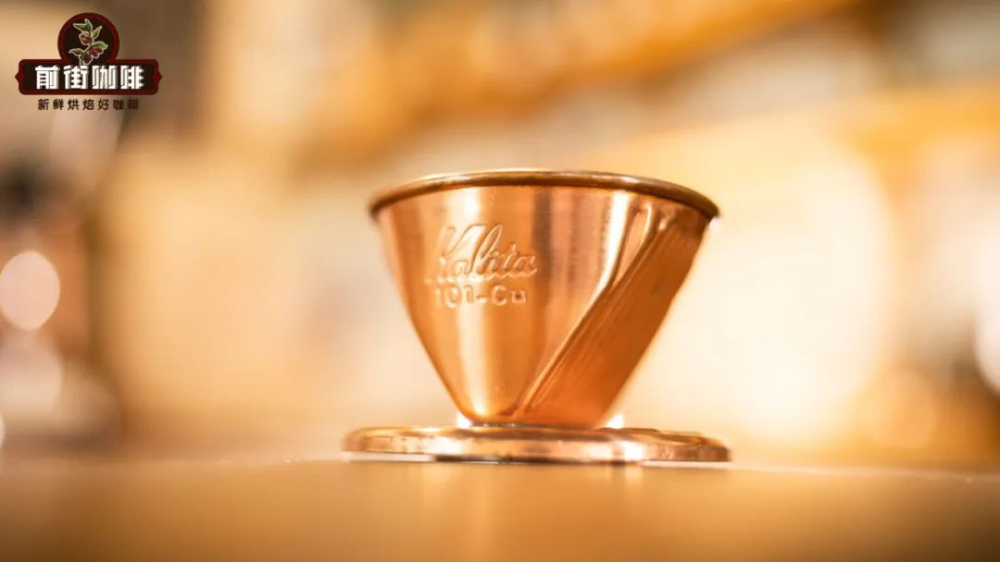
So from the above, we can understand how filter cups of various materials affect brewing. Front Street Coffee would also like to remind everyone here: even if they are all V60 (or other filter cups), because the manufacturing processes used for different materials are different, the designs of the filter cups are not completely identical.
For example: all are V60, but the metal V60 has a faster flow rate than the ceramic V60, and the ceramic V60 has a faster flow rate than the resin V60. This is due to differences in craftsmanship, resulting in certain discrepancies in the prominence of their guiding ribs and the overall size of the filter cup. Therefore, we cannot completely apply extraction formulas from the internet to brew coffee, because differences in material will affect extraction efficiency in multiple ways.
The above content is compiled by CoffeeHunters, a coffee news website.


