







What Defines Green Coffee Beans From Kenya's Kirinyaga Region?
Kirinyaga in central Kenya is a recognized quality region, and this article covers its geography and climate, flavor profile, and the operations and quality control of local exporter DORMANS. Kenya grades green coffee beans by official screen size and by industry cup-testing standards.
Kirinyaga sits on high plateaus with volcanic soil, abundant sunshine and moderate rainfall. Front Street Coffee cupped the washed Kirinyaga beans it sourced and recorded notes of blackberry, dark plum, cherry tomato and citrus. The grading system helps buyers and fair trade coffee farmers describe quality clearly.
African coffee enjoys a stellar reputation in the global market, and Kenya, as Ethiopia's neighbor, is likewise a quality-producing country that cannot be overlooked. This article focuses on Kenya's famous Kirinyaga producing region in central Kenya, introducing its geographical and climatic conditions, coffee flavor characteristics, and the operating model and quality control of the well-known local exporter DORMANS. It also outlines Kenya's green coffee bean grading system, including official size grades and industry cup-testing grading standards. Finally, it shares the cupping performance of the Kirinyaga washed beans procured by Front Street Coffee, delivering flavor notes of blackberry, dark plum, cherry tomato, and citrus.
African coffee occupies a fairly important position in the global coffee market, not only because Ethiopia is widely regarded as the birthplace of coffee, but also because many excellent coffee-producing countries are distributed across the African continent, and Kenya is one of Ethiopia's neighbors.
Kenya
Kenya is located in East Africa, with the equator passing through its center, and it borders Somalia, Tanzania, Uganda, Ethiopia, and South Sudan.
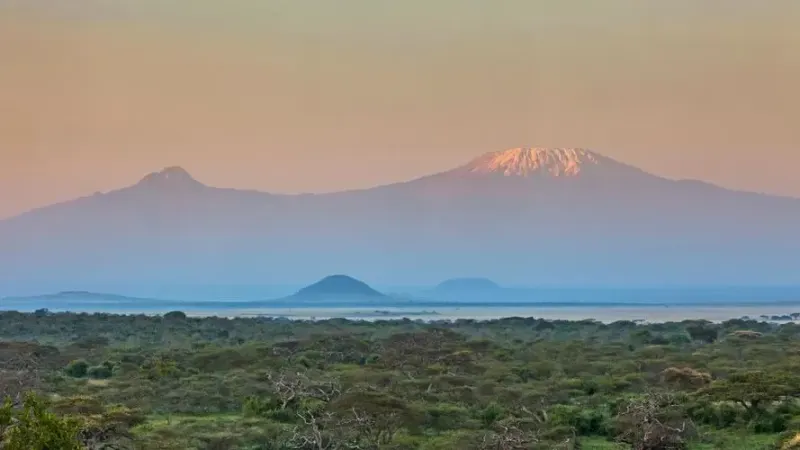
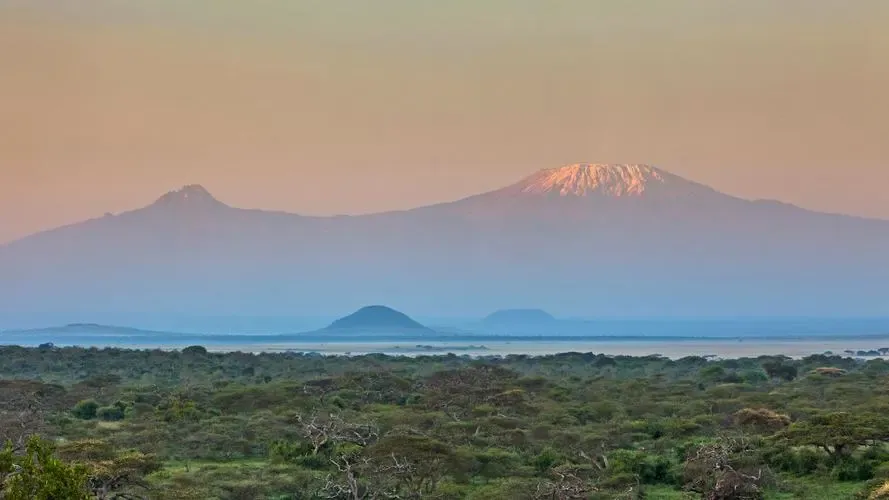
The country's terrain is dominated by plateaus, with an average elevation of about 1,500 meters, and only the coastal strip is plains. The eastern branch of the East African Rift Valley runs north to south through the plateau, dividing it into eastern and western highlands. Kenya has many lakes and numerous volcanoes, among which the extinct volcano Mount Kenya in the central highlands, at 5,199 meters above sea level, is the second-highest peak in Africa.
Kenya belongs to the tropical monsoon zone, with most areas having a tropical savanna climate. The coastal areas are relatively hot and humid, while the highlands have a mild climate. The rainy seasons are from March to June and from October to December each year. Annual temperatures range from 12 to 24°C, and annual rainfall decreases from 1,500 millimeters in the southwest to 200 millimeters in the northeast. High-altitude mountainous areas, volcanic soil, abundant sunshine, and moderate rainfall provide good conditions for the country's agricultural and tourism development.
Coffee-producing regions
Kenya has quite a few coffee-producing regions, mainly distributed in the southwest and center of the country, with a total of 14 producing regions: Bungoma, Embu, Kiambu, Kirinyaga, Kisii, Machakos, Meru, Mt. Elgon, Murang'a, Nakuru, Nyeri, Thika, Taita Taveta, and Trans-Nzoia. Among them, Nyeri, Kirinyaga, Murang'a, Kiambu, and Thika are the most famous.
Kirinyaga: This producing region is also translated as Kirinyaga and means "white mountain" in the local language, with an altitude between 1,300 and 1,900 meters. It is located in central Kenya, adjacent to the high-altitude Mount Kenya, and has fertile volcanic soil, abundant rainfall, and a cool climate. The coffee it produces is world-famous for its intense flavor, rich layering, and solid mouthfeel, and together with the Nyeri producing region, it is regarded as one of Kenya's two best producing regions at present.
Producers in this area are mainly smallholder coffee farmers who join cooperatives. The cooperatives provide wet mills, and the coffee farmers send the harvested coffee cherries to the cooperatives' processing plants for processing.
DORMANS
DORMANS is a very well-known company in Kenya's specialty coffee export sector and one of the country's largest coffee traders, headquartered in Nairobi, the capital of Kenya. Its business covers green bean processing, roasted bean processing, and international trade, spanning multiple coffee-producing regions in Kenya as well as coffee beans from Tanzania, and it has factories, warehouses, and processing plants in both Kenya and Tanzania.
DORMANS is known for excellent quality management. At the company's headquarters, about 1,500 cups of coffee are cupped and evaluated each week by a professional team to select high-quality coffee.
Kenyan grading
In some information about Kenyan coffee beans, labels such as "AA, AB, FAQ" are often seen. This is in fact the same grading system used for Kenyan coffee whether sold domestically or exported. The grading uses coffee bean size and quality as indicators, with clear regulations, and is divided into AA+, AA, AB, PB, C, E, TT, and T. Strict grading helps ensure coffee bean quality.
In addition, for green coffee beans of the AA and AB grades, the Kenya exporters and green bean merchants association has added cup-testing result grading beyond the official grading (not national official), in order: TOP, PLUS (+), FAQ. Based on the cupping performance of green beans and roasted beans, they score the coffee beans in three aspects: acidity, body, and flavor, with 1 to 3 points for each item. For example, a score of 1-1-1 means TOP grade.
At present, Front Street has purchased washed coffee beans from Kenya's Kirinyaga, from the Dorman processing plant, and conducted cupping. When smelling, there are blackberry and dark plum aromas; on the palate, there are berry, cherry tomato, and citrus flavors, with a green tea-like mouthfeel.
The above content is compiled by CoffeeHunters, a coffee news website.


