







How is Crystal Mountain coffee graded in Cuba?
Cuba grows coffee on hillsides and in valleys at 1,000 to 1,900 meters, mainly Typica plus Bourbon, Caturra, and Catimor, with harvest running from September to March. Crystal Mountain coffee stands out because its flavor is close to Jamaican Blue Mountain and it is highly regarded in the Japanese market as a top-grade variety.
Cuban crystal mountain sits within a nine-grade classification system that runs from Crystal Mountain down to peaberry, sorting beans by size, defect count, and cup quality. The island nation, whose Taíno name means fertile land, has made this grading and its tropical savanna climate the basis for its distinct Caribbean coffee profile.
The Caribbean region is home to numerous islands suitable for coffee cultivation, and Cuba is one of the producing countries that cannot be overlooked. This island nation, called "fertile land" in the Taíno language, thanks to its tropical savanna climate, abundant rainfall, and fertile soil, nurtures distinctly styled coffee on hillsides and in valleys at elevations of 1,000 to 1,900 meters. Cuba mainly cultivates Typica, but also has varieties such as Bourbon, Caturra, and Catimor, with the harvest period lasting from September each year to March of the following year. Among them, Crystal Mountain coffee draws much attention because its flavor is close to Jamaican Blue Mountain, and it is even highly regarded by the Japanese market as a top-grade variety. Through this article, Front Street Coffee will take you to understand Cuba's coffee-producing region distribution, variety structure, and the nine-grade classification system from Crystal Mountain to peaberry, fully presenting the coffee profile of this Caribbean island nation.
When it comes to island coffee, many people first think of Jamaican Blue Mountain or Hawaiian Kona. In fact, a large number of islands are scattered across the Caribbean Sea, and their soil and climatic conditions are very ideal for coffee cultivation, so this region has produced several coffee-producing countries, including Jamaica, Cuba, Haiti, and the Dominican Republic.
Cuba
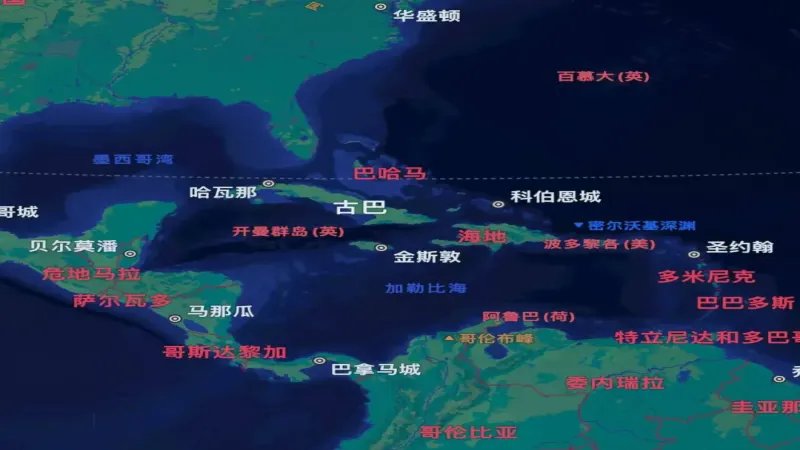
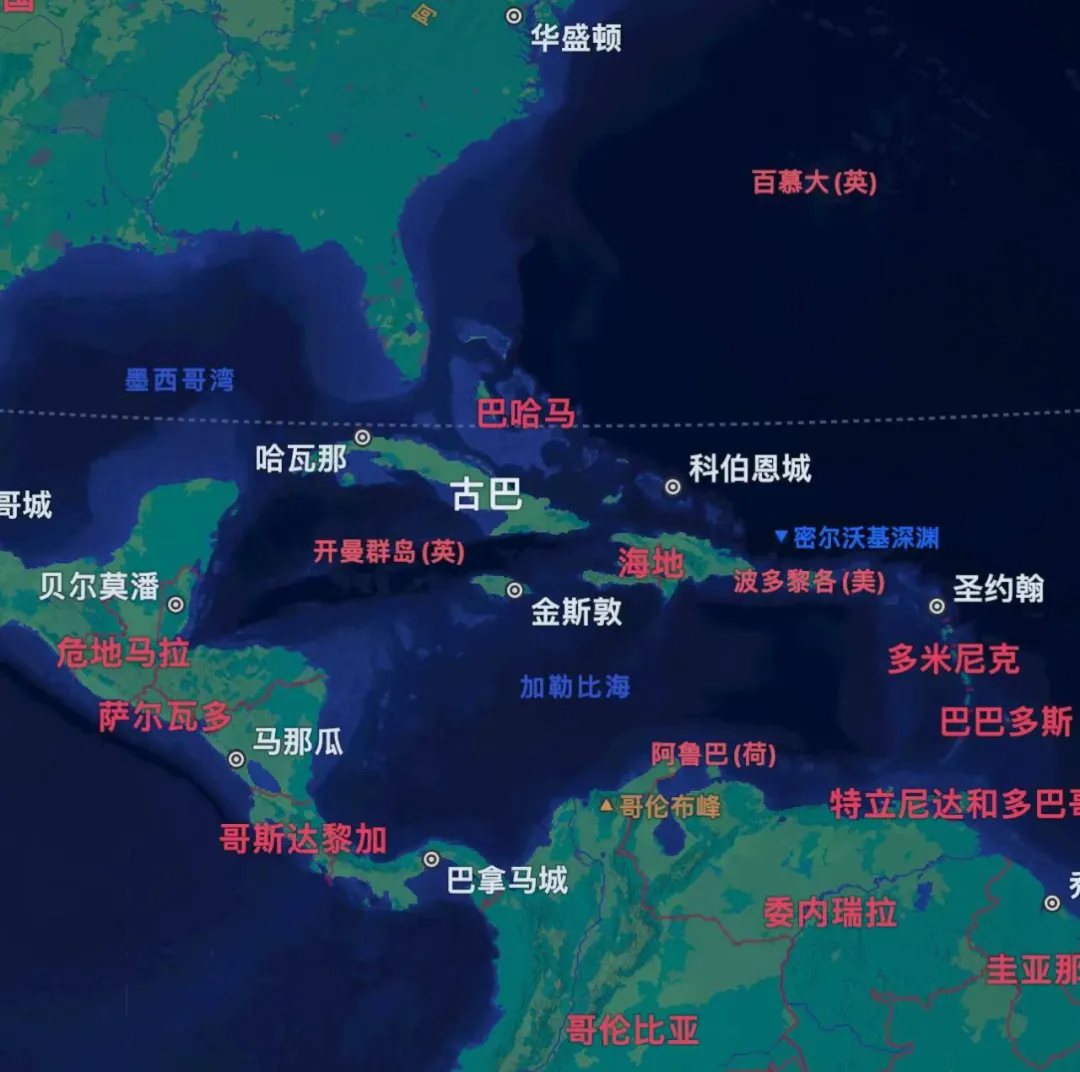
The country name of the Republic of Cuba comes from the Taíno word "coabana," meaning "fertile land." Geographically, Cuba is located in the northwestern Caribbean Sea of North America, at the entrance to the Gulf of Mexico, separated from the United States to the north by the Florida Strait, bordered by the Caribbean Sea to the south, about 140 kilometers from Jamaica, and adjacent to the Gulf of Mexico on the west, about 210 kilometers from Mexico, with a total land area of 109,900 square kilometers.
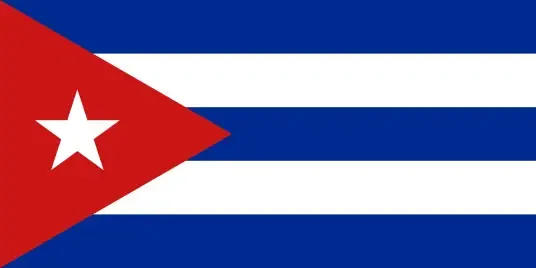
The Cuban flag is rectangular. On the left side of the flag is a red equilateral triangle, with a white five-pointed star in the center of the triangle, and the right side consists of three parallel blue wide stripes alternating with two white wide stripes. The red triangle and the five-pointed star were symbols of Cuba's secret revolutionary organizations in history, representing liberty, equality, fraternity, and the blood of patriots. The five-pointed star also symbolizes that Cuba is an independent nation, the three blue wide stripes correspond to the three provinces of the republic divided into East, West, and Central, and the white wide stripes imply the pure purposes held by the Cuban people during the war of independence.
Cuba's territory is composed of more than 1,600 islands, including the island of Cuba and Isla de la Juventud, making it the largest island country in the West Indies, with numerous volcanoes within its territory. In terms of terrain, plains account for 75% of the total area; the northwest, central, and southeast belong to plateaus and mountainous areas, among which Pico Turquino, at 1,974 meters above sea level, is the highest peak in the country; mountains account for 18%, while the west consists of hills and swamps, accounting for 7%.
Most of Cuba has a tropical savanna climate, divided within the year into a dry season (November to April of the following year) and a rainy season (May to October), with an annual average temperature of about 25°C. Except for a few areas, annual rainfall is generally above 1,000 millimeters. Fertile soil combined with abundant rain makes this place a natural treasure for coffee cultivation.
Coffee-producing regions
Cuba's coffee cultivation areas can be divided into three major parts, distributed respectively in hillside and valley zones at elevations of 1,000 to 1,900 meters. The eastern producing region mainly includes Santiago de Cuba and Granma, the central producing region covers Villa Clara, Sancti Spiritus, and Cienfuegos, and the western producing region is represented by Pinar del Río.
Cuba mainly cultivates Typica, and also grows varieties such as Bourbon, Caturra, and Catimor. September to March of the following year is the harvest period for Cuban coffee.
Among Cuban coffees, the relatively well-known one is Crystal Mountain coffee. Its flavor is similar to Blue Mountain, so it is often called "Cuban Blue Mountain" by many people. Cuba's highest-quality coffee-growing area is located in the Sierra Maestra mountain range. In addition to producing coffee, this area also contains precious minerals such as quartz and crystal, hence the name "Crystal Mountain."
Sierra Cristal, at an elevation of 900 to 1,200 meters, is located in northeastern Cuba and is Cuba's second-highest mountain range. Together with Sierra Maestra in the southeast and Sierra Escambray in the south-central area, it is listed as one of Cuba's three major specialty coffee-producing regions.
However, not all Crystal Mountain coffee circulating on the market is produced in the Sierra Cristal area; it may also come from the other two producing regions. The reason Crystal Mountain coffee got its name is related to its main exports to Japan, France, Italy, and Germany. The Japanese especially highly regard Crystal Mountain coffee, viewing it as the top-grade variety among Cuban coffees, and named it "Crystal Mountain coffee," a name that has been used ever since.
Cuban coffee grading system
The Cuban Coffee Association classifies coffee into nine grades based on bean size and flavor performance:
Crystal Mountain
Extra Turquino
Turquino
Altura
Montana
Cumbre
Serrano Superior
Serrano Corriente
Caracolillo
The grading of coffee beans from the producing regions is mainly based on bean size and can be divided into three categories: ETL (extra large), TL (medium), and AL (ordinary). Cuba's most proud high-quality large premium coffee beans are precisely Crystal Mountain coffee beans.
The above content is compiled by CoffeeHunters, a coffee news website.


