







How does the Wenzhou seaview café case reflect coffee culture?
A cliffside café facing the sea in Cangnan County, Wenzhou, has drawn criticism after tourists reported being stopped at the entrance. Staff holding a QR code asked visitors to scan and pay before entering the viewing platform. Tourists who only wanted to take photos called the no-entry-without-spending rule unreasonable, and the incident spread through videos shot on site.
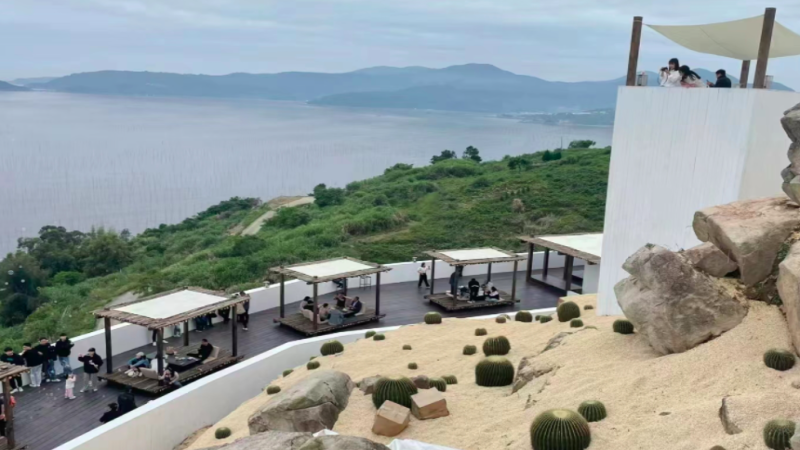
The café sits on a cliff edge in Nantou Village, with stairs down to the shop and white steps along the cliff face leading to a viewing platform over the sea. Its decor, location and sea-and-sky views made it a known photo spot after opening. The case raises how viral cafés balance foot traffic with operations, a recurring question in coffee culture.
In recent years, cafés have become popular check-in spots thanks to their unique locations and exquisite decor, but the management challenges that come with this have also sparked controversy. A cliffside café facing the sea in Cangnan County, Wenzhou, Zhejiang, has been questioned by some tourists for requiring visitors to scan a code and make a purchase before being allowed onto the viewing platform to take photos. Why did the shop set this threshold? And what is netizens' attitude? This article sorts through the whole incident and explores how viral cafés can find a balance between foot traffic and business operations.
▲
Click to follow | Daily specialty coffee culture magazine Coffee Works
These days, for a café to go viral, it is no longer limited to the quality of the coffee itself. Unique decor, a distinctive location, pet-friendly elements, and more can all become reasons that attract customers to visit and spend money.
A café located in Cangnan County, Wenzhou, Zhejiang, owes its rapid rise to local fame as a photo spot after opening precisely to its enviable location—facing the sea, with an open, sweeping ocean view. Many tourists make special trips just to capture a few stunning photos here.
However, recently, some tourists reported that before they had even set foot in the door, they were stopped by the café's staff and could not enter.
From videos shot by on-site witnesses, a staff member holding a QR code stands in front of the passage leading to the café, repeatedly explaining to tourists who want to enter: they must scan the code and pay before they can go to the viewing platform. This requirement left tourists who only wanted to take photos quite dissatisfied, as they felt the shop's rule of "no entry without spending" lacked reasonableness.
It is said that this café sits on the edge of a cliff in Nantou Village, Cangnan County. Guests can follow the stairs behind the staff member in the video downward to reach the café; they can also take the white steps built along the cliff face up to the viewing platform to listen to the sea, enjoy the view, and take photos as souvenirs.
With its unique design, exquisite decor, and the scenery where sea and sky merge into one, the café attracted many young people from the surrounding area to explore the shop after it officially opened, and the spacious viewing platform became a well-known excellent photo spot near and far.
However, as the number of tourists surged during the holidays, many people passing by this café saw the "Recommended Photo Spot" billboard at the stairway entrance and treated the viewing platform connected to the café as a free check-in spot, intending only to go up to take photos and enjoy the view, with no plan to enter the shop and spend money. It was precisely for this reason that the owner had no choice but to resort to this measure and arrange for employees to stand on the necessary path to stop people.
After the video was posted, most netizens expressed support. The viewing platform is a store feature carefully created by the café, and its very purpose is to use this excellent photo spot to attract guests who love photography and scenery. Therefore, many people believe that the viewing platform is essentially a for-profit venue, not a free scenic area in the eyes of tourists. If large numbers of tourists only want to take photos and enjoy the view without spending money, it is bound to affect the merchant's normal business operations.
"It's reasonable—it only became a check-in spot because they decorated it," "Absolutely no problem," "Isn't the whole point of the merchant opening at this location to attract customers to check in?"
Some netizens mentioned that the café has another branch nearby, which has likewise become a viral photo spot because of its unique architectural design and geographical advantage. But this branch gets flooded with huge crowds of tourists during holidays and becomes overcrowded. People who want to drink coffee cannot find seats, and people who want to take photos find that the background is full of people.
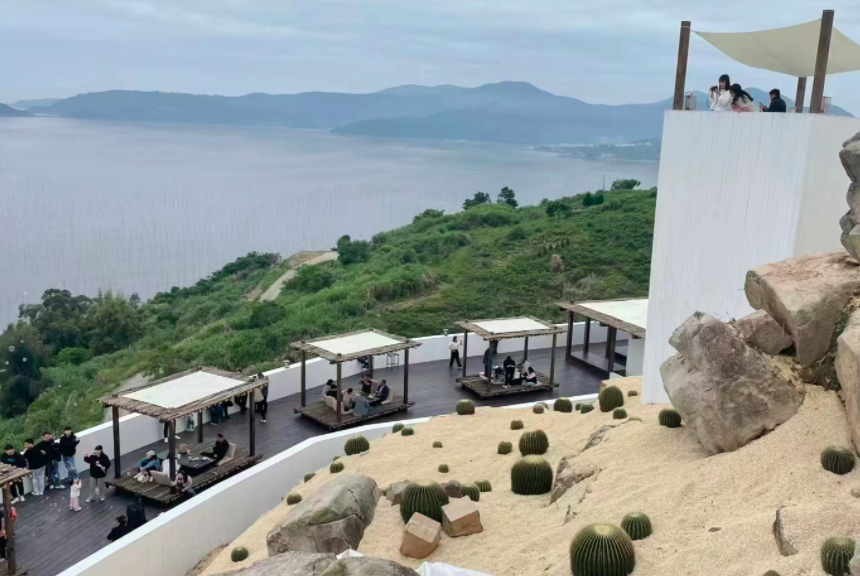
Perhaps it is precisely because of this precedent, and to avoid a similar situation repeating itself, that the newly opened store set the rule of "spend first, then enter." In this way, it can effectively control foot traffic, allow the café to maintain normal operations, and also ensure that customers entering the store have a good consumption experience.
Image source: Xiaohongshu
Disclaimer: Some images in this article are from the internet. For some content on the website, such as images, we will respect the original author's copyright and indicate the source. However, due to the large quantity, a few images and texts may not have been credited in time. Please forgive us. If the original author has any disputes, they may contact the website for handling. Once verified, we will correct it immediately. Compiled and edited by "Coffee Works." Please indicate the source when reposting. If there is infringement, please inform us for deletion. Thank you ~ !
The above content is compiled by CoffeeHunters, a coffee news website.


