







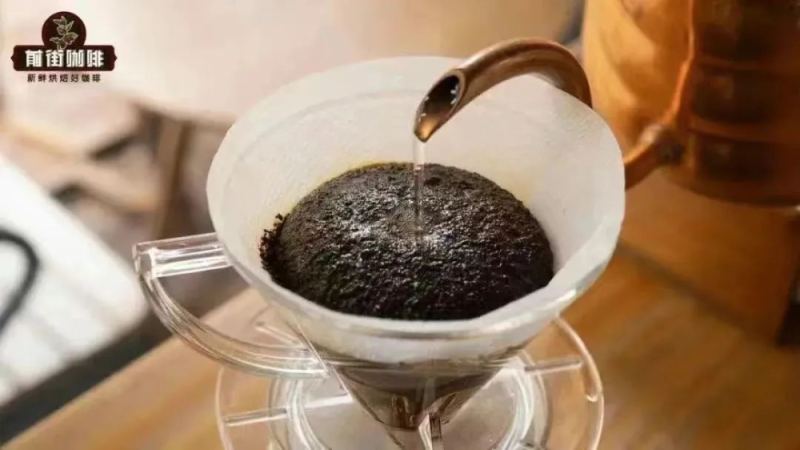
Why Does Japanese Dark Roast Coffee Use a Large Dose?
Japanese-style pour-over often starts with 20 grams or more of coffee. The reason is the deep roast itself: beans taken close to carbonization are brittle, loose in structure, and can leave the hand oily, so they extract fast and throw off many fines. A coarse grind tames that speed, and a large dose then slows the flow by thickening the coffee bed.
That combination produces the style known as high concentration, low extraction. The bigger dose restricts flow rate and raises strength without pulling out the harsh bitterness that over-extraction would bring. A long contact time draws out caramel aroma and a sweet finish instead. It also separates the Japanese coffee-to-liquid ratio from the usual coffee-to-water approach, since less water is used relative to the grounds.
Japanese-style pour-over often uses a large dose of 20g or more—what extraction logic lies behind this? Starting from the characteristics of the dark-roasted beans preferred by Japanese people, this article explains why they dislike bitterness, why they choose a coarse grind, and how a large dose slows the flow and increases concentration by adding thickness to the coffee bed, ultimately forming a "high concentration, low extraction" style. The article also compares the differences between the Japanese-style coffee-to-liquid ratio and the conventional coffee-to-water ratio, and points out how a long extraction time, combined with a large dose, brings caramel aroma and a highly sweet finish. If you are interested in the unique methods of Japanese brewing, or want to understand the concept of high concentration, low extraction discussed by Front Street Coffee, this article will give you a clear answer.
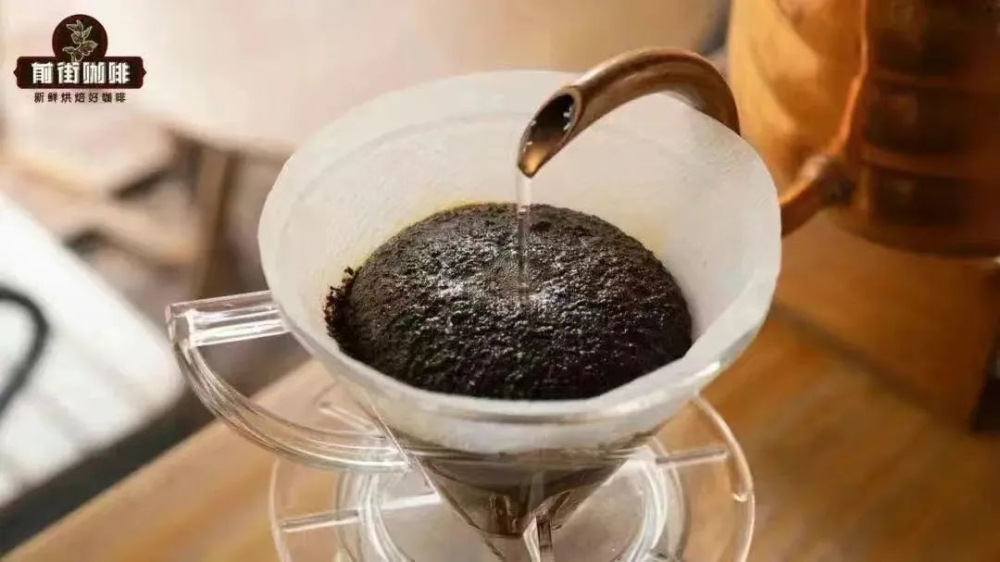
Why do Japanese-style brews all like to use a large dose?
The reason is actually not complicated—just like Front Street, they also can't stand bitterness. Although Japanese people have a particular fondness for dark-roasted coffee, what they are truly obsessed with is the caramel aroma, silky, full-bodied mouthfeel, and the sweetness that rises back after swallowing, all given by deep roasting. These are the charming qualities of dark-roasted beans, not the true bitterness produced by over-extraction.
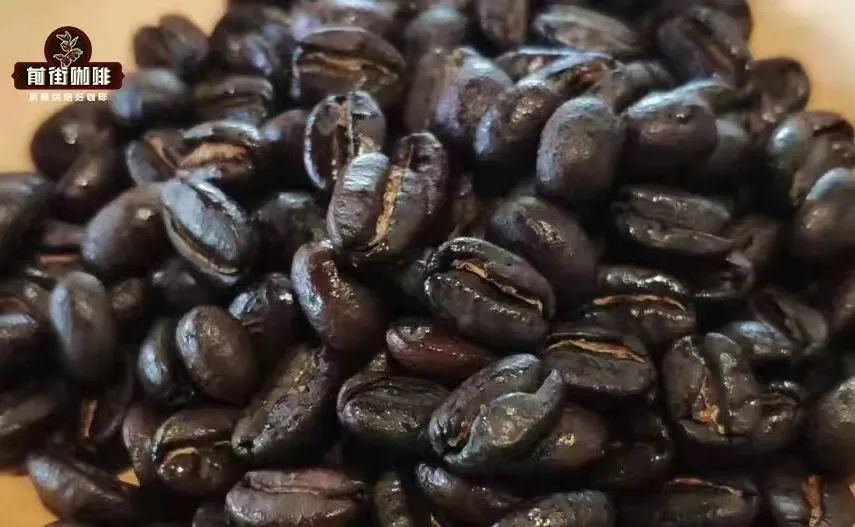
The roast level of coffee beans commonly used in Japan is famously dark. You can imagine dark-roasted beans close to the edge of carbonization—how loose their structure would be, so brittle they almost crumble at a touch, and they can even leave your hand oily. Such beans not only multiply extraction efficiency, but also easily produce a large amount of fines during grinding.
Therefore, a "coarse grind" must be used to reduce the amount of fines and avoid over-extraction.
Coarsening the grind, on the one hand, can reduce the number of times the coffee grounds are repeatedly cut, thereby lowering the proportion of fines; on the other hand, it also reduces the total surface area of contact between the coffee grounds and hot water, correcting the passively raised extraction efficiency back down. But this also has an obvious drawback—the gaps between the coffee particles greatly increase.
(After all, it really is ground very coarse!)
But at the time there was no slow dripper like Kono to slow down the flow rate. Once the gaps grew large, the water flowed quickly, and the essence of the dark-roasted coffee was hard to fully brew out. So the Japanese came up with a solution: relying on piling up the dose to reduce the seepage speed.
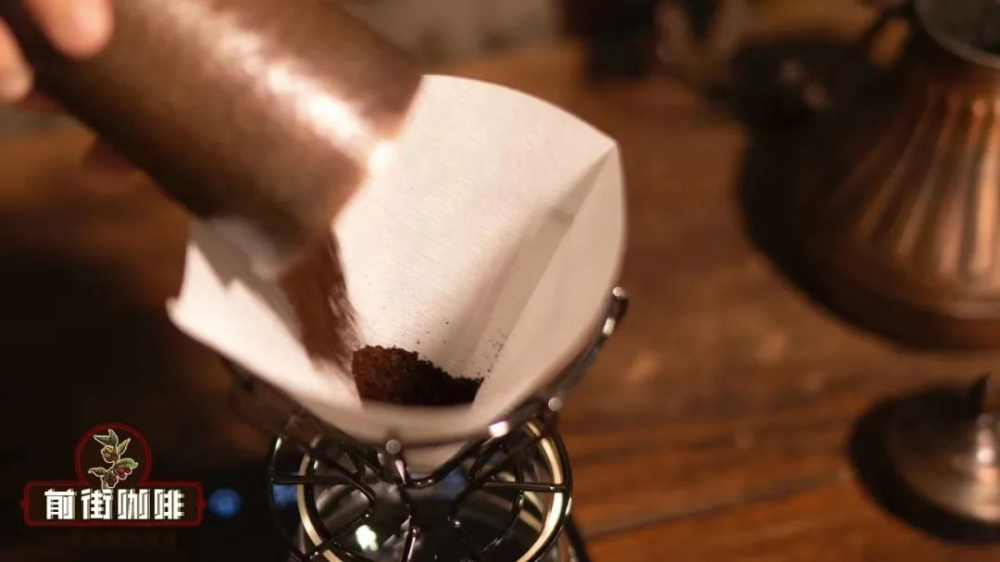
Once the dose is stacked up, the thickness of the coffee bed in the cloth filter or mesh filter increases. When the coffee bed becomes thicker, water has to spend more time passing through it, so the water can carry away more substances from the coffee bed.
But note that the amount of water did not increase along with the dose, so the resulting coffee liquid ends up with a relatively high concentration.
This is what we now often call "high concentration, low extraction." (To learn the specific meaning of high concentration, low extraction, you can go to this article → "High Concentration, Low Extraction")
The coffee-to-water ratio we commonly use now is generally 1:15 or 1:16, which allows the coffee to have a suitable concentration and extraction yield, making it easier to drink and more acceptable to people. The coffee-to-liquid ratio in Japanese-style brewing is usually 1:10 or even lower. In more extreme cases, such as Matsuya-style brewing, the coffee-to-liquid ratio can go to 1:5, after which water is added to dilute it. The reason for extracting in this way is likewise to avoid bringing out the bitterness of the tail end. Once the concentration is raised, the coffee no longer needs excessive extraction to obtain flavor substances.
Generally speaking, in addition to a large dose, Japanese-style brewing has another standard feature: a longer extraction time. In order to let this small amount of hot water extract the substances in the coffee to the maximum extent, they will appropriately slow down the flow, giving the hot water sufficient extraction time. While ensuring concentration, this also gives the coffee a relatively high sweetness. Although the final cup of coffee served is small in quantity, as long as you take one sip, you can feel the caramel aroma of deep roasting bursting in your mouth, a silky touch like Dove chocolate, and a very obvious high sweetness and sweet finish.
- END -
The above content is compiled by CoffeeHunters, a coffee news website.


