







What grind does coffee grinding analogy assign to each brewer?
Coffee grinding has no unified quantitative standard, so particle size is often described by comparing grounds with everyday ingredients. The named levels each stand for a range rather than one fixed value, which is what makes the analogy useful for adjusting a grinder and matching a brew method.
Caster sugar grind suits light-roast pour-over, coarse or white sugar grind fits medium-dark roast beans, and a sea-salt-like grind works for immersion methods such as the French press. Fine salt serves the fast extraction of the moka pot coffee grind, while flour-like grind splits into espresso and Turkish coffee.
There is no unified quantitative standard for coffee grinding, so enthusiasts often use everyday ingredients as analogies to quickly convey the concept of particle size. Common references like caster sugar, coarse sugar, sea salt, fine salt, and flour each correspond to different brewing methods and roast levels. This article goes through the particle size characteristics and suitable scenarios of these analogous grinds one by one: caster sugar is mostly used for light-roast pour-over, coarse sugar suits medium-dark roast beans, sea salt-like grind is suitable for immersion extraction methods like the French press, fine salt-like grind serves the fast-paced extraction of the moka pot, and flour-like grind is divided into two categories: espresso and Turkish coffee. The grind level described by each analogy is a range, not a single fixed value, and understanding this helps with more flexible grind adjustment.
However, there is no rigid standard to describe coffee grinding, so we often have to rely on analogies to explain the size of coffee particles. Although this approach covers a relatively broad range, it is indeed the most direct and easily accepted means of communication.
Besides the common coarse and fine sugars, the analogy method also borrows materials like fine salt, sea salt, and flour for comparison. To avoid leaving beginners who are just getting into coffee completely confused, today we'll briefly discuss what particle sizes of coffee grounds correspond to under different metaphors.
But one thing must be remembered: the grind level described by each analogy represents a range, not a fixed value.
Caster Sugar Grind
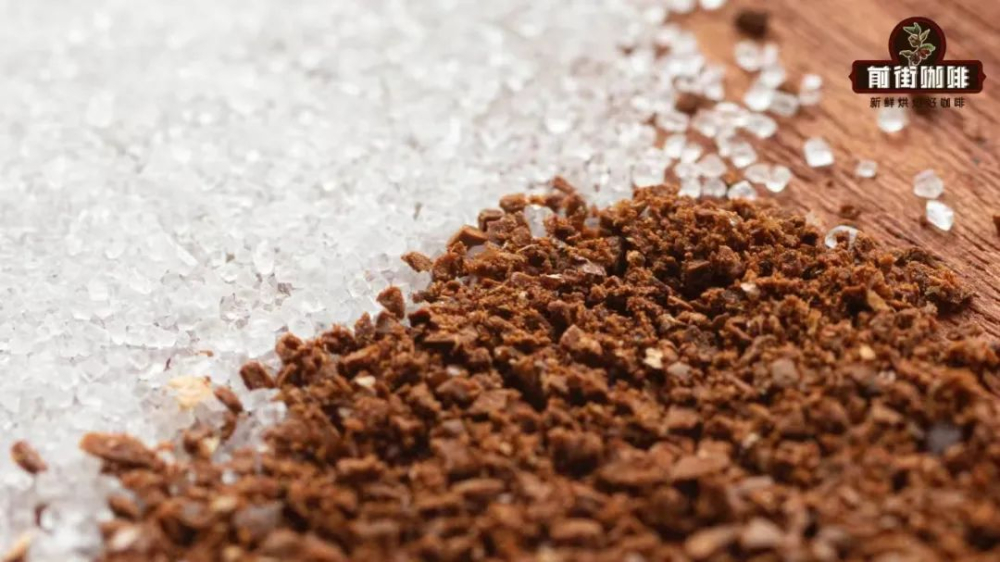
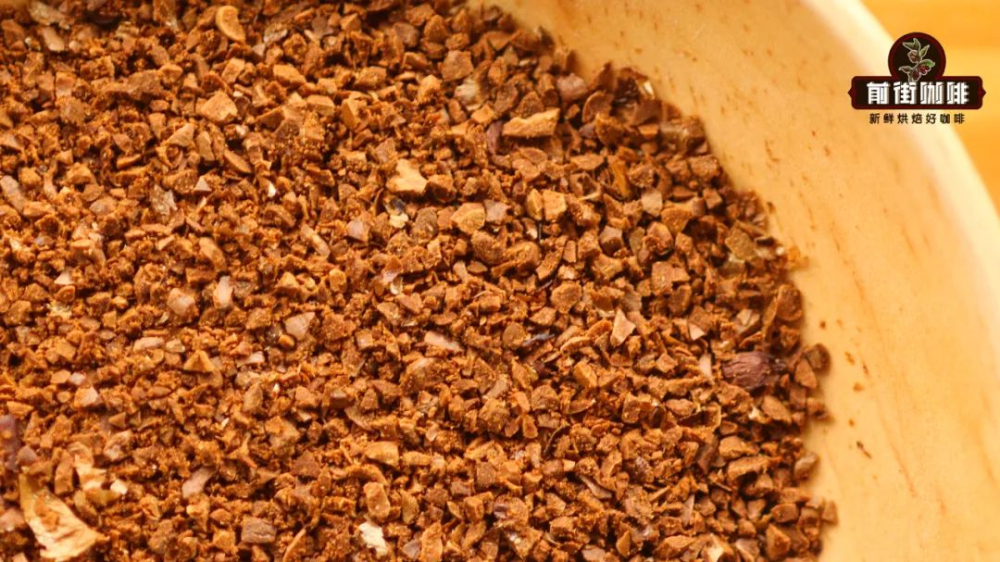
The most commonly heard description is caster sugar grind. Caster sugar feels softly granular when touched by hand, and the particle shapes are clearly visible; the coffee grounds used as an analogy have the same texture. This grind typically appears when making pour-over coffee with light-roast or medium-light roast beans. Because these beans have relatively high density and are difficult to extract, you need to increase the surface area and shorten the distance hot water travels through in order to more fully extract the aromatic components in the coffee.
Coarse Sugar Grind / White Sugar Grind
Coarse sugar grind is also called white sugar grind, and from the name you can tell it is coarser than caster sugar. Whether observed with the naked eye or touched by hand, its graininess is more pronounced than that of caster sugar grind.
However, you must compare carefully to distinguish it from caster sugar grind. This grind
is more suitable for medium-dark roast or dark roast coffee beans, because these beans have lower density and hot water can easily penetrate them. If the grind is too fine, it easily causes over-extraction, so instead you need to reduce the surface area and give the coffee some margin for error to prevent over-extraction.
Sea Salt-Like Grind
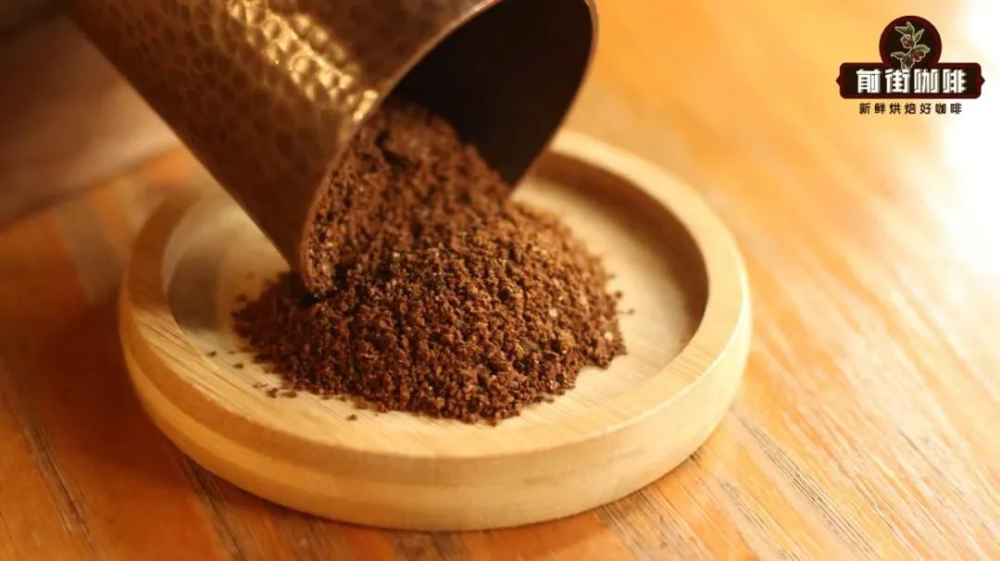
Sea salt is unrefined large-grain salt, with a particle size larger than coarse sugar. You can see clearly distinguishable large particles from its appearance. Because this type of coffee ground has a relatively large particle size, extraction efficiency is reduced, and it is mainly used for extraction methods that require long soaking, such as the French press and the Clever Cup.
Fine Salt-Like Grind
Fine salt is refined salt obtained by dissolving coarse salt and then recrystallizing it, with particles smaller than caster sugar. Although it looks distinct grain by grain, rubbing it with your fingers only gives a scattered granular sensation. Generally speaking, this type of grind is mainly paired with fast-paced extraction tools like the moka pot. Because the extraction time is short, the grounds need to be ground finer in order to extract enough flavor substances in the shortest time.
Flour-Like Grind
There are also differences among flours, such as high-gluten flour and low-gluten flour; different types lead to different particle sizes. Although they are all called flour, high-gluten flour is finer, while low-gluten flour is somewhat coarser. Generally speaking, espresso machines use the coarser type of flour-like grind, which looks very fine but feels slightly coarser than expected when touched.
The flour-like grind that feels dense and completely smooth, with no graininess, is the exclusive choice for Turkish coffee and Ethiopian coffee. Because the coffee grounds are not filtered out during preparation, it needs to be pounded repeatedly until the coffee powder is extremely fine enough not to affect the drinking experience.
- END -
The above content is compiled by CoffeeHunters, a coffee news website.


