







Where does java coffee come from in Bolivia's growing regions?
Bolivia's coffee comes almost entirely from the Yungas, a region that accounts for more than ninety percent of national output, with producing areas in Yungas, Copacabana, and La Paz Caranavi. The Java variety grown there is valued for strong disease resistance and distinctive flavor, alongside Typica and Caturra.
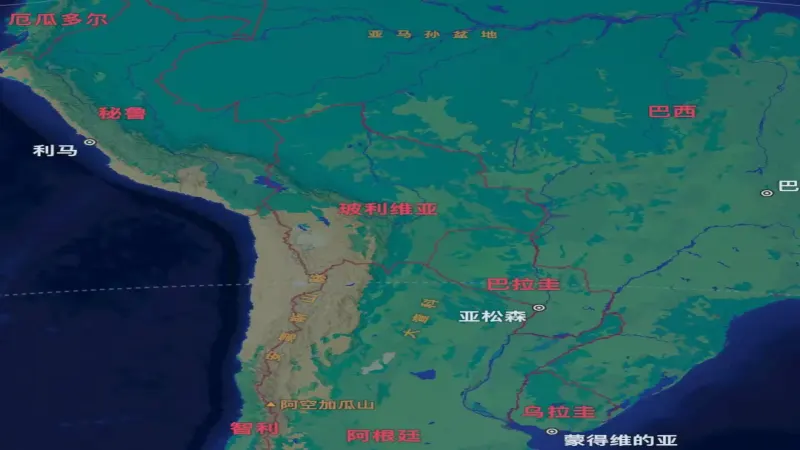
Bolivia is landlocked, bordered by Brazil, Peru, Chile, Argentina, and Paraguay, and its coffee cultivation depends on that geography and climate. The Java variety fits the country's push for quality, giving the Yungas lots a recognizable character within South American coffee production.
Among the many coffee-producing countries in South America, Bolivia, though a landlocked nation, has cultivated coffee of remarkable quality thanks to its unique geography and climate. Its coffee cultivation is highly concentrated in the Yungas region, which accounts for more than ninety percent of the country's output, with producing areas spanning Yungas, Copacabana, and La Paz Caranavi, each offering distinctive flavors. In terms of varieties, aside from Typica and Caturra, a standout Java variety is also grown, prized for its strong disease resistance and exceptional flavor. Front Street Coffee will take you into Bolivia to explore the full picture of this country's coffee industry.
The South American continent is vast in territory and abundantly endowed with natural resources, giving rise to numerous coffee-producing countries, among which Colombia, Ecuador, Brazil, Peru, and Bolivia all rank.
Bolivia
The Plurinational State of Bolivia is located in the central part of South America and is a landlocked country with no coastline, bordering five nations—Brazil, Peru, Chile, Argentina, and Paraguay—and covering a territory of 1.098 million square kilometers, rich in natural resources.
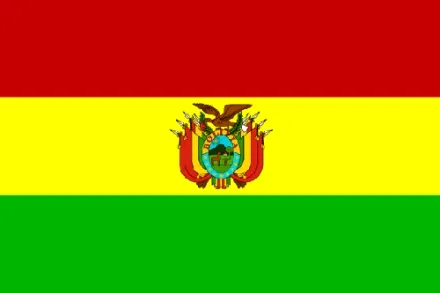
The Bolivian flag is rectangular, composed of three equal horizontal bands—red, yellow, and green—stacked from top to bottom. In the past, red symbolized sacrifice for the nation, yellow represented hope, and green stood for the sacred land; today these three colors respectively represent the country's animals, minerals, and plants.
The version of the flag used on formal occasions also features the national coat of arms at its center. The coat of arms is oval-shaped, containing within its circle images of the sun, mountains, a breadfruit tree, a llama, and grain; the upper half of the oval's border bears the word "Bolivia" in Spanish, while the lower half displays ten five-pointed stars, symbolizing the nine departments that make up Bolivia plus the coastal department seized by Chile. On either side of the coat of arms stand three flags each, with crossed fasces and weapons behind them representing authority; at the top is a condor, symbolizing strength and freedom, flanked by laurel and olive branches, expressing the people's pride in national freedom and their hope for harmonious coexistence among nations.
The eastern and northeastern parts of Bolivia are mostly part of the Amazon River alluvial plain, accounting for sixty percent of the country's area; the central region is a valley zone located on the eastern slopes of the Andes, where agriculture is relatively developed and many important cities are situated; the west is the Bolivian Plateau, with an average elevation exceeding 1,000 meters.
Bolivia has diverse climate types and can be divided into three climatic zones nationwide: the tropical plains with an average temperature of about 25°C, the valley floors with an average of about 18°C, and the plateau regions with an average of about 10°C. It is precisely these climatic conditions that have made coffee one of the country's main cash crops.
Coffee-Producing Regions
Bolivia's coffee-producing regions are mainly concentrated in the Yungas area, where 95% of the nation's coffee comes from. Local infrastructure is relatively underdeveloped, lacking large-scale wet-processing mills, so once the coffee cherries are ripe and harvested, they must immediately be transported to La Paz at a higher elevation for processing. The road from Yungas to La Paz is extremely treacherous, requiring passage through a 90-kilometer mountain road that climbs from 1,200 meters to 4,650 meters in elevation, with a drive of at least three hours and a lack of protective barriers along the way, earning it the name "Death Road."
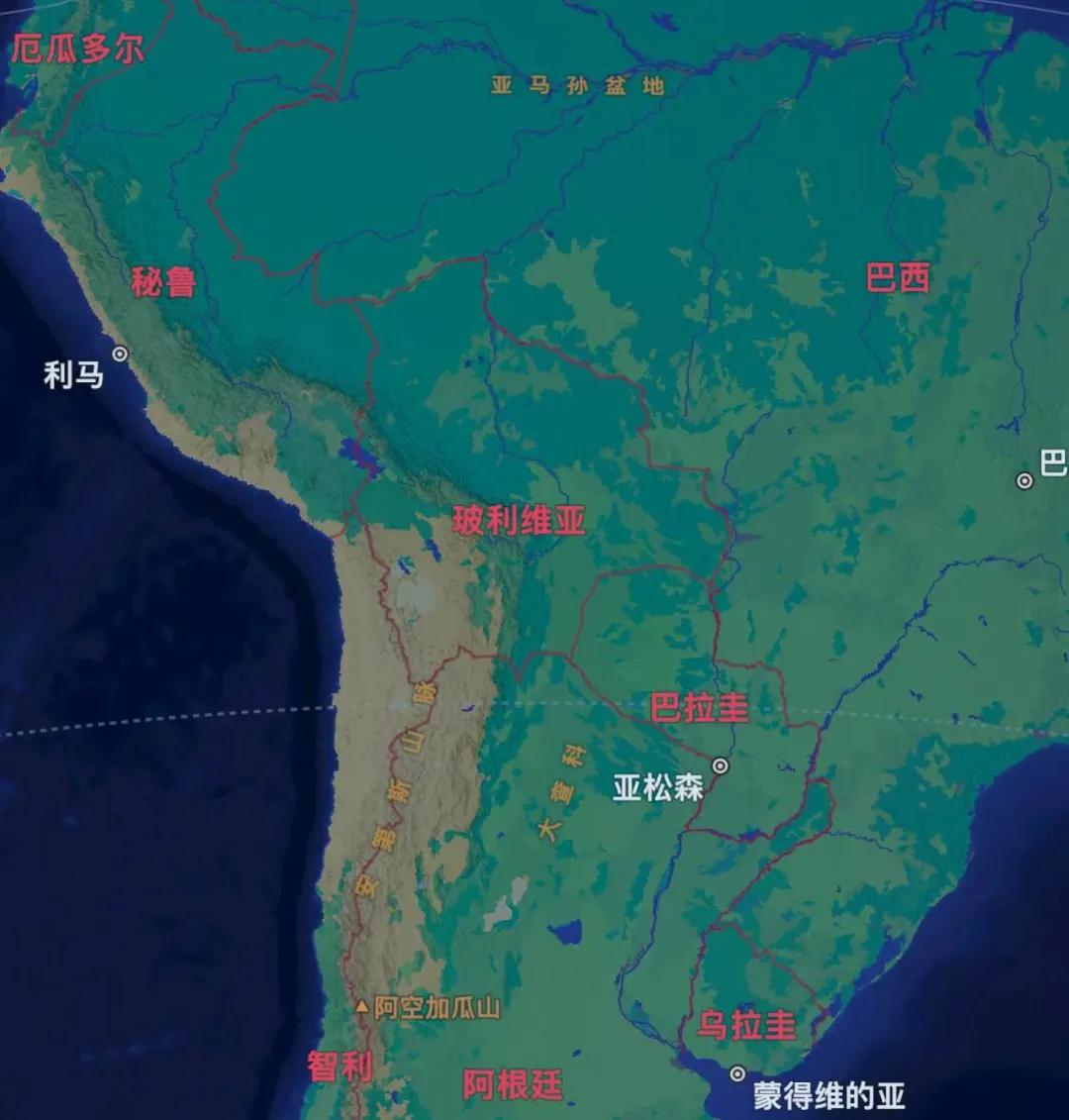
Yungas: This producing region is located on the eastern side of the Andes, with rugged terrain, and is Bolivia's oldest coffee-producing area. The capital, La Paz, sits to the west of Yungas. Coffee is mostly grown at elevations between 800 and 2,500 meters, with the harvest season running from July to November each year. The coffee produced here typically has a deep and full sweetness, with a soft citrus acidity, accompanied by layered black fruit and berry flavors.
Copacabana: Located in western Bolivia, near Lake Titicaca. The humid air creates excellent conditions for coffee growth. Lake Titicaca is also one of the highest lakes in the world, with an average year-round surface temperature of about 10 to 14 degrees Celsius, meaning that coffee from this producing region already holds an advantage in terms of elevation and temperature.
La Paz Caranavi: Located north of Yungas, also in the hilly terrain of the Andes, but its elevation does not reach that of Yungas. Caranavi has an average elevation of about 1,500 meters, so the coffee produced here has slightly lower complexity, with more pronounced chocolate flavors.
Coffee Varieties
Bolivia mainly cultivates Typica, Caturra, and a special coffee variety—Java.
Java: This variety was introduced from Ethiopia to the Indonesian island of Java in the early 19th century and was initially identified as a Typica variety. Later, plantings were brought to Cameroon, where it was discovered to be resistant to coffee berry disease, and it was subsequently introduced to Central and South American countries. Java has relatively elongated fruit and seeds, with bronze-colored young shoots and a fairly tall plant, but low yield. Due to its outstanding flavor, comparable to Geisha, and its stronger resistance to leaf rust and coffee berry disease, it is well suited for smallholder cultivation.
The above content is compiled by CoffeeHunters, a coffee news website.


