







Is Double Grinding Coffee Worth the Wear on Your Grinder?
Double grinding means running already-ground coffee through the grinder a second time, a trick once used in competitions to tighten particle distribution. In practice it multiplies the fines below 0.25mm, raises retention inside the machine, and leaves more grounds stuck in the burr chamber. The result is clogged drainage, over-extraction and longer cleaning, especially on electric grinders.
Hand grinders handle a second pass somewhat differently because less coffee stays trapped in the burrs, but the extra fines still appear. Retention explains the classic gap between input and output, such as 20g of beans yielding 19.8g of grounds. Adjusting grind size or dose is usually a cleaner route than regrinding when chasing a better extraction.
In coffee competitions, double grinding was once seen as a means of precisely controlling particle size, but the actual practice is far from as simple as it sounds. Sending coffee grounds through the grinder a second time not only multiplies the amount of fines, but also worsens the "retention" problem—especially on electric grinders, where it can cause a large amount of grounds to remain behind, making cleaning time-consuming and laborious. This article uses Front Street's experimental data to analyze in detail the impact of double grinding on the grinder, compare the differences between electric and hand grinders in this process, and offer alternative extraction adjustment solutions to double grinding, helping you improve extraction efficiency without disassembling your machine.
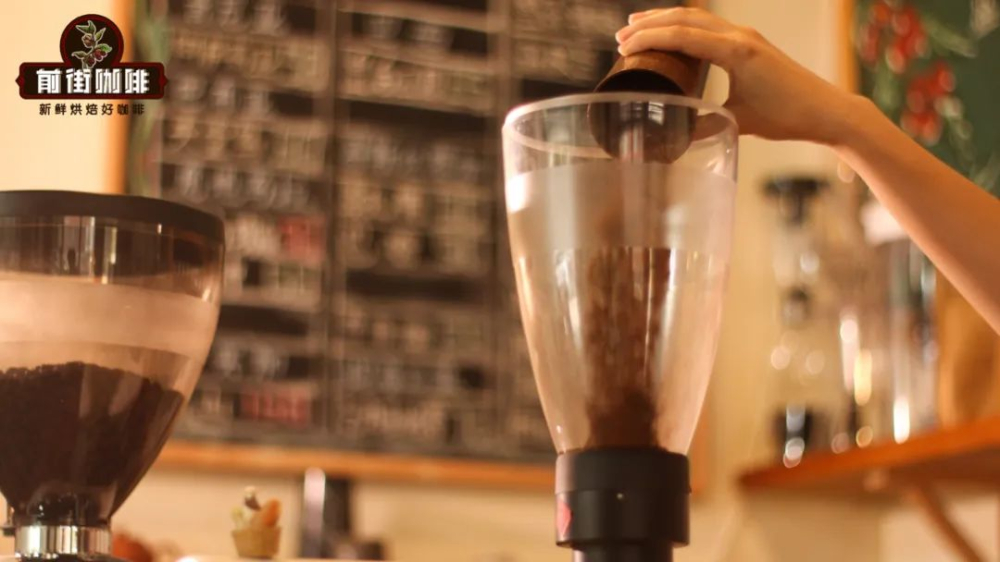
Regrind once? Is that really feasible? In fact, in previous coffee competitions, quite a few competitors adopted this approach, using a second grinding of the coffee grounds to achieve an ideal particle distribution. This practice is known in the industry as "double grinding." Because of its use by competitors, many people mistakenly assume that double grinding is easy to carry out. However, once you actually try it, you discover it is nowhere near as effortless as it looks.
The basic function of a grinder is to break larger particles into smaller ones. Since whole coffee beans can be ground fine, coffee grounds that are coarser than the target grind size should logically also be able to be further pulverized to the desired size. But many people overlook a key point: during grinding, coffee beans themselves already produce a large amount of powder with a particle size below 0.25mm—what we commonly call "fines." Once double grinding is performed, the amount of these fines multiplies. A moderate amount of fines can enhance a coffee's complexity and bring richer flavor; but excessive fines easily clog the drainage channels, leading to over-extraction.
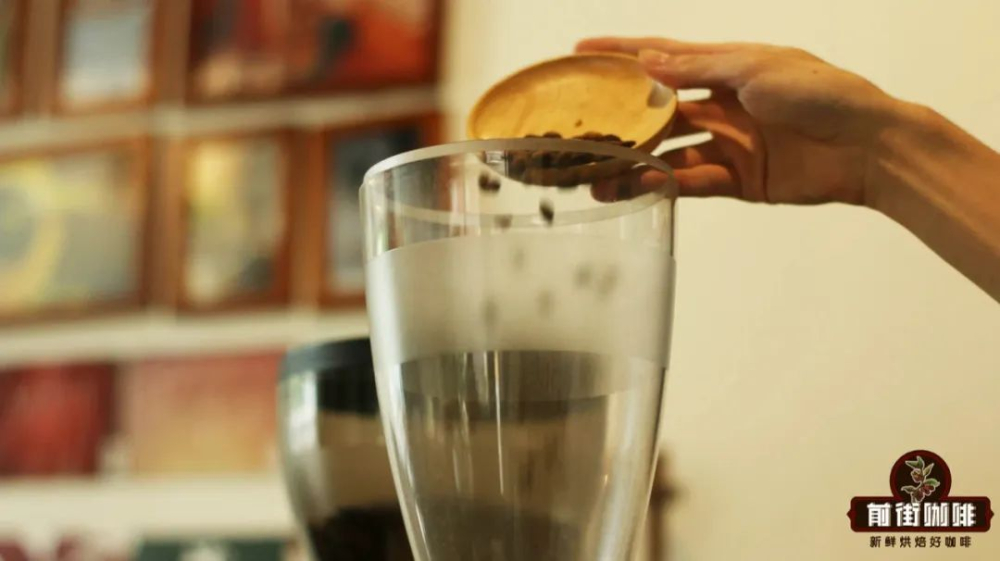
In addition, most grinders exhibit "retention." Because the burrs need clearance to rotate, these gaps become a "safe haven" for coffee grounds. During grinding, some powder is flung into these areas by centrifugal force, where it is neither further pulverized nor able to exit through the discharge chute, or it lingers due to static adhesion. This is how you get the situation of putting in 20g of coffee beans but only getting out 19.8g of grounds—this is what we call "retention."
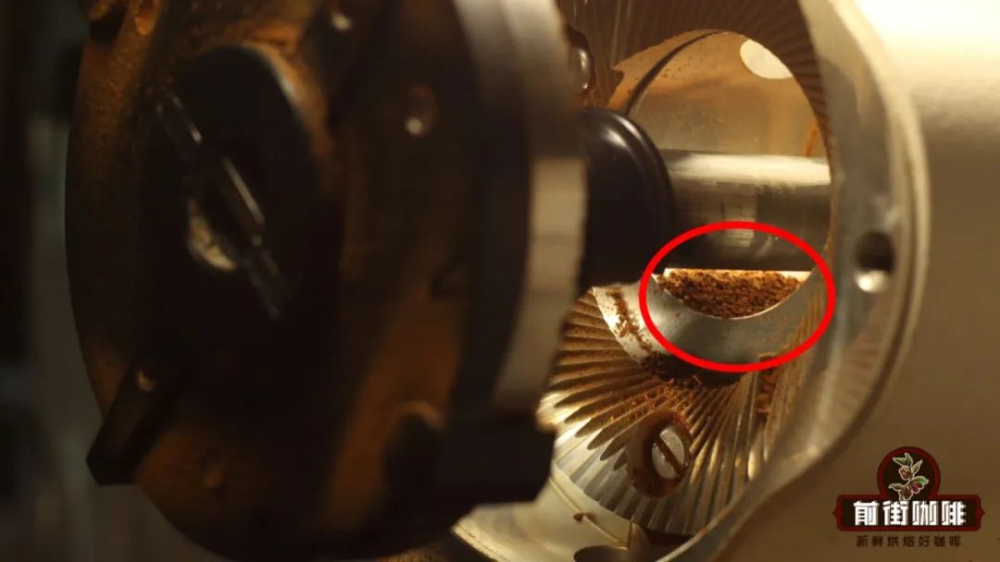
Double grinding also worsens the buildup of static on the coffee grounds, because the number of frictions increases, and more particles adhere by static to corners the burrs cannot reach. Front Street specifically conducted an experiment, and the results are shown in the image below.
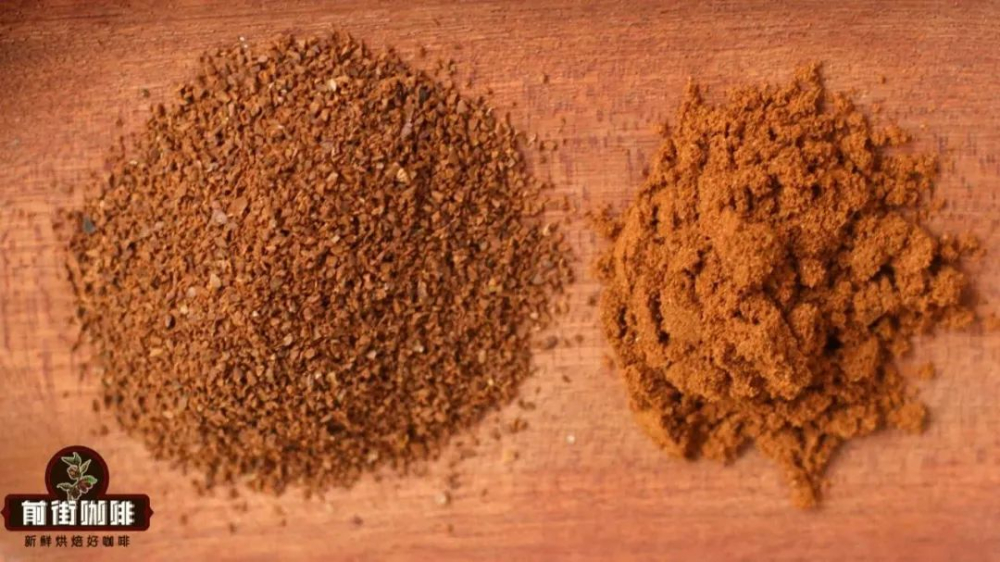
(Coffee grounds adhering inside the grinder) Most of the coffee grounds stuck to places the burrs could not reach. After double grinding 19.8g of grounds, only 13.8g was produced—meaning a full 6g of grounds was lost.
These 6g of grounds remain inside the grinder, meaning you must disassemble the machine, use a blower, or grind fresh beans to flush them out—time-consuming and laborious. If not cleaned promptly, the burrs may clog or even cause the machine to stop; or if you directly grind the next batch of beans without "seasoning" the machine, the 6g of grounds remaining in the burrs will mix into the next dose of coffee grounds. This situation mainly occurs with electric grinders, while the impact on hand grinders is relatively minor. (Hand grinders are easy to disassemble and clean)
From this we can see that for electric grinders, the negative effects of double grinding are quite pronounced: it not only produces more fines, but also increases the cleaning burden. If you have ample time to sift out the fines and clean the machine, double grinding is not entirely unworkable—it can indeed bring the coffee grounds to your desired particle size. But if you don't want to clean frequently, we can try adjusting other parameters to compensate for the drop in extraction efficiency caused by the missing grind. A coarser grind reduces extraction efficiency, so you can increase the extraction yield by raising the water temperature and extending the extraction time. Specific measures include: raising the water temperature by 2–3°C, switching to a dripper with a slower flow rate (such as Kono or Cross Star), or increasing the force of the water stream when pouring (adding more agitation). These parameter adjustments can all help you extract more coffee solids and reduce under-extraction. (The prerequisite is that the grind size is not absurdly coarse)
- END -
The above content is compiled by CoffeeHunters, a coffee news website.


