







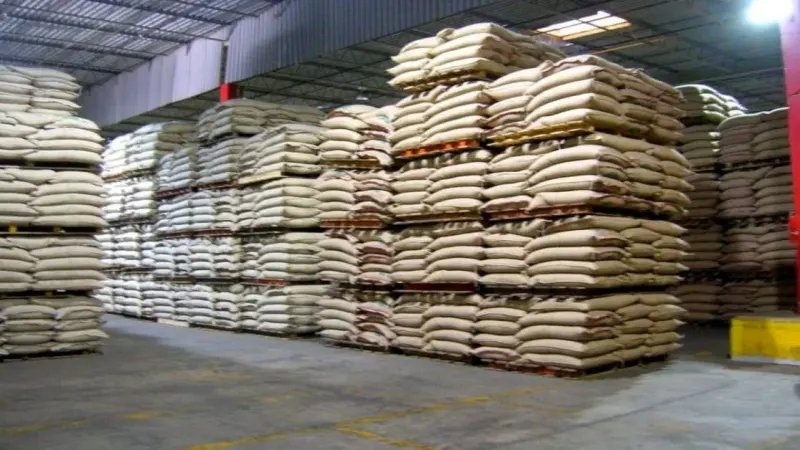
Why Did Uganda's Coffee Development Slip in March?
Uganda exported 329,686 sixty-kilogram bags in March, earning 246.8 billion shillings, about US$64.74 million. That is down 32.4% in volume and 9.45% in revenue from a year earlier, according to the Uganda Coffee Development Authority. El Niño rains during the October-to-March main harvest knocked fruit off the trees and cut yields. Robusta and Arabica volumes both dropped.
For the full coffee year from April 2023 to March 2024, exports still reached 5.9 million bags, up 2.42%, with revenue rising 16.91% to US$993.63 million. Tight Vietnamese supply lifted Robusta prices. The government now wants funds for traceability and mechanization, targets 20 million bags by 2025, and is courting China's fast-growing coffee cultivation market.
The latest monthly report from the Uganda Coffee Development Authority shows that coffee exports in March totaled 329,686 60-kg bags, earning 246.8 billion shillings (about US$64.74 million), a marked decline from February, with a year-on-year drop of 32.4% in volume and 9.45% in revenue. Heavy rains triggered by El Niño battered the main harvest season, causing fruit drop and reduced yields. Nevertheless, on a coffee-year basis, total exports still reached 5.9 million bags, with revenue up 16.91% year on year. Robusta prices rose amid tight supply in Vietnam, benefiting Uganda. The government is seeking funds to build a traceability system and improve mechanization, and the president has even set a target of 20 million bags by 2025, while also eyeing China's 15%-20% annual growth in coffee consumption and hoping to expand exports to China.
Recently, the Uganda Coffee Development Authority (UCDA), the coffee authority of Uganda, an important coffee-producing country in Africa, released its March coffee export report. Data show that Uganda exported a total of 329,686 bags of coffee (60 kg each) that month, with export revenue of 246.8 billion shillings (about US$64.74 million). This figure was down from 434,582 bags and 314.7 billion shillings (US$82.56 million) in February, and compared with the same period last year, export volume fell 32.4% while revenue dropped 9.45%.
The main reason for the decline in March exports was heavy rain in Africa caused by El Niño. Uganda's main harvest season usually runs from October to March of the following year, and during this period the heavy rain knocked off large amounts of coffee fruit, directly reducing production. At the same time, as coffee prices kept climbing, coffee theft cases also increased in Uganda.
According to the monthly report, the coffee exported in March included 244,975 bags of Robusta worth US$46.01 million and 84,711 bags of Arabica worth US$18.72 million. Compared with the same period last year, Robusta export volume fell 33%, but revenue edged down only 0.24%; Arabica export volume fell 30%, while revenue dropped 26%.
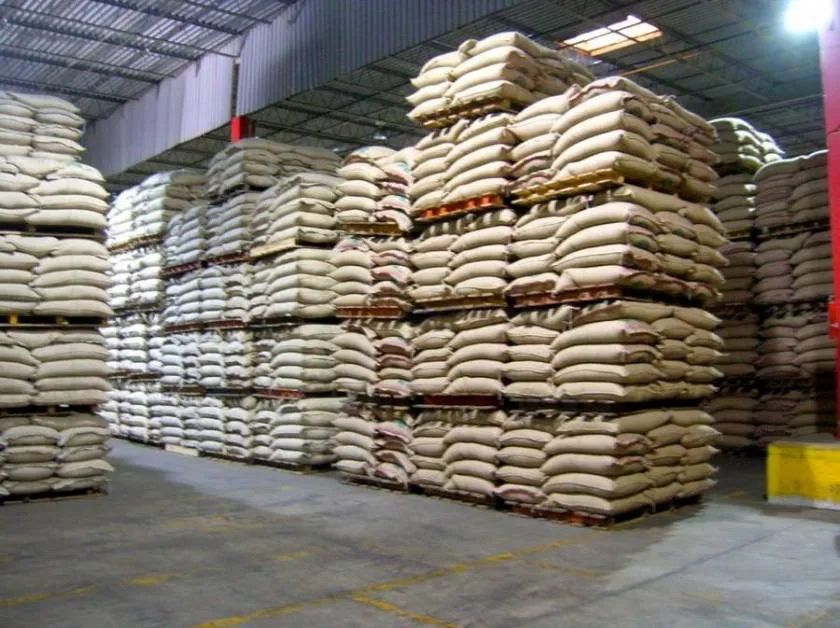
Despite the poor single-month export performance in March, for the whole coffee year (April 2023 to March 2024), Uganda exported a cumulative 5.9 million bags of coffee, up 2.42% from 5.76 million bags in the previous coffee year, with revenue reaching US$993.63 million, up 16.91% year on year. At present, the southwestern part of the country has entered a new harvest period, and overall conditions are good. The Uganda Coffee Development Authority (UCDA) predicts that April exports could reach 400,000 bags.
It is worth noting that the average export price of Robusta in March reached US$3.27/kg, up 83 cents from US$2.44/kg in March 2023. Among these, washed Robusta commanded the highest price, selling for US$4.23/kg.
The high Robusta price is mainly due to adverse weather in Vietnam, a major producing country, which has tightened supply. In addition, after earlier coffee price increases, farmers were reluctant to sell, triggering a wave of defaults that further pushed up the Robusta market. Uganda benefited as a result: even though export volume fell in March, revenue did not shrink significantly.
Market surveys show that Robusta coffee dominates the Italian coffee market, so Italy remains the largest importer of Ugandan coffee, with a market share of 38.08%, followed by India at 12.29% and Germany at 10.5%.
On the positive side, the Uganda Coffee Development Authority (UCDA) has applied to the government for 32.5 billion shillings to establish a coffee traceability system to ensure that Ugandan coffee complies with the EU Deforestation Regulation (EUDR). In addition, funds have been allocated to procure and deploy agricultural infrastructure equipment and raise the level of mechanization in the agricultural sector, thereby enhancing output capacity and earning more foreign exchange revenue when coffee prices are high.
Uganda's president said earlier that coffee cultivation would be strengthened and yields increased, with the goal of reaching 20 million bags by 2025. At the same time, given China's sustained growth in coffee demand, with annual consumption growth of 15%-20%, Uganda hopes to further expand its coffee exports to China.
For domestic coffee lovers, if you want to taste the unique flavor of Ugandan coffee, you can check out Front Street Coffee's product recommendations. The Ugandan Robusta and Arabica beans selected by Front Street Coffee can present the rich body and fruity aroma characteristic of African coffee, making them a good choice for exploring African origins.
The above content is compiled by CoffeeHunters, a coffee news website.


