







Why is coffee a beverage category under Shanghai's new rules?
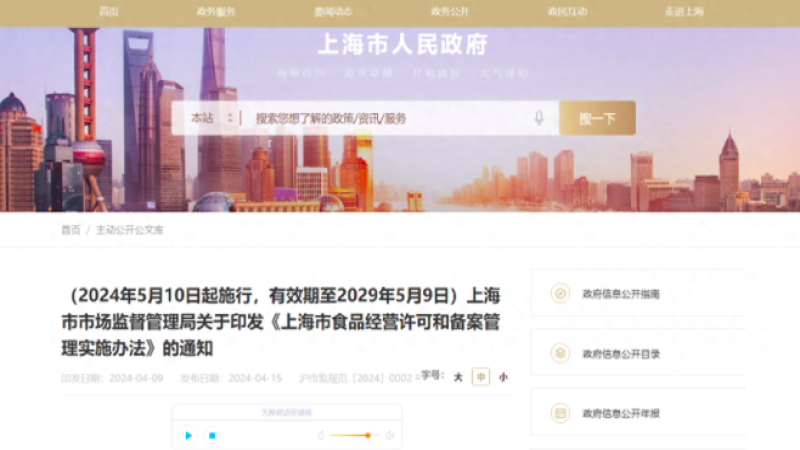
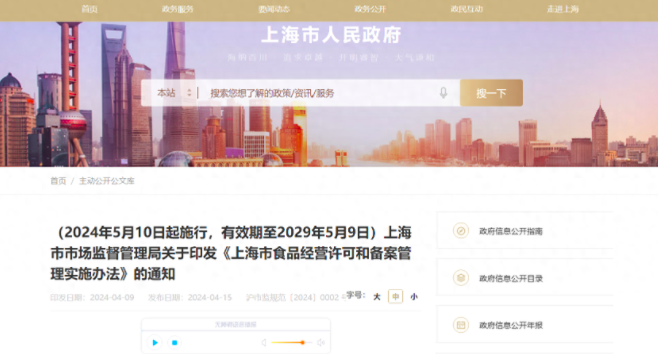
Shanghai's Implementation Measures for Food Business Licensing and Record-Filing Management took effect on May 10, 2024. The rules cancel secondary catalog licensing items, support mixed multi-format operations, and let coffee shops and bars share one storefront. Non-catering stores such as bookshops and clothing stores can also apply for a homemade beverage business.
Because coffee is a beverage, it falls under the simplified homemade beverage category, one of four replacing 19 earlier catalog items alongside hot food, cold food, and raw food. The previous 6-square-meter production site restriction was removed, and rules on the disputed smashed cucumber dish now require only a designated area. Whether the changes invigorate the market while protecting food safety remains to be tested.
Shanghai recently issued the "Shanghai Municipal Implementation Measures for Food Business Licensing and Record-Filing Management," effective from May 10, 2024. The new regulations eliminate secondary catalog licensing items, support mixed multi-format operations, allow coffee shops, bars, and others to coexist in the same storefront, and permit non-catering stores such as bookshops and clothing stores to apply for a homemade beverage business. At the same time, "made and sold on-site" has been adjusted to "made and sold on the premises," with 19 business catalog items simplified into 4 categories: hot food, cold food, raw food, and homemade beverages, and the 6-square-meter production site restriction has been removed. Regarding the long-disputed "smashed cucumber," the new rules allow for just a designated area. Whether the policy benefits can invigorate the market and ensure food safety still needs time to be tested.
▲
Click to follow | Daily specialty coffee culture magazine Coffee Workshop
A few days ago, Shanghai officially released the "Shanghai Municipal Implementation Measures for Food Business Licensing and Record-Filing Management," which will take effect on May 10, 2024. Because adjustments to food business licensing directly affect the vital interests of many catering operators, the news quickly sparked widespread attention and heated discussion across society once it was announced.
The first thing the new regulations do is "subtraction" — all secondary catalog licensing items are canceled altogether. From now on, licenses will no longer be issued based on subdivided formats such as large supermarkets, small supermarkets, and beverage shops, but instead will adopt a broader classification by main business format. At the same time, mixed operations of different formats are also explicitly supported.
This means that multiple formats such as coffee and bars can share one storefront for mixed operations; bookshops, clothing stores, and other stores that originally belonged to non-catering categories can likewise apply for a homemade beverage business and sell various homemade drinks to customers in-store.
Second, the new regulations loosen the constraints on food business items, adjusting the wording from "made and sold on-site" to "made and sold on the premises." Under the new rules, the "made and sold on the premises" business license applies to all types of food sales operators. At the same time, the original 19 business catalog restrictions have been streamlined into 4 categories of business items: hot food, cold food, raw food, and homemade beverage production and sales.
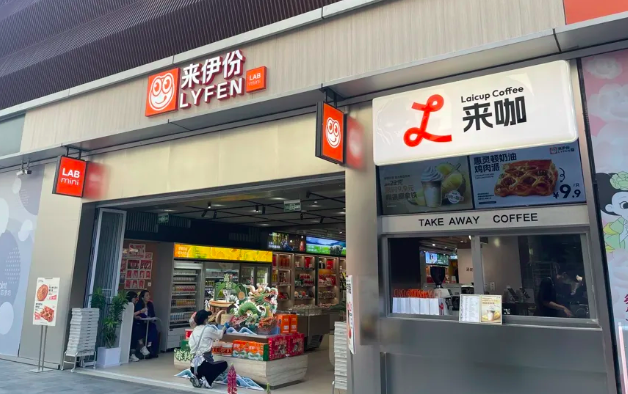
After this adjustment to food business items, operators will be given greater autonomy. It is understood that after the new regulations took effect, the snack brand Laiyifen labmini store, which obtained a new license, has already begun selling freshly made bread, pastries, and coffee and tea drinks to passersby.
In addition, the new regulations also remove the requirement that food production sites have a usable area of no less than 6 square meters, which has delighted some enterprises that had long refrained from entering the catering business because their store layouts were unsuitable.
A person in charge of a Shanghai location of the sports brand Anta admitted that, based on the previous store layout, it was difficult to find a complete production space of more than 6 square meters in the store that met the requirements. Hampered by the restriction, some Anta stores did not bring coffee machines into their stores. Now that there is no site restriction requirement, the person in charge immediately planned a coffee-making area in the store and said that if this attempt succeeds, other stores may follow suit.
It is worth noting that the new regulations also make relevant provisions for the highly controversial "smashed cucumber." Previously, simple food production and sales activities such as smashed cucumber and tea brewing were all subject to business site restrictions, and even if the process was simple, a dedicated operation room was required.
In the past, many catering practitioners, either out of ignorance or with a mentality of taking chances, sold smashed cucumber without qualifications, and because of this were targeted by professional anti-counterfeiters, frequently maliciously reported and fined, to the point that "smashed cucumber" became a nightmare for catering workers.
To solve the troubles of catering practitioners, the new regulations stipulate that for simple production and sales activities such as smashed cucumber and tea brewing, on the premise of ensuring food safety, only a designated area may be set up.
However, everything has two sides. In the view of some netizens, although the new regulations cancel many restrictions on the catering industry and allow non-catering venues such as convenience stores, clothing stores, and marketplaces to join across sectors, this may intensify the already fierce competition in the industry and deliver a considerable "shock" to traditional catering enterprises. At the same time, some consumers have some concerns about food safety after the implementation of the new regulations, believing that after the new rules relax restrictions on food production sites, they may increase risks in the production process and make it difficult to guarantee food safety.
The introduction and implementation of Shanghai's new catering business regulations may bring market vitality to the catering industry and also meet the public's comprehensive consumption needs anytime and anywhere, but whether this favorable policy can actually play its role as expected still needs time to verify.
Image source: Internet
Disclaimer: Some images in this article are from the Internet. For some content on the website, such as images, we will respect the original author's copyright and indicate the source. However, due to the large quantity, a few images and texts may not have been credited in time. Please forgive us. If the original author has any disputes, they may contact the website for handling. Once verified, we will correct it immediately. Compiled and edited by "Coffee Workshop." Please indicate the source when reprinting. If there is infringement, please inform us for deletion. Thank you~!
The above content is compiled by CoffeeHunters, a coffee news website.


