







How should you brew geisha coffee at home?
Geisha coffee is an Arabica variety, like Typica and Bourbon, and its name is a transliteration of Geisha. It rose to fame in 2004 when Hacienda La Esmeralda entered it in the BOP competition and took first place with an intense floral aroma. Because it is scarce, hard to cultivate, and expensive, many brewers hold back and end up with a mediocre cup. A medium-light roast and a longer roast time suit the variety.
Using Green Label Geisha as an example, a Front Street recipe calls for 92°C water, a coarser grind, a 1:16 coffee-to-water ratio, and a three-pour method. That combination aims at the floral aromatics and soft sweetness and acidity the variety is known for. The key is to brew boldly enough to let the geisha coffee show its character instead of treating it as too precious to extract properly.
Geisha is hailed as the "luxury item" of the coffee world—outstanding in flavor yet scarce in yield, and difficult to cultivate, so its price is naturally high. Precisely because of this, many people are extra cautious when brewing, which ironically makes it hard to showcase its true charm. This article will start from Geisha's varietal origins, appearance characteristics, and cultivation requirements, explain why it needs a longer roasting time and a medium-light roast profile, and then use Green Label Geisha as an example to break down Front Street's brewing recipe in detail: 92°C water temperature, coarser grind, 1:16 coffee-to-water ratio, and a three-pour method, to help you consistently brew a cup of coffee with intoxicating floral aromas and soft sweetness and acidity.
In the consumer market, products that possess uniqueness, scarcity, and a sense of rarity are often labeled "luxury items." The prices of such products are usually closely tied to their quality, so they generally sell at a premium. The same kind of "luxury item" exists in the coffee world, and that is Geisha.
Everyone knows that Geisha's price has always been a notch higher than that of ordinary coffee varieties. The reason is that it has outstanding flavor, limited yield, and a high cultivation threshold—excellent quality and scarcity stacked together naturally drive the price up. (Here Front Street is discussing the price of conventional Geisha, not those special cases with severe premiums where the taste and price are seriously disconnected.) Because of this, many friends always hold back when brewing, afraid of ruining this expensive good flavor. But it is precisely because they dare not brew boldly that the final cup often turns out mediocre. So don't be afraid~ Today Front Street will talk about how to brew a good cup of Geisha!
What is Geisha?
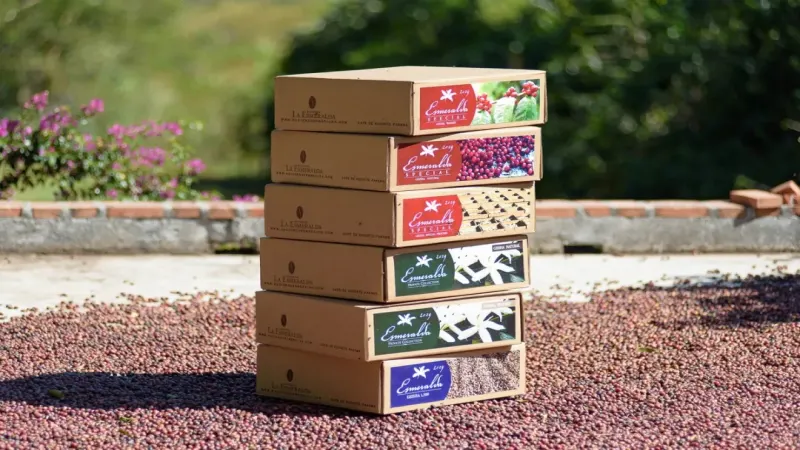
The Chinese name "瑰夏" is actually a transliteration of "Geisha." Like Typica and Bourbon, it is also a coffee variety under the Arabica category. The reason Geisha rose to fame can be traced back to 2004. That year, Hacienda La Esmeralda entered it in the BOP competition, and Geisha took first place with its astonishing floral aroma. From then on, this variety ascended to the altar, captivating countless people, and countless others tried to pull it down with other bean varieties, but even today, Geisha's dynasty remains firmly established.
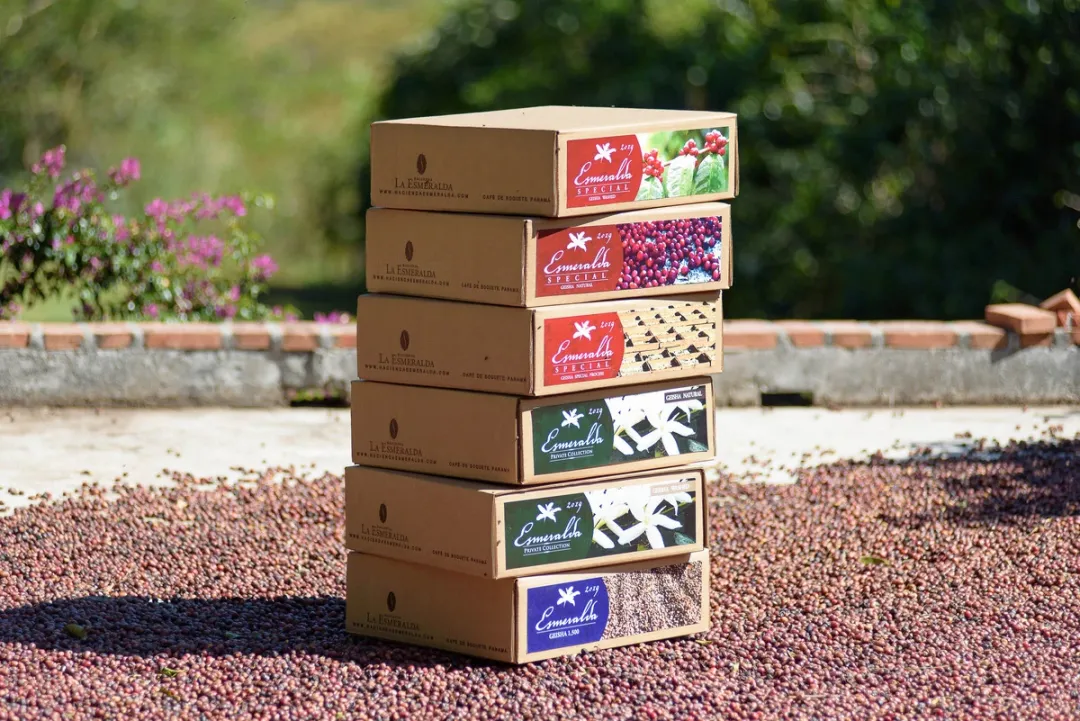
Let's take a look at the shape of Geisha beans. Compared with common varieties, Geisha green beans are larger and more elongated, with slightly pointed tips at both ends and an overall oval shape.
(Hacienda La Esmeralda · Green Label Geisha)
Because its appearance is so highly recognizable, in some single-origin beans that are Geisha blends (Geisha blend refers to beans that are planted, harvested, processed, and sold together with Geisha and other varieties.) , we can also recognize the presence of the Geisha variety at a glance.
(This is a Geisha blend from Panama: Butterfly, and this bean contains 70% Geisha. Everyone can try to distinguish it~)
As mentioned at the beginning, Geisha has stricter requirements for growing conditions and needs a superior environment to grow healthily. It is also because of these requirements that Geisha has more ample time to accumulate nutrients, making the beans denser and harder.
During roasting, if a fast-paced approach is still used, it is easy to end up with an underdeveloped center while the outside is already roasted. Therefore, when Front Street roasts Geisha, it usually appropriately extends the roasting time so that heat fully penetrates to the center of the bean and avoids underdevelopment. For Geisha, a medium-light roast is more suitable, because this roast level can moderately reduce acidity while highlighting Geisha's signature floral aroma. So Front Street will develop for about 1 minute and 20 seconds after first crack begins before dropping the beans (the specifics depend on the beans).
(Image for reference only)
So how should Geisha be brewed to taste good?
We often hear this saying: as long as the beans are good enough, they will taste good no matter how they are brewed. That is true, but Geisha is already this expensive—shouldn't it not only taste good but also let us feel its uniqueness~ So brewing out Geisha's characteristics is equally important. This brewing uses Green Label Geisha, with a dose of 15g~
As Front Street said, Geisha beans are large and dense. To extract them, a higher water temperature is needed, and Front Street uses 92°C here. For grinding, Front Street chose a slightly coarser setting than usual, with a 78% passing rate through a No. 20 sieve. Because of its high density, Geisha tends to sink to the bottom more easily, and fines are also more likely to cause clogging, so a slightly coarser grind is used to reduce clogging.

Correspondingly, after the grind becomes coarser, other parameters are needed to make up for the lost extraction yield, and the coffee-to-water ratio is exactly the best choice. Front Street uses 1:16. On one hand, increasing the water amount can lengthen the extraction time and correct the extraction yield; on the other hand, Geisha has fewer bitter compounds, so we can boldly extract more flavor compounds. So this is the kind of coffee Front Street often mentions that still tastes good even when the extraction yield is not within the golden cup range.
When brewing, note that Geisha is dense and absorbs water more slowly. If you still use 30ml of hot water for blooming, it is easy to cause too much bypass water. So we can appropriately reduce the blooming water amount to lower the production of bypass water. The blooming time is also 30 seconds; just pour water from the center outward to wet the coffee grounds!
After blooming ends, you can pour the second stage of hot water! Front Street allocates 120ml of water to this stage, with the aim of appropriately extending the extraction time and making the flavor more complete. The pouring method is the same: first make circles from the center outward, and after reaching the outer ring, continue circling at a steady speed until the target water amount is poured. At this point, the time is about 1 minute.
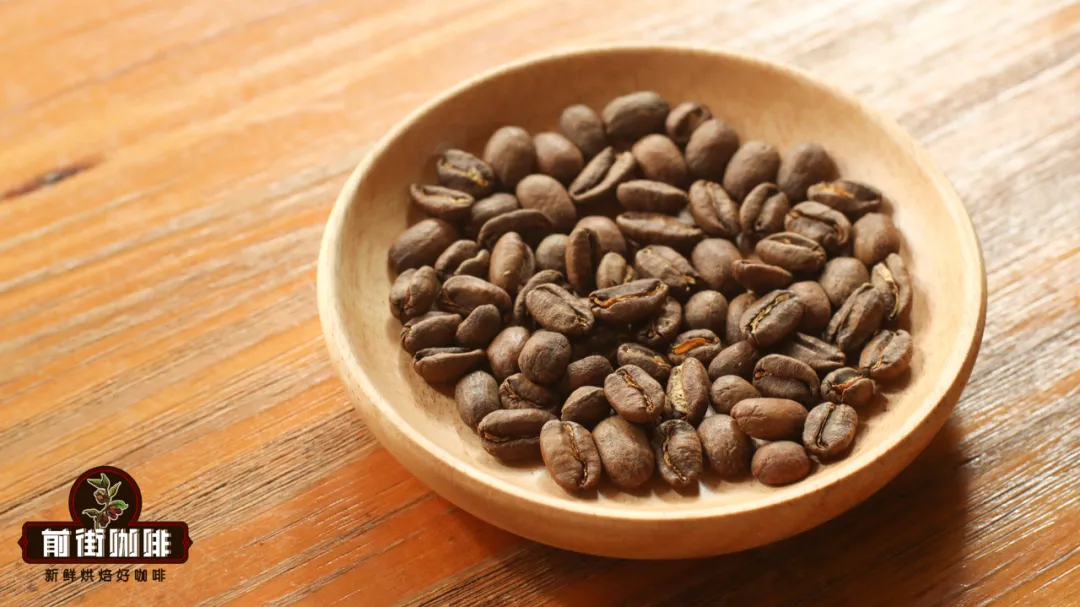
Next, you need to wait for the water level to drop until the bottom coffee bed is visible! If the pouring technique is fine, the slowly descending water level will gradually reveal a "small bowl-shaped" coffee bed. At about 1 minute 15 seconds to 20 seconds, the water level will drop to the point where the coffee bed can be seen, and then you can pour the third stage of hot water.
The final stage uses 95ml of water. Since the entire coffee bed has already formed a bowl shape, the coffee grounds that were originally on the surface are evenly distributed on the wall of the cup, so now we can extract the coffee grounds at the bottom that were not fully extracted in the first two stages! Therefore, the pouring method we use is: steady small circles.
These small circles only need to be the size of a coin. At around 1 minute 35 seconds, the water will be fully poured. At this point, we only need to wait for the coffee liquid to finish dripping!
After the coffee liquid finishes dripping, we swirl it, give it a little shake, and then we can start tasting!
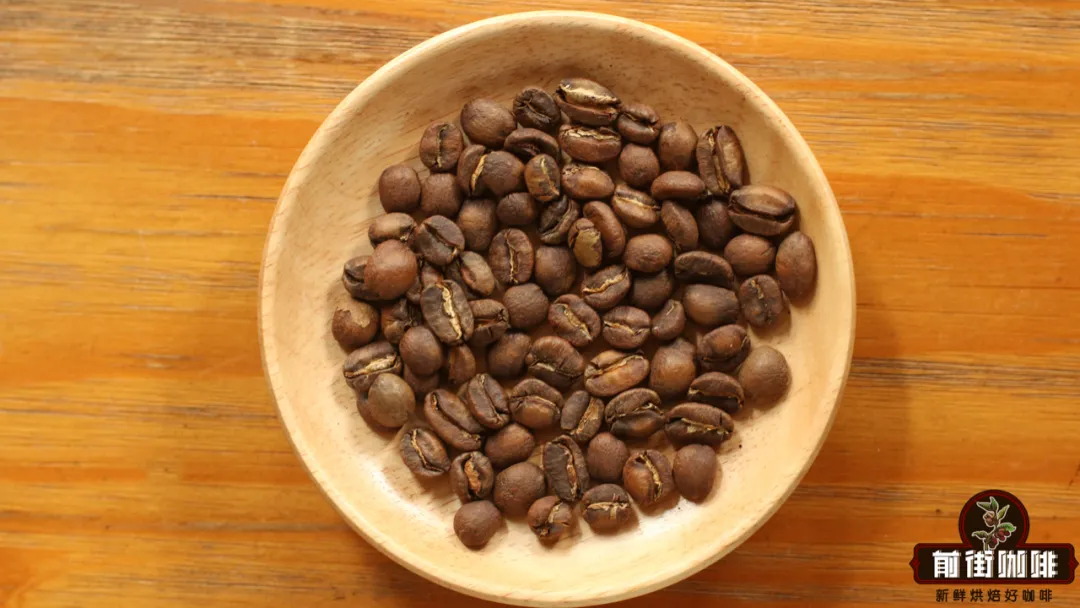
Geisha brewed this way has an intoxicating floral aroma and soft acidity. The flavors of white flowers, citrus, and honeydew melon can all be clearly perceived. The honey-like silky mouthfeel and the long green tea finish are all outstanding expressions of this cup of coffee. Hurry up and give it a try~
The above content is compiled by CoffeeHunters, a coffee news website.


