







Which Coffee Production Regions Shape El Salvador's Pacas and Pacamara?
El Salvador is Central America's smallest country by land area and produces less coffee than its neighbors, yet volcanic soil, Pacific sea breezes and high-altitude mountains yield specialty lots with varied flavors. Its main growing areas sit on volcanic highlands, and two varieties stand out: Pacas, a Bourbon mutation, and Pacamara, a Pacas and Maragogype cross.
Coffee cultivation here relies on shade and elevations that slow cherry maturation, concentrating sweetness and acidity. Coffee production once ranked among the region's leaders before civil conflict and low prices cut output, so today's smaller harvests are often directed at specialty buyers seeking the large-bean Pacamara and the rounded Pacas profile.
Although El Salvador is one of the smallest countries in Central America by land area, and its coffee production is less than that of its neighbors, its volcanic soil, Pacific sea breezes, and high-altitude mountains give rise to specialty coffees with diverse flavors. This article will guide you through El Salvador's geographical and climatic conditions, the distribution of its main coffee-producing regions, and the origins and characteristics of two highly representative varieties—Pacas and Pacamara. Whether you are a beginner coffee enthusiast or a seasoned connoisseur looking for your next bean, you will gain practical knowledge about the producing regions.
In this land of Central America, there are quite a few coffee-producing countries, including Costa Rica, Nicaragua, Panama, and El Salvador. In terms of land area, El Salvador is one of the smallest. Although its total production cannot compare with that of its neighbors, it possesses highly ideal growing conditions, and its coffee flavors are quite diverse.
El Salvador
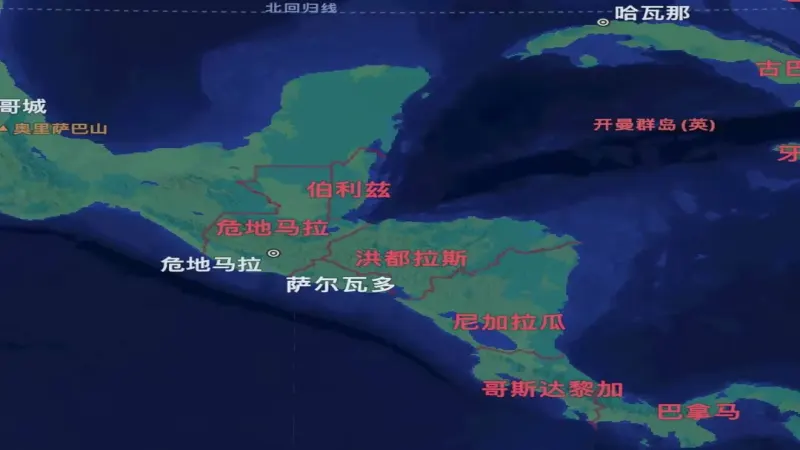
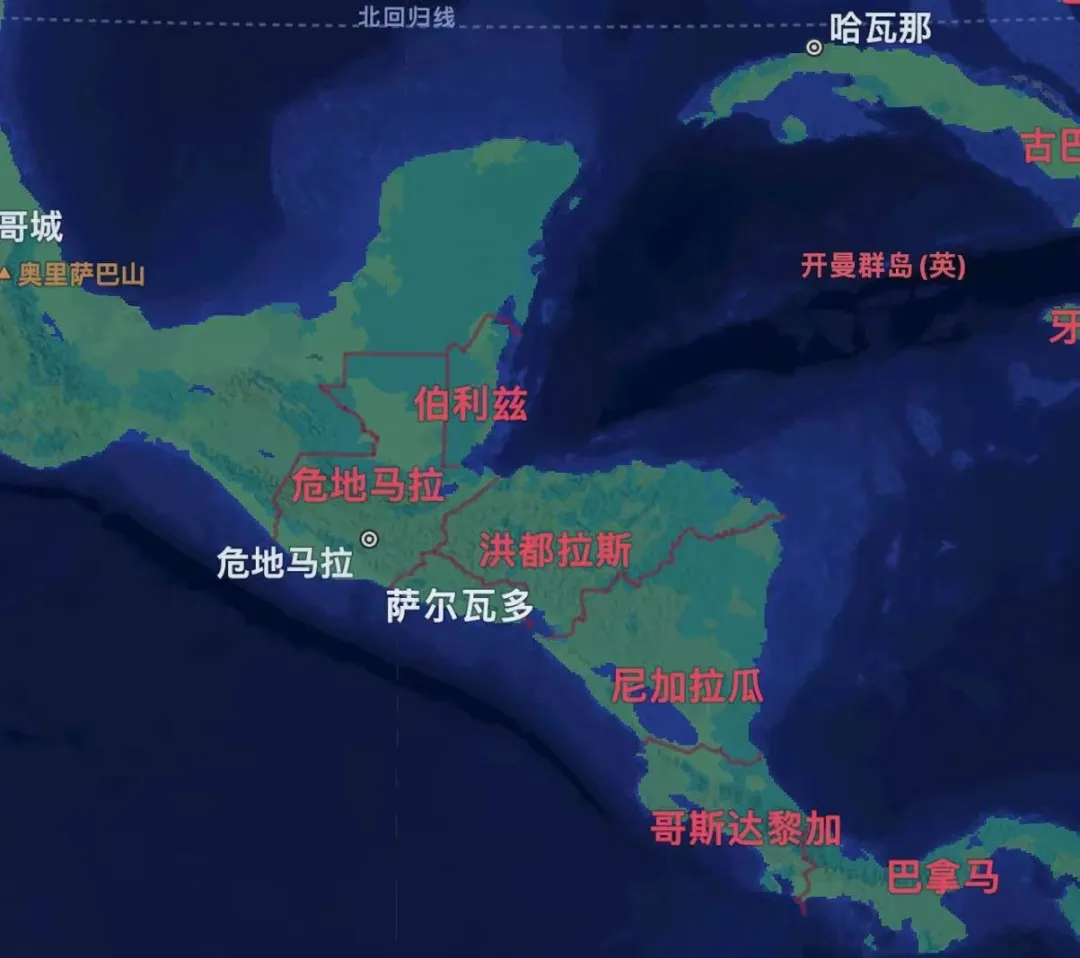
The Republic of El Salvador is located in northern Central America, bordered by Honduras to the north, Guatemala to the northwest, the Pacific Ocean to the south, and the Gulf of Fonseca on its eastern side, with a total area of approximately 21,040 square kilometers.
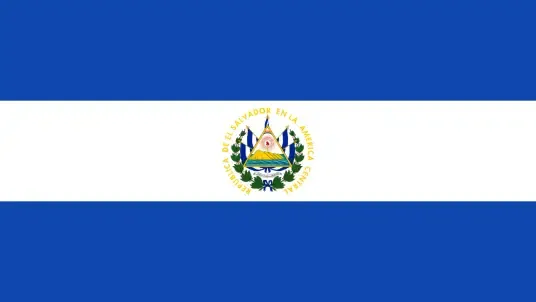
The national flag is rectangular and consists of three parallel horizontal bands—blue, white, and blue—arranged from top to bottom. The blue represents the sky and the ocean, while the white symbolizes peace.
In the center of the white area of the flag is the national coat of arms. The main body of the coat of arms is an equilateral triangle, with three yellow edges symbolizing equality, truth, and justice. Inside the triangle are five volcanoes, representing the five Central American countries. Atop the volcanoes stand the "Pole of Liberty" and the "Cap of Liberty," radiating light outward; inscribed in the rays is "September 15, 1821," the date of El Salvador's independence. A rainbow in the sky signifies joy and hope, while the ribbon at the bottom bears the Spanish words "God, Union, Liberty," and the golden text on the outermost ring reads "Republic of El Salvador in Central America."
El Salvador's terrain is dominated by mountains and plateaus, with numerous volcanoes, earning it the title "Land of Volcanoes." The highest point in the country is the active Santa Ana Volcano, at 2,385 meters above sea level. The northern part features the Lempa River valley, while the southern part is coastal plain.
The country has a tropical climate, with an average annual temperature of about 28°C. The dry season runs from November to April of the following year, and the rainy season from May to October. The coastal and lowland areas are hot and humid, while the mountains are cooler, with annual rainfall in mountainous areas reaching over 1,800 millimeters. Pacific sea breezes, abundant rainfall, and volcanic soil together create favorable conditions for coffee cultivation in El Salvador.
Coffee-Producing Regions
Nationwide, the varieties grown in the major producing regions are fairly similar, with Bourbon predominating, followed by Pacas and Pacamara. Coffee is grown throughout El Salvador, with the Alotepec-Metapan highlands in the north and the Apaneca-Ilamatepec volcanic region in the west being the most well-known.
Alotepec-Metapan: Covering the departments of Santa Ana and Chalatenango in the northwestern part of the country, this region is dominated by small producers, with coffee grown at altitudes between 1,200 and 1,800 meters.
Apaneca-Ilamatepec: Located in the western part of the country, this region contains forests, lakes, and volcanic chains, with cultivation altitudes between 800 and 2,300 meters. It is the region with the largest commercial coffee production in El Salvador.
EL BÁLSAMO QUEZALTEPEC: Located in central El Salvador, also in a volcanic zone, with cultivation altitudes between 500 and 1,900 meters.
Cacahuatique: Located in the eastern part of the country, within a mountain range dominated by sandy soil, with cultivation altitudes between 1,500 and 1,800 meters. This is one of El Salvador's smaller coffee-producing regions, accounting for only 4% of the national coffee-growing area, and both coffee and cacao are cultivated locally.
Chichontepec: Located in central El Salvador, distributed mainly around a large extinct volcanic crater, with coffee planted on hillsides at altitudes between 1,000 and 1,500 meters.
Coffee Varieties
Pacas: Pacas is a natural mutation of Bourbon, resulting from a single-gene mutation. The plant is relatively short with compact internodes and densely arranged leaves. These characteristics make it suitable for dense planting, give it high yields, and make it well-suited for cultivation at high altitudes, though it is susceptible to disease. In 1949, this variety was discovered on a farm owned by the Pacas family in the Santa Ana region of El Salvador, hence its name. Today, Pacas is widely planted in El Salvador, accounting for about 25% of the country's coffee production.
Pacamara: This variety often appears in El Salvador's COE competitions and is therefore relatively well-known. It is a cross between Pacas and the Typica variety Maragogype. The Pacamara tree is medium-sized, with thick, broad leaves and short internodes. The fruit is elongated with a small protrusion at the tip, and the coffee beans are large and oval-shaped. This variety performs excellently in flavor and is suitable for high-altitude cultivation, but it has weak disease resistance and is especially highly sensitive to leaf rust.
The above content is compiled by CoffeeHunters, a coffee news website.


