







How Does Nicaragua's Coffee Grading System Work Across Its Regions?
Nicaragua grows coffee in three core regions: Jinotega, Matagpa and Nueva Segovia, spread across the north-central highlands and coastal lowlands. Caturra and Bourbon are the main cultivated varieties. Although the country is less famous abroad than Costa Rica or Panama, its altitude, volcanic soil and microclimates give it comparable growing conditions.
The coffee grading system sorts beans by bean size, altitude and defect count, which determines how lots are marketed and priced. Knowing the producing regions helps buyers link a grade back to its terroir, since elevation in Jinotega and Nueva Segovia shapes density and flavor differently from lower coastal plots.
Located in the heart of Central America, Nicaragua may not be as renowned as Panama or Costa Rica, yet it possesses coffee-growing terroir that is by no means inferior. The country's north-central highlands, eastern coastal plains, and western coastal lowlands create diverse microclimatic environments, nurturing three core producing regions: Jinotega, Matagalpa, and Nueva Segovia, with Caturra and Bourbon as the primary cultivated varieties. This article will systematically outline Nicaragua's geographical and climatic characteristics, the elevation and harvest details of each producing region, and introduce its coffee grading system, helping coffee enthusiasts gain a comprehensive understanding of the coffee landscape of this potential Central American origin.
The American continent happens to span the coffee-growing golden belt, which is why this land has produced many well-known coffee origins, including Panama, Honduras, Costa Rica, and Nicaragua. Although Nicaragua is less famous on the international market than Costa Rica and Panama, its natural endowments for coffee cultivation are no less than those of other Central American countries.
Nicaragua
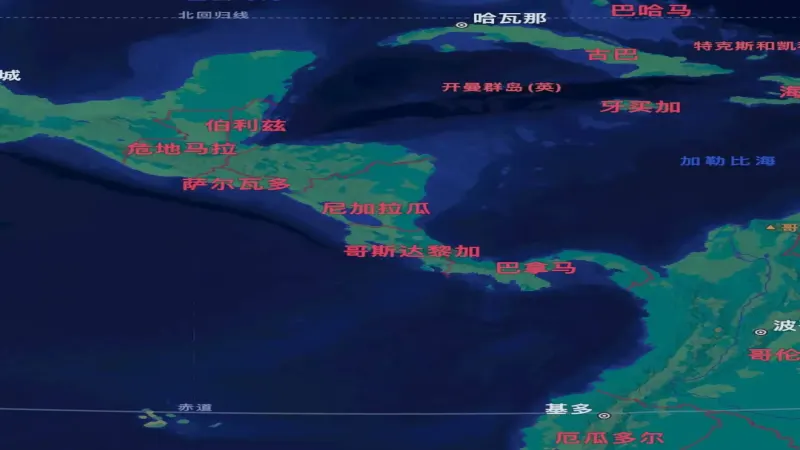
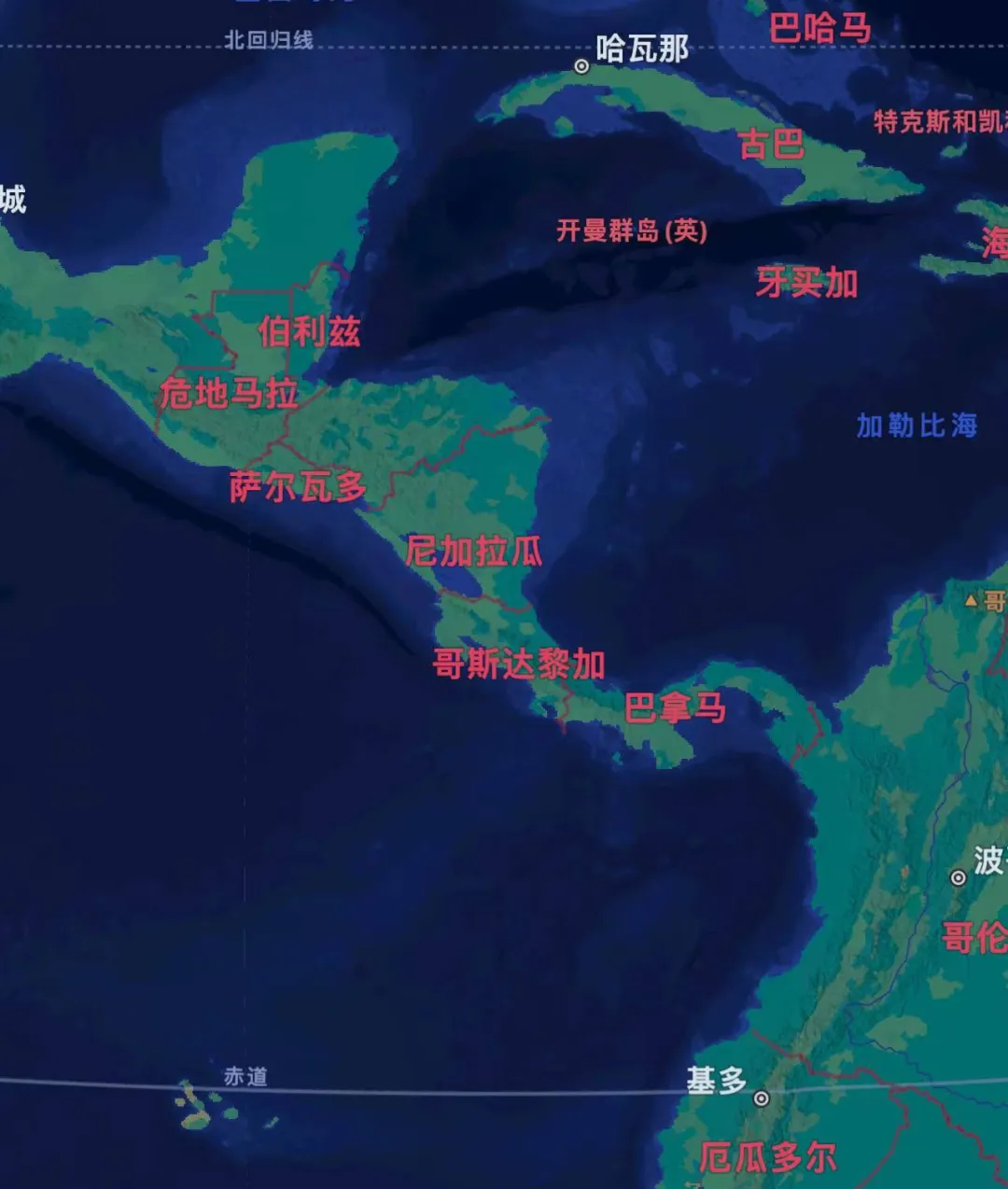
Nicaragua's official name is the Republic of Nicaragua, and it operates as a presidential republic. Geographically, it is located in the central part of Central America, bordered by Honduras to the north, Costa Rica to the south, the Caribbean Sea to the east, and the Pacific Ocean to the west. The total land area is 130,400 square kilometers, administratively divided into 16 departments and 2 autonomous regions.
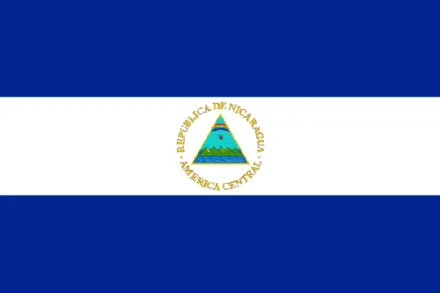
The flag of Nicaragua is rectangular, composed of three equal horizontal bands of blue, white, and blue arranged from top to bottom. This color scheme is inherited from the flag of the Federal Republic of Central America and also symbolizes the country's unique position between the Pacific Ocean and the Caribbean Sea. In the center of the flag is the Nicaraguan coat of arms, the main body of which is a triangle bordered by three golden lines, representing equality, truth, and justice. The five green volcanoes inside the triangle symbolize the five member states of the former Federal Republic of Central America, while the blue portions represent the Pacific Ocean and the Caribbean Sea separated by the Central American land bridge. Above the green volcanoes stands the "Pole of Liberty" and the "Cap of Liberty," with a rainbow at the top symbolizing hope, and the outer ring encircling the English name of Nicaragua.
In terms of topography, Nicaragua's north-central region consists of highlands, the east is coastal plains covered with jungles and swamps, low and flat, while the west is coastal lowlands with many volcanoes and lakes distributed on its eastern side. The plains of Nicaragua have high temperatures and abundant rainfall, belonging to a tropical maritime climate; the western coastal lowlands receive significantly less rainfall than the east, with distinct dry and wet seasons, characterized by a tropical savanna climate. The central highlands have an average annual temperature of about 18°C, with annual precipitation between 1,500 and 2,500 millimeters, and the rainy season runs from May to December each year.
Coffee Producing Regions
Nicaragua's coffee cultivation is mainly concentrated in three producing regions: Jinotega, Matagalpa, and Nueva Segovia. These areas generally use Caturra and Bourbon as the primary cultivated varieties, and the coffee harvest period for all falls between December and March of the following year.
Jinotega: Both the producing region and its capital city derive their names from the Nahuatl word "xinotencatl," meaning "city of the elderly." The economic lifeline of this area has long been closely tied to coffee, and it is also one of Nicaragua's most important coffee origins, with elevations ranging from 1,100 to 1,700 meters. The harvest period is from December to March of the following year, with Caturra and Bourbon as the main cultivated varieties.
Matagalpa: This region is also named after its capital city, and within it is a coffee-themed museum. Coffee cultivation is mainly concentrated at elevations between 1,000 and 1,400 meters. The harvest period lasts from December to February of the following year, with Caturra and Bourbon as the main varieties.
Nueva Segovia: This region is located on Nicaragua's northern border, with elevations between 1,100 and 1,650 meters. In recent years, this producing region has gradually built a reputation for having the country's best coffee and has achieved impressive results in Nicaragua's Cup of Excellence competition. The harvest period is from December to March of the following year, with main cultivated varieties including Caturra, Catuai, and Bourbon.
Coffee Grading System
Strictly High Grown (SHG): 1,500–2,000 meters
High Grown (HG): 1,300–1,500 meters
Medium Grown (MG): 1,000–1,300 meters
Low Grown (LG): 500–1,000 meters
The above content is compiled by CoffeeHunters, a coffee news website.


