







Which pour-over coffee misconceptions trip up self-taught brewers?
Self-taught pour-over brewers often pick up five recurring misconceptions: fixating on brewing technique before understanding extraction, misreading bloom timing, judging freshness by the dome, using flow cutoff to dodge bitterness, and over-mystifying the Golden Cup. Each one distorts how water temperature, grind size, and coffee-to-water ratio interact, so the resulting cup misleads more than it teaches.
The underlying logic matters more than the surface form of any recipe. A technique copied without knowing why it uses a given temperature, grind, or ratio only works for one bean or roast level. Switch to beans with different coffee attributes, or change how the processing coffee beans were handled, and the same method delivers a different result.
On the journey of teaching yourself pour-over coffee, information is scattered and channels are numerous. Without guidance, it is easy to fall into certain deep-rooted misconceptions. Today, Front Street Coffee will sort out the five most common "knowledge minefields": from blindly pursuing brewing techniques and confusion over bloom timing, to judging freshness by the dome, using flow cutoff to avoid bitterness, and over-mystifying the Golden Cup extraction. These misconceptions seem minor, but they directly affect your understanding of extraction principles and the final flavor presentation. Only by clarifying the underlying logic and understanding the interaction between water temperature, grind size, and coffee-to-water ratio can you truly master different brewing methods and let every bean release its deserved brilliance.
However, there are now all kinds of ways to learn pour-over, with a huge amount of information and no systematic organization, so it is easy to unknowingly step into a misconception while self-studying. If no one around corrects you in time, you may sink deeper and keep going wrong. So today, Front Street wants to talk with everyone about those "knowledge minefields" that often lead people astray when learning pour-over coffee on their own.
1. Overly fixating on brewing techniques
Many friends who have just encountered pour-over, before they even understand the basic principles of extraction, cannot wait to try various brewing methods, because they think brewing technique is the key factor determining coffee flavor.
Different brewing methods do indeed bring differences in mouthfeel, but compared with the taste presented by these techniques, the core logic behind them is more important. You need to understand that the design philosophy of any brewing method follows the same principle:
Heat an appropriate amount of water to a suitable temperature, then within the proper time reasonably extract coffee grounds of an appropriate grind size.
If we do not understand why a certain technique uses this water temperature, this grind size, and this coffee-to-water ratio, then what we replicate is only the surface-level form of that brewing method. If you only learn the superficial parts, that technique can only apply to one bean or beans of one roast level. Once you switch to another bean with completely different attributes (such as a different roast level or processing method) , it will be hard for you to bring out the advantages of that brewing method, and you also will not be able to fully express the bean's flavor.
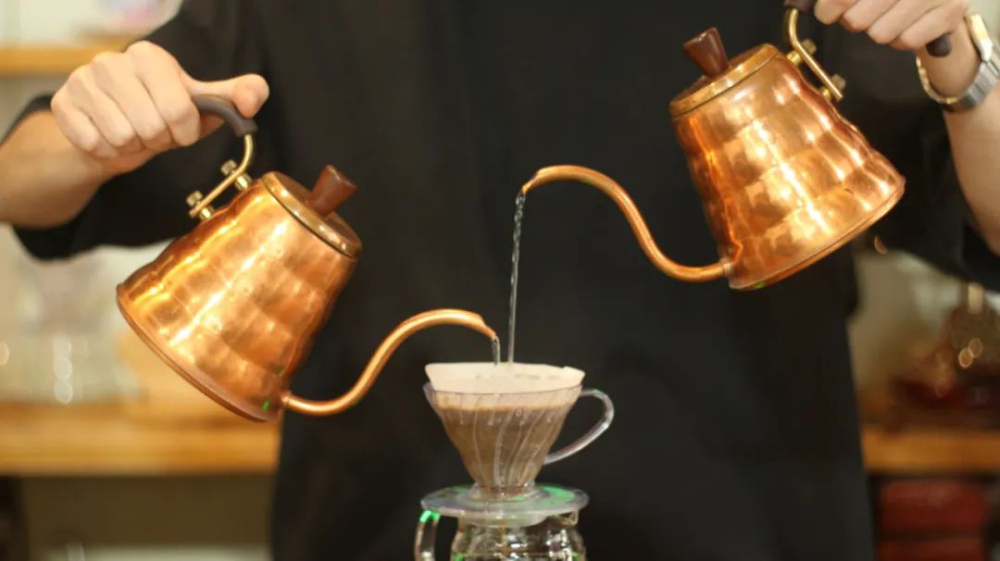
Therefore, understanding the underlying logic behind a brewing method is more important. And before that, we must first clarify the interrelationship among water temperature, grind size, and coffee-to-water ratio, so that we can better understand and master the essence of brewing methods.
2. The timing point of the bloom timer
During pour-over blooming, should the timer be pressed before pouring or after pouring? The difference between the two is 7 to 9 seconds (mainly depending on the strength of the pouring stream) . This time difference affects the total brewing time, and in turn interferes with our judgment of the brewing process. Therefore, this question confuses most people.
Generally speaking, the extraction time we refer to is the period from when the coffee grounds first contact hot water to when the last drop of coffee liquid leaves the coffee grounds. So the timer should be started at the very beginning of the bloom, because at that point the coffee grounds have already begun to be extracted and are continuously releasing golden bubbles.
3. If the bloom does not dome up, it means the coffee is not fresh
There is another point in the bloom stage that easily causes misunderstandings among beginners, and that is the doming condition of the coffee bed.
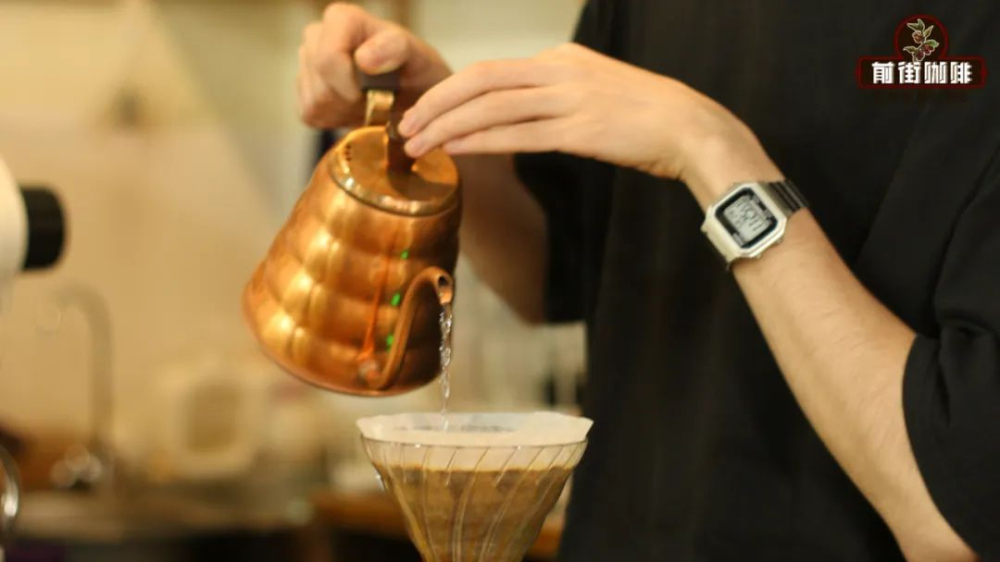
For most friends just starting out, the brewing sign that a bean is not fresh is that during the bloom it cannot rise into a large "hamburger"-like dome. But in fact, the size of the coffee bed's dome depends on the amount of carbon dioxide in the coffee grounds. The more carbon dioxide, the larger the dome. However, while large amounts of carbon dioxide are present, they also hinder hot water from extracting flavor compounds, so some denser beans need to rest for a period of time to let this carbon dioxide escape before extraction. At that point, although the beans can no longer dome up largely during the bloom, that is precisely when they are in a "fresh" state.
4. I do not want bitterness, so I cut off the flow!
Removing the dripper before the coffee has finished dripping is called "flow cutoff" in the industry. Generally speaking, flow cutoff is intended to prevent negative flavors from appearing in the coffee due to excessively long extraction time. But many friends mistakenly think that the tail end is the stage where bitterness is released in large amounts, so it must be cut off. As a result, whether brewing at home or ordering outside, they treat flow cutoff as a fixed procedure.
However, friends who often read Front Street articles should know that the coffee liquid at the tail end is not the culprit that makes the whole cup bitter. Excessive extraction efficiency is! When the beans, extraction parameters, and brewing technique are all normal, there is no need to worry at all that the coffee will taste bitter. So please do not blindly use flow cutoff to avoid bitterness. The brewing data is more important.
5. Pursuing Golden Cup extraction
Golden Cup extraction is a concept derived from research on a group of people's taste preferences. When a cup of coffee's extraction yield and concentration fall within a certain numerical range, that cup's taste will be liked by the largest number of people. After some friends learn this concept, they treat it as a "standard": the coffee must be brewed into this Golden Cup extraction range! If the extraction yield and concentration are not in this range, then the coffee must not taste good!
But you should understand clearly that coffee falling within the Golden Cup extraction range is not necessarily tasty, and coffee outside the Golden Cup extraction range is not necessarily bad. This depends entirely on the taste preferences of the drinking group. Different people have different dietary habits and different preferred tastes. We cannot unify everyone's preferences, so numbers cannot fully represent whether a cup of coffee is good or bad.
To judge whether a cup of coffee is good or bad, you should make the evaluation through direct contact, that is, by tasting it yourself. Rather than staring fixedly at the numbers, which will only greatly compress your room for experience and make you miss a large number of delicious, good coffees!
The above content is compiled by CoffeeHunters, a coffee news website.


