







Why Did Vietnam Coffee Prices Fall Back?
Coffee futures have pulled back from recent highs. London robusta September contracts fell to $3,985 per ton, while New York arabica September futures sat at 216 cents per pound. The retreat followed robusta's record $4,339 per ton, a peak driven by drought that cut Vietnam's output and prompted growers to hold stock.
The downturn came after Brazil and Vietnam, the two largest producers, released export reports showing strong volumes. Vietnam's coffee exports reached 75.6 tons in the first four months of 2024, worth $2.57 billion, with average export prices at $3,402 per ton. Drought persists in both countries, so the market remains in a wait-and-see mood.
After a significant climb in the earlier period, coffee futures prices have recently retreated. London robusta September contracts fell to $3,985 per ton, while New York arabica September contracts stood at 216 cents per pound. Previously, robusta had hit a historic high of $4,339 per ton, mainly driven by reduced output due to drought in Vietnam. However, the latest export reports from both Brazil and Vietnam showed strong growth, and declining prices in soft commodities such as cocoa made investors more cautious, weighing the market down. Yet global weather remains unstable, with drought persisting in Brazil and Vietnam, and concerns over future output have not dissipated, leaving the market largely in a wait-and-see mood.
Some time ago, the coffee futures market experienced a sustained rally, with robusta coffee futures setting a new all-time record, touching a high of $4,339 per ton. This surge also had a knock-on effect, pushing arabica futures prices higher as well.
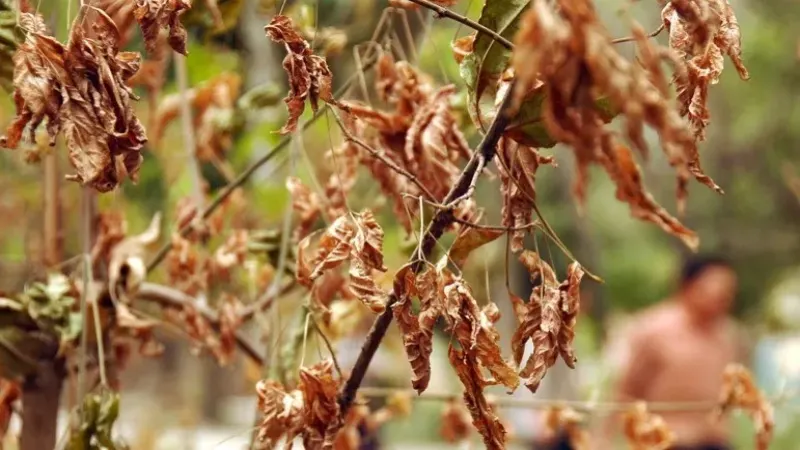
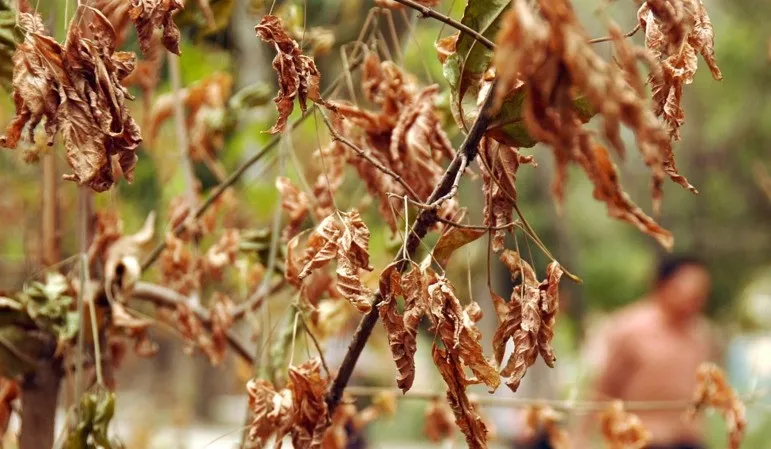
The reason was that Vietnam was in its dry season, with drought more severe than usual and groundwater sources drying up. Coffee plants were at the flowering stage but wilted and yellowed due to lack of water, causing Vietnam's coffee output to drop significantly.
After the output decline, local growers had room to hoard stock in anticipation of higher prices, while traders, fearing major losses from contract defaults, were willing to buy coffee beans at high prices, further pushing coffee prices up.
However, the market has recently begun to turn downward. London September robusta futures are currently at $3,985 per ton, while New York September arabica futures are at 216 cents per pound.
The reason for the price retreat is that Brazil and Vietnam, the two largest coffee producers, successively released export reports, both showing that the two countries' export volumes remained strong.
According to a report by the Vietnam Coffee and Cocoa Association, in the first four months of 2024, Vietnam's coffee exports reached 75.6 tons, with export value of $2.57 billion. Compared with the same period in 2023, output rose 5.4%, turnover increased 57.9%, and the average export price reached $3,402 per ton, up $49.7 from the same period in 2023.
Looking at April alone, coffee exports were 170,000 tons, up 3.9% year on year but down 10% from March. April export value was $644 million, surging 61.5% year on year driven by the recent sharp price rise, with the average export price that month reaching as high as $3,791 per ton.
Meanwhile, the Brazil Coffee Exporters Association (Cecafe) said that in April 2024 Brazil exported a total of 4.6 million bags of coffee, of which 3.5 million bags were arabica, up 27% from the same period in 2024.
In addition, on other exchanges, most tropical agricultural products traded lower. Cocoa prices fell to $8,000 per ton, a drop of nearly 14%. This development made some investors and large investment institutions more cautious toward the entire soft commodities sector (including cocoa, coffee, and sugar), generally taking a wait-and-see stance, which also pushed prices lower.
However, current global weather conditions remain unstable. Drought in Vietnam is still ongoing, and Brazil is also suffering from drought, with major producing regions seeing no rainfall over the past week. Normally, cold air would move north from southern Brazil and meet heat waves to form rain, but this time extreme heat blocked the cold air from moving north, instead triggering heavy rain in Rio Grande do Sul in the south, while the rain could not reach central Brazil. Therefore, the market's concerns about future output have not dissipated, and it remains in a wait-and-see state. For friends who love coffee, you may want to follow Front Street Coffee's related products and seek a flavor choice that suits you amid market fluctuations.
The above content is compiled by CoffeeHunters, a coffee news website.


