








How Do You Fix a Flat Coffee Bed in Pour-Over Brewing?
A flat, even coffee bed with no indentation after brewing means water flow control during extraction was insufficient, so the grounds never formed the bowl shape that supports even extraction. Three mistakes are most common: not raising the coffee bed, using too little stirring force from the water stream, and circling with too wide an amplitude. Each one leaves the bed shallow and the brew uneven.
The fix is technique, not bean choice. Raising the bed means pouring with a larger flow to lift the water level, which lifts the grounds; as water drains, the bed settles and the grounds cling to the dripper walls. How deep the final indentation looks depends on how much coffee you used, not on whether the beans were lightly roasted or dark, so a shallow bed is not proof of a light roast.
Many pour-over beginners don't encounter clogging issues during brewing, but after finishing, the coffee bed is flat and even, with no indentation. This indicates that the water flow control during extraction is inadequate, and the coffee bed cannot form a bowl shape, which easily leads to uneven extraction. Front Street has summarized three common mistakes: not raising the coffee bed, insufficient stirring force from the water flow, and excessive circling amplitude, analyzing the reasons for each and providing adjustment methods. Additionally, the depth of the coffee bed indentation is not necessarily related to the roast level; whether a indentation can be formed depends on the pouring technique rather than the bean's roast degree, and the depth of the indentation is determined by the amount of coffee grounds.
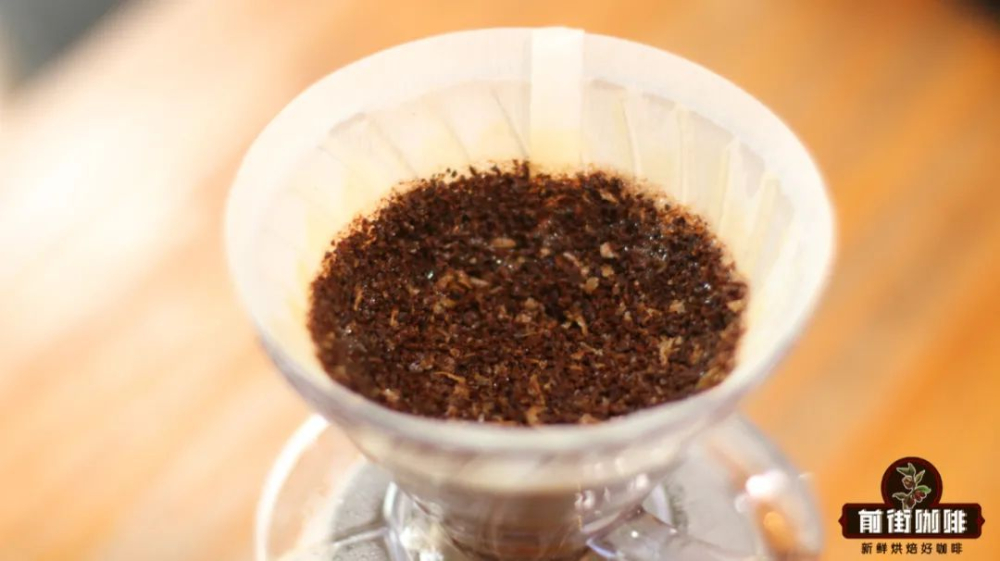
However, for many who are new to pour-over, even without clogging, the coffee bed often ends up flat after brewing, with no noticeable height variation. This actually means that the water flow control during extraction is inadequate, and the coffee bed cannot form a "bowl" shape. This situation easily leads to uneven extraction. Front Street has compiled several common brewing mistakes; if you also can't form a coffee bed indentation, why not check and see if you've made one of them~
1. The coffee bed is not raised
Many people don't deliberately raise the coffee bed when brewing coffee; doing so not only makes it difficult for the indentation to form but also easily causes uneven extraction in some drippers.
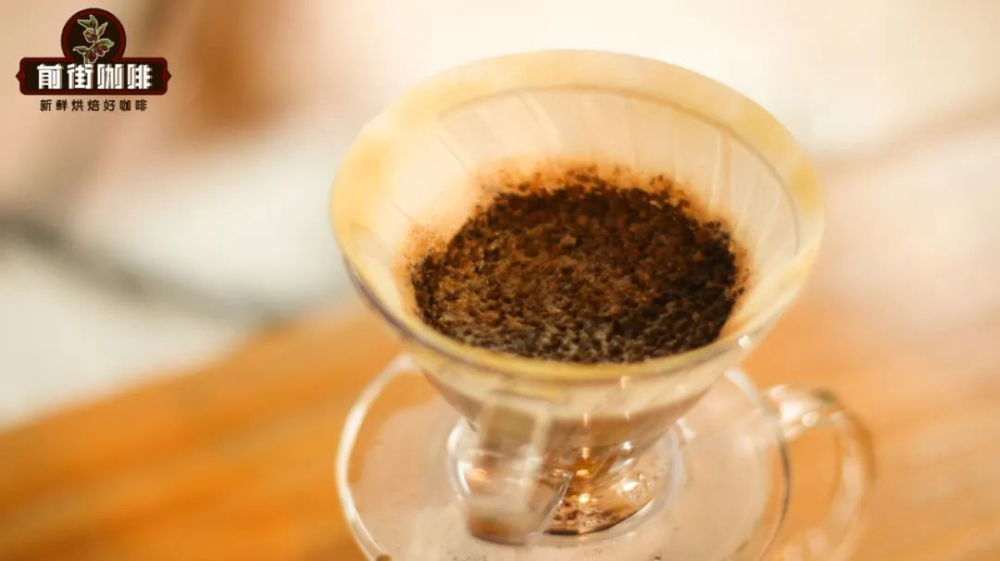
Especially when using a conical dripper, raising the coffee bed is particularly important. The conical structure causes a large amount of coffee grounds to gather in the central area. If the coffee bed is not raised to spread the grounds, the coffee grounds piled on top will continue to be repeatedly washed by the hot water with the highest extraction efficiency, while the coffee grounds at the bottom can only be extracted by nearly saturated coffee liquid, resulting in uneven extraction. Therefore, we need to raise the coffee bed. So-called raising the coffee bed means using a larger water flow to push the water level higher; as the water level rises, the coffee grounds are also lifted. As the hot water gradually seeps out from the bottom, the water level slowly falls, and during this process, the coffee grounds cling to the sides of the dripper, forming a "coffee wall." If subsequent hot water is poured concentrated in the center, then after all the coffee liquid has drained, you will most likely get a bowl-shaped coffee bed indentation, and the coffee will also achieve even extraction—two benefits at once.
2. The stirring force of the water flow is too small
Insufficient stirring force means the water flow lacks penetration power, cannot push open the coffee bed, and cannot stir the coffee layer, so the coffee bed remains flat from start to finish. There are two reasons for weak water flow impact: insufficient pouring height and too small a water flow rate.

Both of these make the poured hot water lack penetration power, neither providing a stirring effect nor raising the coffee bed. Although this can prolong the extraction time, if not used under reasonable conditions, it will reduce extraction efficiency, especially when brewing light-roasted beans, where uneven extraction is very likely. So when pouring, it's best to pay attention to the reasonable coordination of water flow rate and water flow impact. Friends who want to learn more can move on to this article~ "How should large and small water flows be used?"
3. The circling amplitude is too large
Even if the penetration power is appropriate, the water flow rate is large enough, and the coffee bed has been raised, if the circling amplitude is too large during subsequent pouring, the hot water will hit the wall of the dripper. The coffee grounds adhering to the wall will be washed down by the hot water, and the indentation that was about to form will turn back into a "plain." Not only that, the hot water will also bypass the coffee grounds along the wall and seep directly from the bottom. The coffee is not fully extracted, and the hot water without coffee concentration will mix into the server, affecting the overall coffee liquid, ultimately manifesting as: a thin mouthfeel and a bland taste.
So the circling range in pour-over coffee is particular. If you want to circle widely, try to circle at the middle position between the center of the dripper and the wall (as shown in the picture below). This can effectively improve the extraction rate of the hot water and reduce the occurrence of bypass water.

It is worth mentioning that many people think only dark-roasted beans can produce a coffee bed indentation, but this is a misconception. Dark-roasted beans merely produce a slightly larger indentation. Whether the coffee beans are dark-roasted or light-roasted, as long as the pouring method is correct, the coffee bed will eventually form an indentation shape. However, affected by the bean's expansion rate and density, the final size of the indentation will vary. The depth of the indentation depends on the amount of coffee grounds~ Therefore, Front Street wants to say that not being able to form an indentation has nothing to do with the roast level; the key is whether the technique is correct~
- END -
The above content is compiled by CoffeeHunters, a coffee news website.


