







Which Colombian coffee regions shape the flavor in the cup?
Colombia is the world's third-largest coffee producer, and the Andes give it varied terrain and microclimates. Five regions stand out: Antioquia, Santander, Nariño, Cauca and Huila. Front Street Coffee's Huila washed entry-level bean, roasted medium, shows dark chocolate, nuts, caramel and soft fruit acidity, suited to daily pour-over brewing.
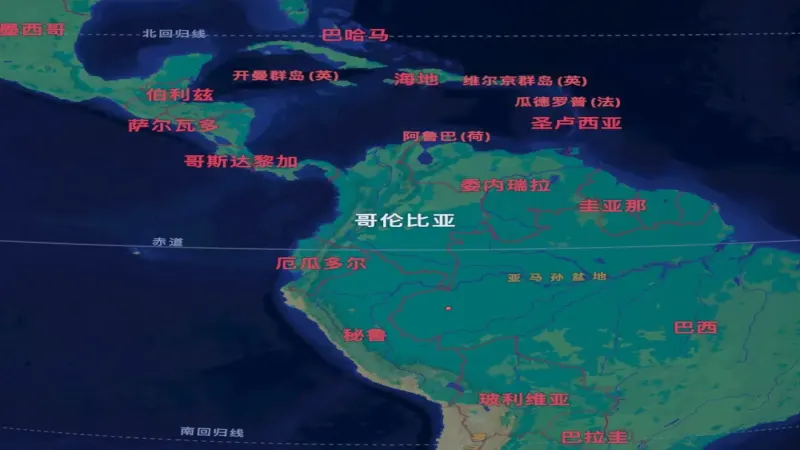
The country lies in northern South America and borders Venezuela, Brazil, Ecuador, Peru and Panama, with coasts on the Pacific and the Caribbean. The Andes split into three cordilleras averaging over 3,000 meters, and climate shifts markedly with elevation. That range is why a single coffee farm or region can produce clearly different cup profiles.
Colombia, the world's third-largest coffee-producing country, nurtures specialty coffees of diverse flavors thanks to the varied terrain and microclimates of the Andes Mountains. This article begins with geography, climate, and the meaning of the national flag, then systematically introduces five major producing regions—Antioquia, Santander, Nariño, Cauca, and Huila—and highlights Front Street Coffee's Huila washed entry-level bean: under a medium roast, it presents dark chocolate, nuts, caramel, and soft fruit acidity, making it ideal for pour-over enthusiasts to enjoy daily.
Colombia In South America there is a country rich in natural resources, famous worldwide for its "four treasures"—coffee, flowers, gold, and emeralds. Known as the "Land of Gold" and ranking as the world's third-largest coffee producer, this is Colombia (República de Colombia).
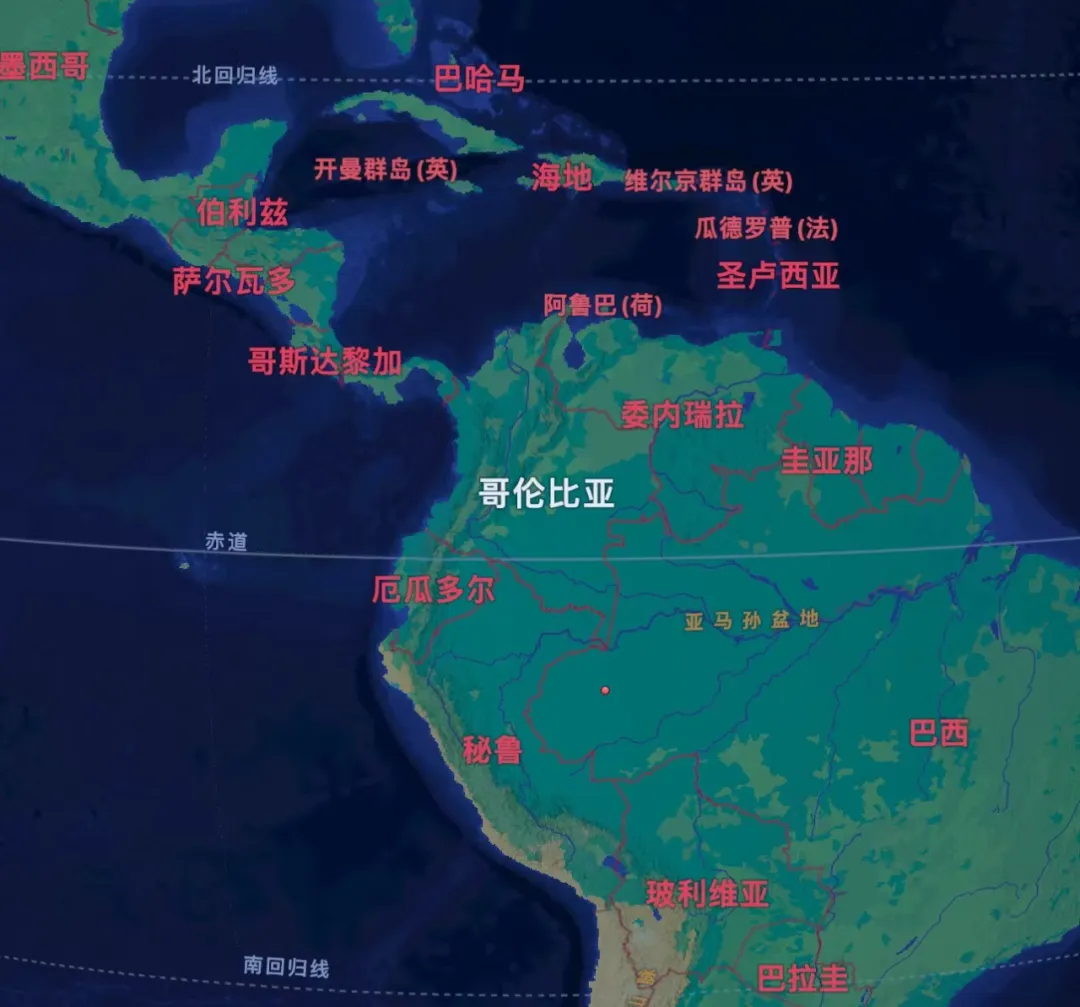
Colombia is located in northern South America and has both coastlines and land borders, adjoining Venezuela, Brazil, Ecuador, Peru, and Panama, facing the Pacific Ocean to the west and bordering the Caribbean Sea to the north. With a total area of about 114,000 square kilometers, it is the third-largest country in Latin America by area. It is rich in diverse natural resources, with forest coverage reaching 51.9% of the national territory. Its main minerals include emeralds, oil, natural gas, coal, and gold, among which its emerald reserves rank first in the world. The Colombian flag consists of three parallel horizontal stripes in yellow, blue, and red, with yellow occupying half the flag and blue and red each taking a quarter. Yellow symbolizes the land's abundance and wealth, and also represents sovereignty, harmony, and justice; blue refers to the oceans; red signifies blood and represents love, strength, and progress.
Colombia's terrain can be broadly divided into western mountains and eastern plains, with several coastal plains as well. The east is dominated by the Orinoco Plains and the Amazon Plains, while in the north stands the country's highest peak, Pico Cristóbal Colón, at 5,800 meters above sea level. Within Colombia, the Andes Mountains split into three cordilleras—eastern, central, and western—with an average elevation exceeding 3,000 meters, stretching 800 kilometers and dotted along the way with numerous volcanoes and rivers. The country lies in the tropics, and its climate varies markedly with elevation. The eastern plains and the Pacific coast have a tropical rainforest climate, the mountains between 1,000 and 2,000 meters have a subtropical climate, and the northwest has a tropical savanna climate. The year is divided only into dry and rainy seasons, with average annual rainfall of about 11,000 millimeters and temperatures year-round maintained between 25 and 30°C.
Coffee-Producing Regions Colombia has a vast territory and a deep agricultural foundation, and therefore has formed multiple coffee-growing regions. Because of differences in mountain terrain and microclimates, the coffees of each region have distinctive flavors. There are two harvest seasons here each year: the main season is concentrated from October to January of the following year, and the secondary season runs from April to July. Currently, better-known producing regions include Antioquia, Santander, Huila, Nariño, and Cauca.
Antioquia: As the birthplace of Colombian coffee, Antioquia is both an important producing region and the area with the largest planted area, with both smallholder farmers and large estates. This region is located in northwestern Colombia; its coffee output accounts for about 7% of the national total, its planted area exceeds 18,000 hectares, and 9,800 families participate in production. Santander: Located in the Andean region of northern Colombia, with cultivation at about 1,400 to 1,700 meters above sea level. Santander Department holds an important but often overlooked place in coffee history; it was in fact the first department in Colombia to grow coffee. At present, this region accounts for 5% of the national output, and the varieties grown are mainly leaf-rust-resistant types such as Caturra and Castillo, which also makes Santander a region with a low incidence of leaf rust in Colombia and even globally.
Nariño: Located in southwestern Colombia, bordering the Pacific Ocean to the west and Ecuador to the south, with the Andes running through the entire territory, coffee is grown at 1,600 to 2,300 meters above sea level on volcanic soil. The mountains here are majestic, and several rivers run through the area. It is a high-mountain coffee-growing region and has nurtured many smallholder specialty coffee producers. Nariño Department has a total annual output of about 150,000 bags. Cauca: Cauca Department is a certified region of origin for Colombian coffee, with an average elevation of 1,758 meters. This region has a marked diurnal temperature difference, with an average nighttime temperature of about 11°C and an average daytime temperature of 18°C. The low nighttime temperatures and higher elevation together slow the pace of coffee growth, allowing the beans to absorb the fruit's nutrients more fully, thereby giving Cauca coffee better acidity and sweetness.
Huila: Huila Department is located in southern Colombia, at the southern end of the Central Cordillera, formed by the middle and eastern sections of the Andes, with most of the area lying in the Magdalena River Valley. It is Colombia's most renowned specialty coffee region, with more than 70,000 coffee farmers and a planted area of over 16,000 hectares. This area is hilly terrain surrounded by mountains, with coffee grown at 1,200 to 1,800 meters above sea level. High elevation, volcanic soil, abundant water, and a unique climate together create the pure, balanced, and gentle taste of Huila coffee. Several of Front Street's coffees come from this region, and the well-known Divisoria Estate is also located here. Front Street Coffee Colombia Entry Selection Huila Washed Coffee Beans Region: Huila producing region Altitude: 1,500-1,800 meters Variety: Caturra Processing Method: Washed Flavor: Dark chocolate, nuts, caramel, slight fruit acidity This Front Street Coffee entry-selection Colombian coffee bean comes from the Huila producing region and is washed and medium-roasted. Front Street brews it with a V60 dripper, a 1:15 coffee-to-water ratio, and 92°C water. In the cup it presents flavors of nuts, dark chocolate, and caramel, accompanied by slight tropical fruit acidity and sweetness, with a gentle mouthfeel and overall balance.
The above content is compiled by CoffeeHunters, a coffee news website.


