








Why do coffee particles slow the final pour-over drain?
Pour-over total drip time depends on grind size, how the coffee particles absorb water, pouring technique and dripper construction, so it cannot be controlled precisely. A final stage that drains slowly stretches extraction and tends to bring out bitter and off-flavors. The article breaks down the causes, from ground quality and roast level to pouring technique and coffee bed management.
With a digital scale, a full drip of about 2 minutes suggests the brewing parameters sit in a reasonable range, while running 30 seconds to a minute over or well under that points to a problem. The most frequent issue is pooling in the last stage. Adjustments to grind, pour pattern and bed management are the practical fixes, rather than changes to the coffee bean mixture itself.
The total drip time of pour-over coffee is influenced by multiple factors working together, including grind size, the water absorption state of the particles, pouring technique, and dripper construction, making it very difficult to control precisely. Many people new to pour-over habitually use time as the basis for judging whether the flow rate is normal. Once the water in the final stage is slow to drain and the extraction time gets dragged out, the coffee easily develops bitter and off-flavors. This article focuses on the common problem of water pooling in the final stage of pour-over coffee, analyzing the causes one by one from aspects such as coffee ground quality, bean roast level, pouring technique, and coffee bed management, and provides corresponding solutions summarized by Front Street Coffee to help everyone find the real reason for poor drainage and make targeted adjustments.

Pour-over coffee is a typical representative of drip extraction. The essence of the entire process is to first pour hot water into the coffee bed, then let the water pass through the filter paper on its own and flow down into the server. With the help of a digital scale, we can fairly accurately record the time spent pouring. However, the total time for all the coffee liquid to drip into the server is constrained by many variables such as grind size, the water absorption condition of the coffee particles, pouring technique, and dripper structure (including filter paper material). Therefore, it is unrealistic to want to precisely control the duration of the entire drip process.
For those just starting out, time is often the most intuitive and easiest reference standard for flow rate to grasp. If, after all the planned water has been poured, the coffee liquid in the dripper finishes dripping in about 2 minutes, that indicates the various brewing parameters are broadly within a reasonable range. But once the total time exceeds too much (30 seconds to 1 minute), or is far short of 2 minutes, it suggests that some step may have gone wrong and needs to be quickly investigated and addressed.
Among the many extraction-time issues Front Street Coffee has dealt with, the most frequent situation is that the flow rate in the final stage is too slow, causing the overall time to be prolonged. We usually describe this as the coffee "pooling" or "flooding" in the last stage. So how should it be handled?
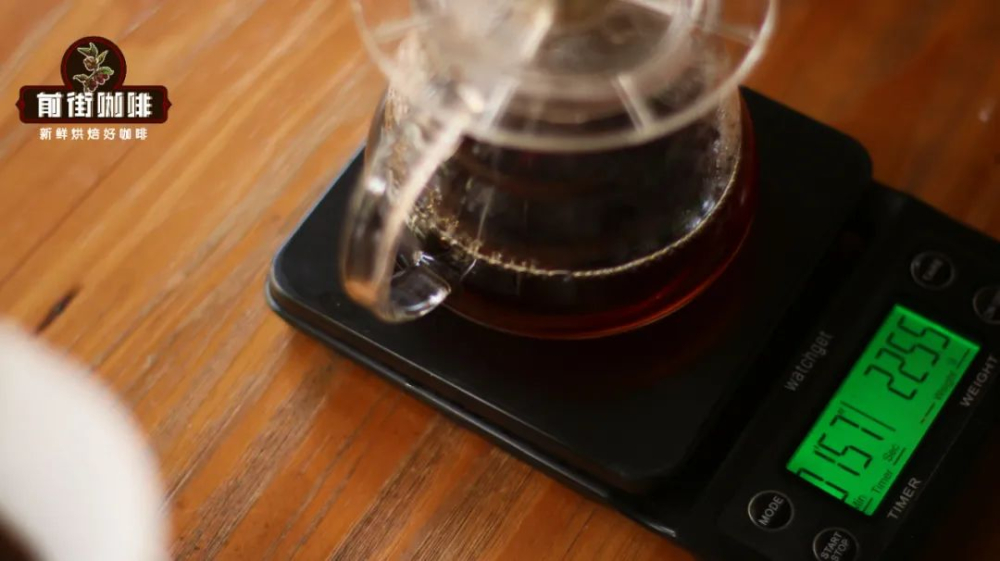
If the pooling is severe, will it affect the taste of the coffee?
No matter which method is used to make coffee, the basic principle of extraction is the same. Taking immersion brewing as an example, if the time is too short, the coffee tends to be weak and tasteless; if the time is too long, it becomes heavy and bitter. This is true for both cold brew and French press. By the same token, the longer a pour-over coffee drips, the more opportunities the coffee grounds have to contact the water, and the more flavor substances are dissolved out. Correspondingly, the possibility of over-extraction is also higher.
When pooling occurs in the final stage, if you carefully observe the coffee bed, you will find that the foam floating on the surface is very sparse, showing a pale yellowish-white color, and sometimes there is even no foam at all, leaving only water accumulated in the dripper. This situation indicates that most of the coffee grounds have already sunk to the bottom and blocked the water flow channels. By the time the water slowly flows into the server, it has most likely already carried out excessive soluble substances from the coffee, and these later-released large molecules are mostly bitter and off-flavors, so the brewed coffee naturally does not taste good.
Why is the water in the final stage so slow to drain?
As mentioned earlier, coffee grounds are the key factor obstructing the water flow. The finer the grind, the greater the resistance and the slower the flow rate. The grind size commonly used for pour-over is roughly equivalent to granulated sugar particles. If sifted through a No. 20 sieve, a coarseness with a pass-through rate between 70% and 80% is relatively suitable. However, grinding cannot be absolutely uniform, which means the coffee grounds will inevitably contain a mixture of coarser and finer particles.
In general, severe pooling in the later stage (coffee liquid still not finished dripping after 2 minutes and 20 seconds) is often because the grinder's grinding quality is not good enough, producing too many extremely fine particles. During circular pouring, water, as the carrier that drives the coffee grounds to move, travels along the stirring path, and the smaller fine particles are the first to get "stuck" in the drainage holes at the bottom, blocking the hot water from penetrating.
If you are brewing fruit-acidity beans with a lighter roast level, on the one hand, the bean structure is denser and its water absorption capacity is weaker; on the other hand, its higher bean density makes it more likely to sink to the bottom first, thereby causing blockage and accumulation.
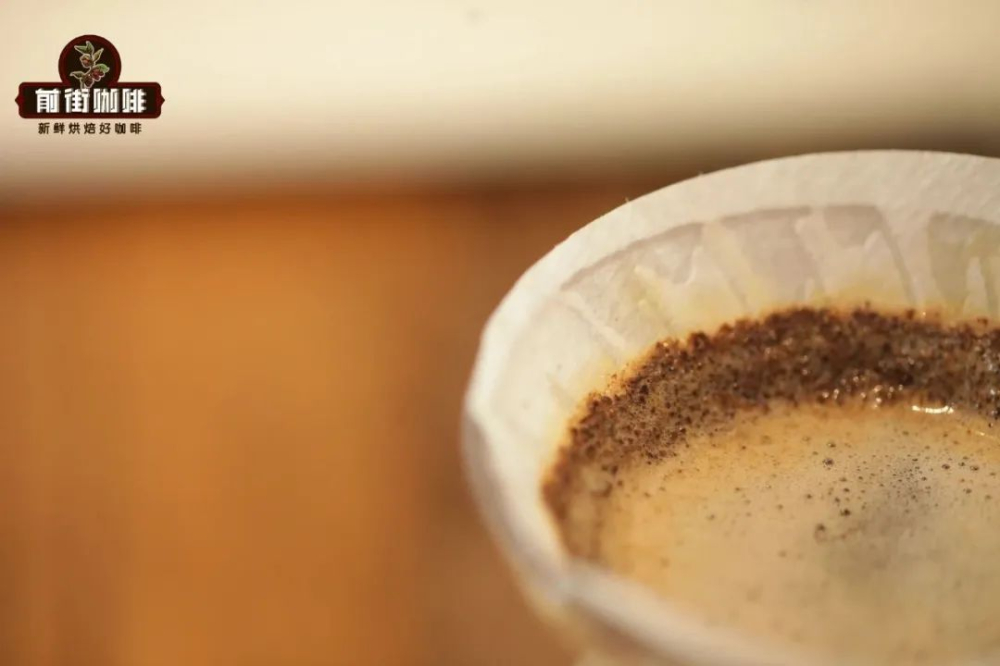
In addition to the influence of grinding, pouring technique can also cause water blockage in the later stage. Some people habitually pour in very large circles when brewing. This technique can gradually raise the water level in the early stage, but in the later stage, the water poured in large circles easily "splashes" onto the filter paper, washing all at once the coffee wall that had previously accumulated on the dripper wall down to the bottom, resulting in the situation where the water will not drain.
Also a matter of coffee bed management: if the pouring force in the early stage is too gentle and the coffee bed is not properly agitated and raised, the coffee layer as a whole settles at the cone angle. Then when it comes to the third pour, even if you raise the kettle spout and use a strong stream, it is difficult to "rescue" the low coffee bed, and the coffee liquid can only slowly drip down along the dripper by gravity.
After understanding the principle, next we need to find the corresponding problem.
Let us help you find the "culprit" causing the pooling.
If, whether you are brewing dark-roasted beans or light-roasted beans, the final coffee bed looks like wet mud as in the picture below, and the time often exceeds 2 minutes, and the coffee has a low, murky feeling, then it indicates that too many extremely fine particles produced by the grinding equipment are the cause. To solve this kind of problem, the most effective way is to directly switch to a grinder with better grinding quality. After all, higher-precision burrs can greatly reduce the trouble caused by extremely fine particles.
Without replacing equipment, Front Street Coffee suggests first trying a coarser grind. After the overall particles become coarser, the corresponding extremely fine particles will also be somewhat reduced. In addition, switching to a dripper with a faster flow rate can also effectively improve the problem of overly slow drainage, such as the Hario V60 and Ice Eye B75 commonly used by Front Street Coffee.
But if slow flow only occurs when brewing light-roasted beans, and you want to avoid the negative mouthfeel brought by prolonged "flooding," you might as well adjust your technique.
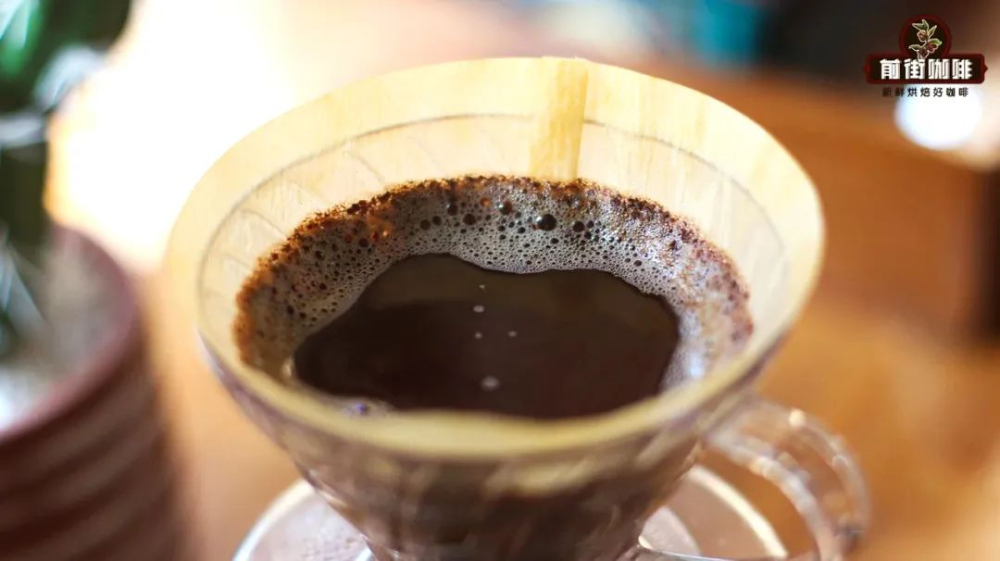
Taking the three-stage method commonly used by Front Street Coffee as an example, after blooming, first pour vertically with a strong stream from the center, maintaining a circular pouring range the size of a one-yuan coin. You can see foam continuously emerging from the middle. As the water level keeps rising, the coffee grounds are gradually pushed to the edge to form a coffee wall about two-thirds high. For the final stage, switch to a gentle stream and still maintain a small circular range. This allows the coffee and water to contact more evenly, while also preventing the coffee grounds at the edge of the dripper from being washed down.
- END - Front Street Coffee (FrontStreet Coffee)
No. 10 Baoqian Street, Yandun Road, Dongshankou, Yuexiu District, Guangzhou City, Guangdong Province
The above content is compiled by CoffeeHunters, a coffee news website.


