







Coffee Regions of Papua New Guinea and the Bird of Paradise Bean
In Papua New Guinea, where do they grow coffee beans is answered by four main regions: Western Highlands, Eastern Highlands, Chimbu, and Jiwaka. The country lies in the southwestern Pacific and includes more than 600 islands, with high-altitude mountains, volcanic soil, and abundant rainfall that suit coffee cultivation.
The Typica variety performs especially well there, and because the terroir resembles Jamaica Blue Mountain, the area is sometimes called Little Blue Mountain. Bird of Paradise beans from Sigri Estate, brought by Front Street Coffee, are a washed Typica example. Under medium-dark roasting they show caramel, cocoa, and almond, with soft citrus acidity as the cup cools.
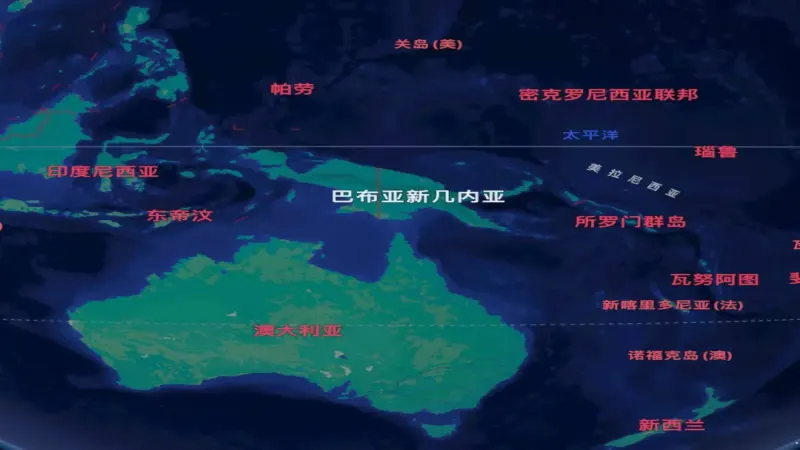
Located in the southwestern Pacific, Papua New Guinea is an island nation made up of more than 600 islands, bordering Indonesia to the west and looking toward Australia to the south. It has high-altitude mountains, volcanic soil, and abundant rainfall, providing exceptional natural conditions for coffee cultivation. The country's coffee is mainly distributed across four major producing regions: Western Highlands, Eastern Highlands, Chimbu, and Jiwaka. Among them, the Typica variety performs especially well, and because its terroir resembles Jamaica Blue Mountain, it is known as "Little Blue Mountain." The Bird of Paradise coffee beans from Sigri Estate brought to you by Front Street Coffee are a typical representative of washed Typica from this region. Under medium-dark roasting, they present a balanced flavor of caramel, cocoa, and almond, with a soft citrus-like acidity emerging as the coffee cools.
Papua New Guinea, officially the Independent State of Papua New Guinea, is located in the southwestern Pacific and is a country composed of numerous islands. It borders Indonesia to the west and faces Australia across the Torres Strait to the south. It is part of the Melanesian archipelago, with more than 600 islands distributed throughout the country.
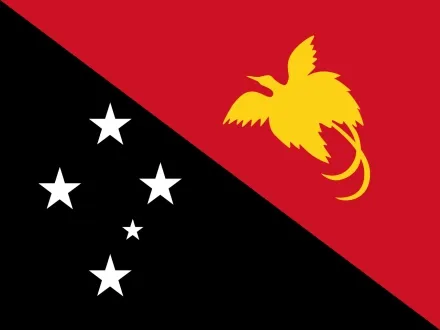
The national flag is rectangular, with a diagonal line dividing the flag from the upper left corner into two triangles of equal area. The upper right area has a red background, with a yellow bird of paradise with spread wings depicted in the center; red represents fierceness and courage. The bird of paradise is also widely known by another name, the bird of paradise, and it is Papua New Guinea's unique national bird, symbolizing the country's independence, the nation's freedom, and happiness. The lower left area has a black background, arranged with four white five-pointed stars of the same size, plus one smaller white five-pointed star; black signifies that the country's territory is located among the "Black Islands," while the arrangement of the five stars corresponds to the Southern Cross, indicating that the country lies in the Southern Hemisphere.
Papua New Guinea has a land area of 462,800 square kilometers and includes more than 600 islands. The terrain of the islands is mainly mountainous, with frequent volcanic activity. The southern region consists of plains and lowlands, the central part is the Central Range, and the northern mountain ranges run parallel to the Central Range and are formed by several independent mountain ranges.
In terms of climate, areas above 1,000 meters above sea level have a mountain climate, while the remaining lower-altitude areas have a tropical rainforest climate. The dry season runs from May to October each year, and the rainy season runs from November to April of the following year. Temperatures in coastal areas average between 21 and 32°C, while mountain temperatures are 5 to 6°C lower than coastal areas, with an average annual rainfall of 2,500 millimeters. This country is close to the equator, has excellent climatic conditions, abundant rainfall, and volcanic soil, making it an ideal place for coffee cultivation.
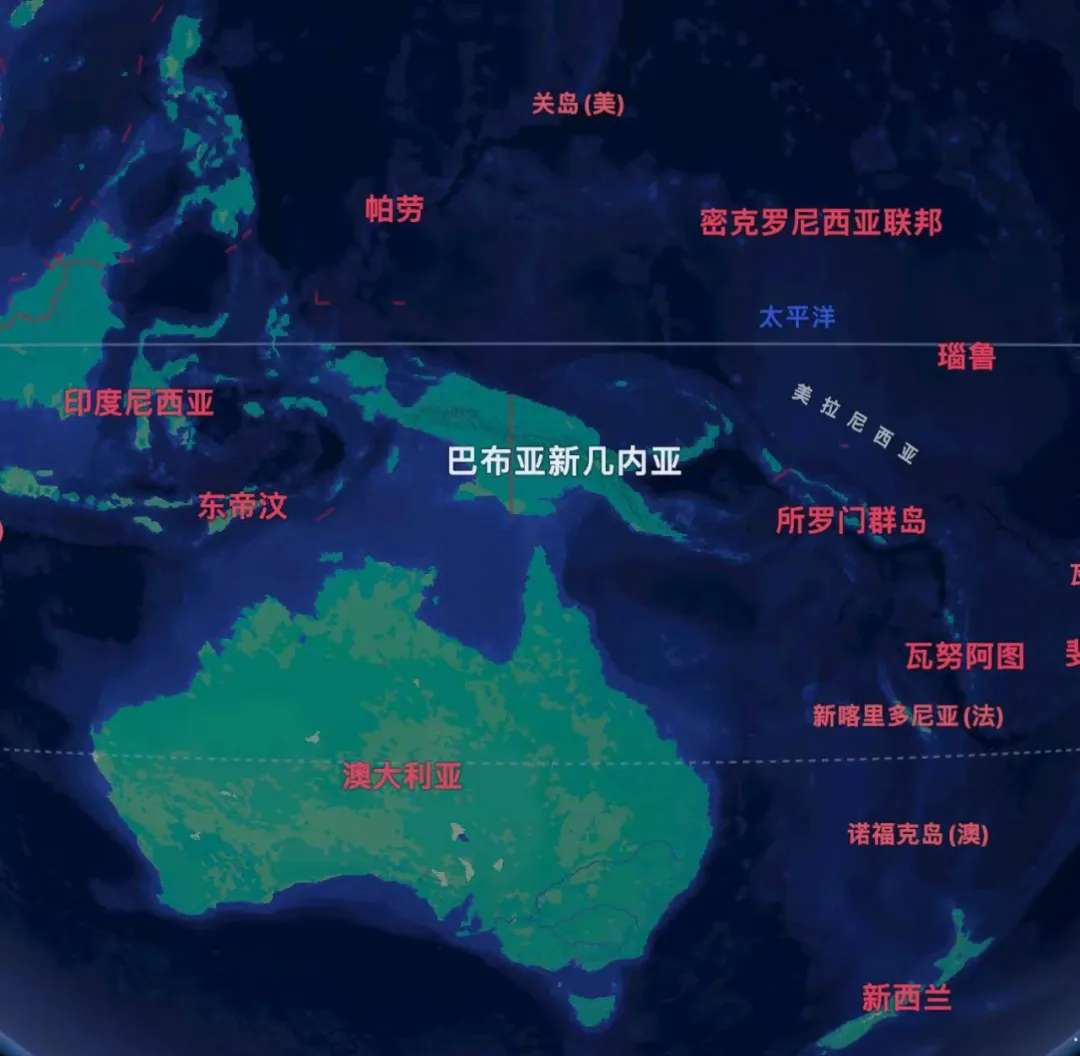
Coffee Producing Regions
At present, coffee cultivation in Papua New Guinea is divided into four producing regions: Western Highlands, Eastern Highlands, Chimbu, and Jiwaka. Among them, the Eastern Highlands and Western Highlands are the main producing areas of Typica, while small amounts of Catimor and Bourbon varieties are also grown.
Western Highlands Province: This region is densely populated, and coffee is the local economic lifeline and the country's largest coffee-producing region. The producing area is inland, with coffee cultivation at altitudes between 1,000 and 1,800 meters. The famous Sigri Estate is located in the Waghi Valley of Mount Hagen.
Eastern Highlands Province: As Papua New Guinea's second-largest coffee-producing region, Eastern Highlands Province is located in the center of the country, with the Bismarck Range running through its entire territory, and cultivation altitudes ranging from 400 to 1,900 meters. Large numbers of smallholder coffee farmers live in the valleys of the province's north. After picking coffee cherries during the harvest season, they send them to processing plants for subsequent processing.
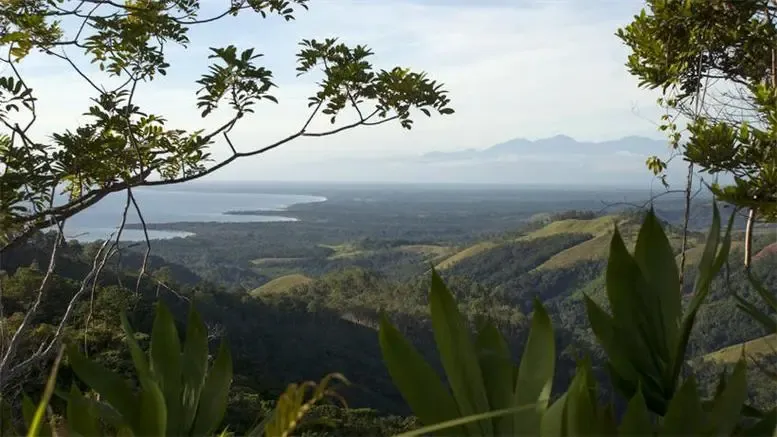
Chimbu: This is a mountainous inland province, and its coffee output accounts for only 7.47% of Papua New Guinea's national coffee production. Chimbu coffee is known for its flavors of dark chocolate, red apple, and stone fruit.
Jiwaka: Located in the central highlands of Papua New Guinea, the Waghi River flows through the main valleys of Jiwaka, with steep volcanic mountains and ridges on both sides of the valleys. Jiwaka is Papua New Guinea's third-largest coffee-growing region, contributing 12% of the national harvest, with cultivation altitudes between 1,400 and 2,000 meters.
Typica Variety
Typica and Bourbon are both among the oldest surviving coffee varieties, and both originated in southwestern Ethiopia. Typica coffee trees have ridged leaves with pointed tips, and their color tends toward green and bronze; the spacing between fruit nodes is relatively long, the fruit is mainly red, the coffee beans are relatively long in shape, and the whole plant is relatively tall. This variety is suitable for cultivation in high-altitude areas, where quality performs better, but yields are low, and it is highly susceptible to coffee leaf rust, nematodes, and berry disease. At present, Typica is grown in countries such as Peru, Papua New Guinea, and Jamaica. Papua New Guinea has an island-type climate, high-altitude conditions, and volcanic soil similar to Jamaica's, so it is called "Little Blue Mountain."
Front Street Coffee Papua New Guinea Sigri Estate Bird of Paradise Coffee Beans Region: Western Highlands producing region Estate: Sigri Estate Altitude: 1,500 meters+ Variety: Typica Processing Method: Washed Flavor: Caramel, cocoa, almond, balanced, citrus acidity when cool
This Bird of Paradise coffee from Front Street Coffee is washed and roasted to a medium-dark level. Front Street uses a KONO dripper, brewing with a 1:15 coffee-to-water ratio and a water temperature of 89°C. From the first sip, you can sense the flavors of caramel, cocoa, and almond. The body is rich and silky, and as the temperature drops, it reveals a citrus-like acidity, making the overall cup soft and balanced.
The above content is compiled by CoffeeHunters, a coffee news website.


