







Why are some coffee beans oily and why should you rest them?
Dark-roasted espresso beans need a longer resting period for two reasons. They hold more carbon dioxide than lighter roasts, and that gas interferes with stable extraction on an espresso machine, lowering crema quality and raising dialing-in costs. During resting, medium-dark beans also secrete oil, which builds crema stability and body.
Front Street Coffee suggests resting medium-dark espresso beans about 10 days, with darker roasts extended depending on condition. If you ask why are some coffee beans oily, the answer is that roast level drives how much oil migrates to the surface. Too much oil accelerates oxidation, so sealed storage and timely consumption keep the flavor from fading.
Many coffee enthusiasts wonder: dark-roasted beans have a loose texture, so logically the resting period should be shorter—why does it actually require longer? This article approaches the question from two angles—carbon dioxide release and oil secretion—to explain the fundamental reason why the resting period for dark-roasted espresso beans is extended. Excessive carbon dioxide can interfere with stable extraction on an espresso machine, affecting crema quality and dialing-in costs; while medium-dark roasted beans gradually secrete oil during resting, which can improve crema stability and coffee body. Front Street Coffee recommends resting medium-dark roasted espresso beans for about 10 days, with darker roasts extended depending on their condition. It also reminds that too much oil accelerates oxidation, so attention should be paid to sealed storage and timely consumption.

The length of the resting period is usually judged in combination with the roast level of the coffee beans. The lighter the roast, the shorter the resting time required; the darker the roast, the longer the resting period instead. In particular, dark-roasted beans used to make espresso often need a longer resting time. Why do dark-roasted espresso beans need to rest longer? Many people may think that dark-roasted beans have a loose structure, so logically the resting period should be shorter than that of light-roasted beans. That is indeed reasonable, but have you considered that dark-roasted beans actually contain more carbon dioxide?
1. Instability caused by carbon dioxide This is the first reason dark-roasted beans need an extended resting period: a higher carbon dioxide content. Although dark-roasted beans are loose in texture, they store more carbon dioxide and release it over a longer period. Espresso extraction is extremely sensitive, and excessive carbon dioxide is a negative factor for it. When carbon dioxide is excessive, it not only suppresses the release of aromatic substances but also lowers the quality of the crema. During pressure extraction on an espresso machine, the surplus carbon dioxide is pressed into a thick golden crema. However, although this crema looks abundant, its surface is very rough, it dissipates extremely quickly, and it easily clumps. Such crema is hard to satisfy whether used for latte art or tasted directly.
Second, Front Street Coffee has mentioned that espresso extraction is very sensitive, and even a slight change in the beans can lead to different extraction results. During the period just after roasting, carbon dioxide is being released in large amounts, more than after resting is complete. Therefore, the extraction parameters you spent a lot of effort dialing in in the morning may become invalid a few hours later because of the large release of carbon dioxide. The loss of carbon dioxide greatly increases dialing-in costs, and instability in all aspects rises exponentially. So generally speaking, to allow espresso beans to stably extract espresso, we choose to let the coffee beans rest for a longer time.
2. Letting the coffee beans release oil The second reason is to let the beans release oil. This mainly applies to medium-dark roasted coffee beans. Medium-dark roasted coffee beans have some oil on their surface to a greater or lesser extent, and this oil is essentially the beans' water-soluble fats.

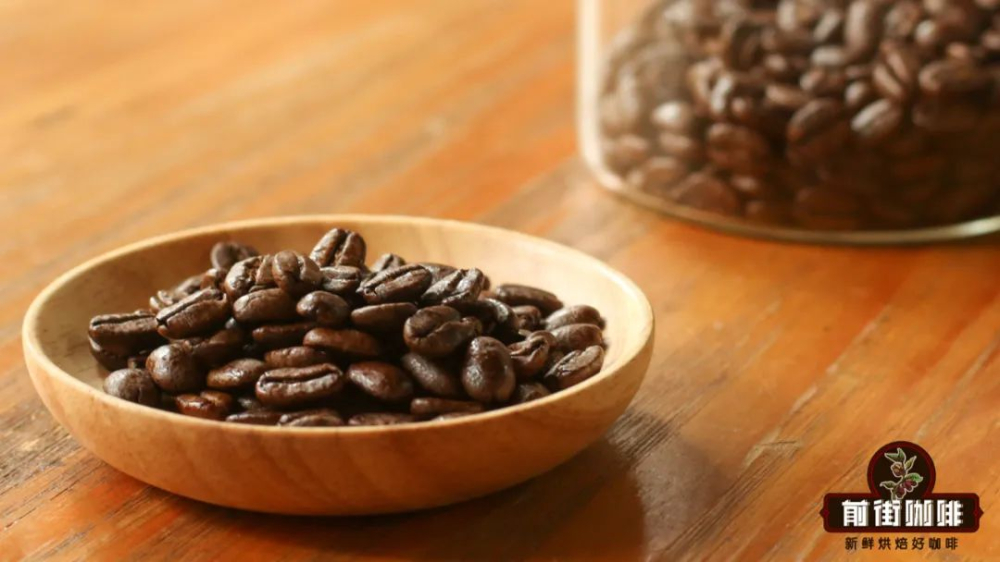
Before roasting, coffee beans have a tight structure, with oils wrapped around the fiber matrix. Once roasting begins, the heat continuously provided by the roaster causes the beans to expand, and the pores in the green bean cell walls are gradually pushed open by the heat wave; this is when carbon dioxide enters. As roasting is completed, the coffee beans return from a high-temperature environment of over two hundred degrees to normal temperature and pressure, carbon dioxide is gradually released, and oils slowly seep out onto the bean surface. Many coffee beans are only slightly oily when just out of the roaster, or even show no oil at all, but after a few days of resting they become glossy with oil. These oils seeping onto the bean surface can both press out a more stable crema and enhance the coffee's body, making the overall mouthfeel rounder and thicker.
Based on the above two points, dark-roasted coffee beans used for espresso are best rested appropriately longer, so that the extracted coffee tastes better. Front Street Coffee's recommendation is to rest medium-dark roasted espresso beans for about 10 days (counting from the roast date), while darker roasts can be extended depending on their condition. Of course, too much oil is not entirely a good thing. Excessive oil accelerates the oxidation of coffee beans. So once the beans reach their peak state, it is best to finish drinking them as soon as possible to avoid producing too much rancid oil flavor from oxidation. If you cannot finish them, you can seal the beans in an airtight container to extend the optimal flavor period.
The above content is compiled by CoffeeHunters, a coffee news website.


