








How Does a Kenyan Coffee Farm Shape the Asalia Cup?
Kenya sits on the equator in East Africa, and that position plus highland volcanic soil and steady sunshine defines the cup. Asalia beans from Front Street Coffee are washed in the K72 process and roasted medium-light. Growing areas such as Nyeri, Kirinyaga, Murang'a, Kiambu and Thika each bring their own accent to the flavor.
Kenya covers 582,646 square kilometers and is divided into 47 counties. Terrain is mostly highland at roughly 1,500 meters average, cut north to south by the eastern branch of the East African Rift Valley. Mount Kenya rises 5,199 meters, the second-highest peak in Africa. Most areas have a tropical savanna climate, with rains from March to June and October to December.
Kenya is a dazzling coffee gem in East Africa, where the equator, highland volcanic soil, and abundant sunshine together create a unique flavor profile. This article will give you a comprehensive understanding of Kenya's national overview, geography and climate, and coffee-producing regions, with a focus on the characteristics of well-known regions such as Nyeri, Kirinyaga, Murang'a, Kiambu, and Thika. It will also share the brewing performance and flavor experience of the Asalia coffee beans sourced by Front Street Coffee under K72 washed processing and medium-light roasting, making it suitable for every enthusiast who wants to gain a deeper understanding of Kenyan coffee.
Kenya kenya
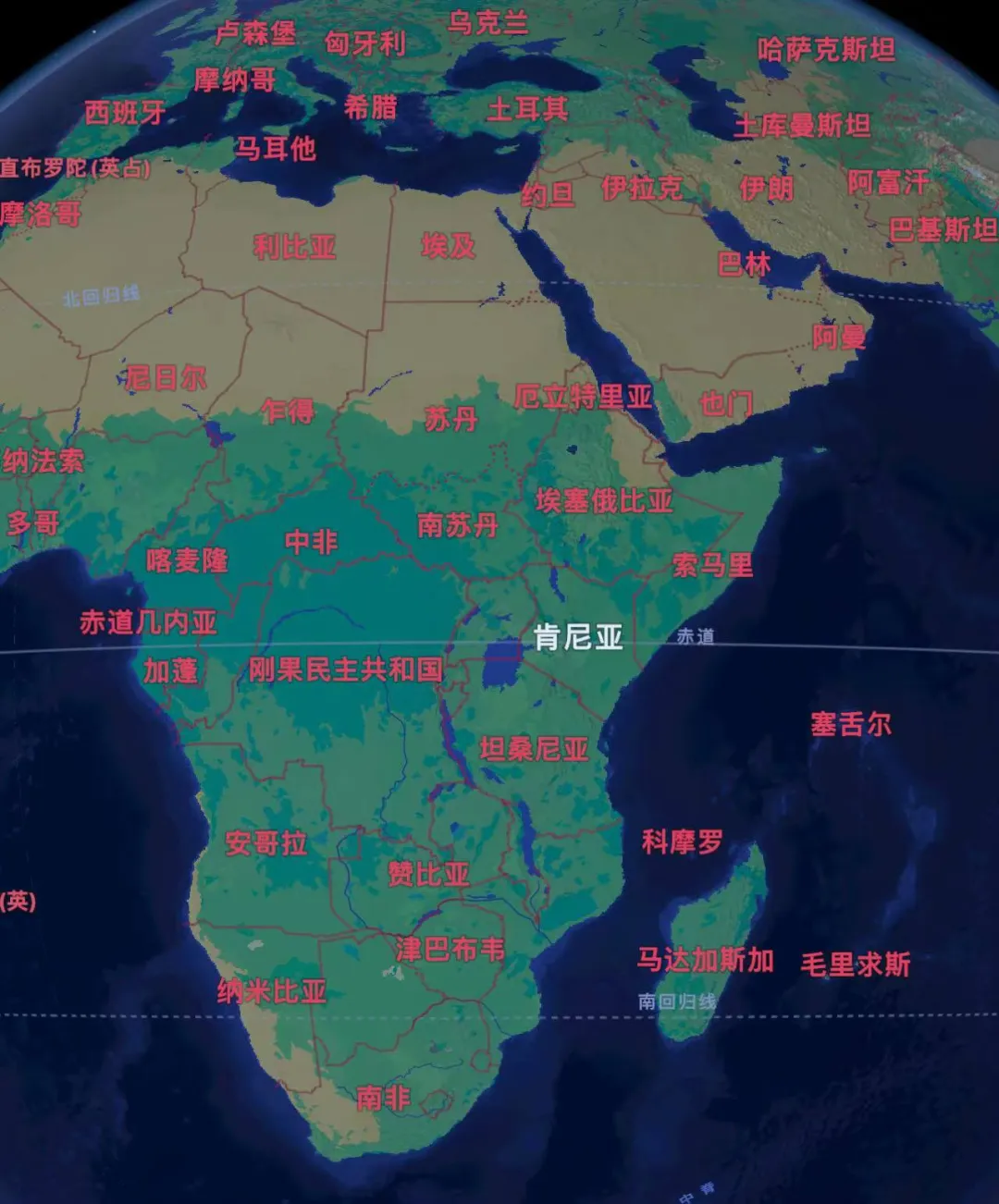
Kenya's official name is The Republic of Kenya. It is located in East Africa, with the equator passing through the center of the country. It borders Somalia, Tanzania, Uganda, Ethiopia, and South Sudan, and faces the Indian Ocean to the southeast. Its total land area is 582,646 square kilometers, and the country is divided into 47 counties.
The design of the Kenyan flag was inspired by the flag of the Kenya African National Union before independence. It consists of three equal-width horizontal rectangles from top to bottom in black, red, and green. The red rectangle is bordered by a white stripe above and below, and in the center of the flag is a shield with two crossed spears. In terms of color symbolism, black represents the Kenyan people, red symbolizes the struggle for freedom, green refers to agriculture and natural resources, white expresses unity and peace, and the spears and shield signify national unity and the determination to defend freedom.
Kenya's terrain is mainly highland, with an average elevation of about 1,500 meters, and only the coastal strip is plains. The eastern branch of the East African Rift Valley cuts through the highlands from north to south, dividing the highlands into eastern and western parts. There are many lakes in the country, as well as many volcanoes. Among them, the extinct volcano Mount Kenya in the central highlands reaches 5,199 meters above sea level and is the second-highest peak in Africa.
Kenya lies in a tropical monsoon zone. Most areas have a tropical savanna climate, the coastal areas are relatively hot and humid, and the highlands have a mild climate. The rainy seasons are from March to June and from October to December each year, while the rest of the year is the dry season. Annual temperatures generally range from 12-24°C, and annual rainfall gradually decreases from 1,500 millimeters in the southwest to 200 millimeters in the northeast. High-altitude mountainous areas, volcanic soil, abundant sunshine, and moderate rainfall have made the country's agriculture and tourism relatively developed.
Coffee-producing regions
Kenya has a large number of coffee-producing regions, mainly distributed in the southwest and central parts of the country. There are 14 producing regions in total: Bungoma, Embu, Kiambu, Kirinyaga, Kisii, Machakos, Meru, Mt. Elgon, Murang’a, Nakuru, Nyeri, Thika, Taita Taveta, and Trans-Nzoia. Among them, Nyeri, Kirinyaga, Murang’a, Kiambu, and Thika are the most famous. Kenya has two harvest seasons. The main harvest season is concentrated from October to December, and the secondary harvest season is from May to July.
Nyeri: Located in central Kenya, it is where the extinct volcano Mount Kenya is found, with a growing elevation of 1,200-2,300 meters. Due to its higher terrain and fertile volcanic soil, Nyeri has become an important center of Kenya's central coffee industry, and its related supporting facilities are also relatively well developed.
Kirinyaga: Adjacent to the Nyeri producing region, with an elevation of 1,300-1,900 meters. This producing region is renowned worldwide for coffee with strong flavor, rich layers, and a solid mouthfeel, and together with the Nyeri producing region, it is regarded as one of the two best producing regions in Kenya today. Producers in this region are mostly smallholder coffee farmers who join cooperatives. The cooperatives provide wet mills, and the coffee farmers send the coffee cherries to the cooperatives' mills for processing.

Murang’a: Under Central Province, it is also a producing region that benefits from volcanic soil, with an elevation between 1,350-1,950 meters. There are about 100,000 coffee farmers in this region, and the number of smallholder coffee farmers exceeds that of estates.
Kiambu: A producing region located in central Kenya, also benefiting from volcanic soil. This producing region is dominated by large coffee estates, and there are also many cooperatives. The growing elevation is about 1,500-2,200 meters.
Thika: Thika is a small town near Nairobi, the capital of Kenya, and there are large numbers of coffee fields around Nairobi. Although Thika is an industrial town, it is surrounded by agricultural areas and waterfalls. There are about 2,000 farmers in the area, and coffee is grown at elevations between 1,520-2,200 meters. Compared with coffee beans from other Kenyan producing regions, coffee from the Thika producing region often has a more pronounced tomato flavor.
This Front Street Kenya Asalia coffee bean sourced by Front Street Coffee (FrontStreet Coffee) uses K72 washed processing and medium-light roasting. Front Street uses a V60, a 1:15 ratio, and 92°C for brewing. You will smell ripe tomato and floral notes, and on the palate there will be cherry tomato and smoked plum flavors, with bright acidity, prominent sweetness, a juicy feel, and a clean mouthfeel.
The above content is compiled by CoffeeHunters, a coffee news website.


