







Why Is Yirgacheffe Coffee So Distinct in Flavor and Origin?
Yirgacheffe, a region in southern Ethiopia, produces coffee known for floral and fruity notes, and the Red Cherry Project sharpens that profile by paying high prices for fully ripe red cherries. Ethiopia is the birthplace of coffee and Africa's largest arabica producer, with an estimated 15,000 varieties. Front Street Coffee's sun-dried Yirgacheffe Red Cherry beans, light roasted and brewed on a V60, show citric acidity and berry flavors.
Ethiopia sits on the East African plateau southwest of the Red Sea, with mountains averaging near 3,000 meters and a national average elevation of about 2,450 meters. Annual rainfall is around 1,237 millimeters and the average temperature near 16°C. Most coffee cultivation follows a garden model, where coffee trees grow beside other crops near farmers' homes and are tended and harvested by the families themselves.
As the birthplace of coffee, Ethiopia boasts the world's richest coffee gene pool, with an estimated nearly 15,000 coffee varieties. Among them, the Yirgacheffe region is famous for its unique floral and fruity notes, while the Red Cherry Project has enhanced coffee quality by purchasing fully ripe red cherries at high prices. This article will walk you through Ethiopia's coffee cultivation model, the terroir characteristics of Yirgacheffe, and how the Red Cherry Project has driven the development of specialty coffee. Front Street Coffee's sun-dried Yirgacheffe Red Cherry coffee beans, light-roasted and brewed with a V60, present citric acidity and berry flavors—well worth a try.
For many coffee lovers, Ethiopia is nothing short of a coffee holy land. Not only is it the birthplace of coffee, but it is also now Africa's largest Arabica coffee-producing country. The country has the world's largest coffee gene pool, with extremely rich varieties, and it is estimated that Ethiopia currently has close to 15,000 coffee varieties.
Ethiopia is located on the East African plateau southwest of the Red Sea, bordering Djibouti, Somalia, Sudan, South Sudan, Kenya, and Eritrea. Its terrain is dominated by mountains and plateaus, with most of the country belonging to the Ethiopian Highlands; the central and western parts form the main body of the plateau, accounting for about two-thirds of the national territory. The East African Rift Valley runs through the entire country, and the mountains have an average elevation of nearly 3,000 meters.
Ethiopia has a national average elevation of about 2,450 meters. Such high terrain keeps the country's annual average temperature at around 16°C. The year is roughly divided into a dry season and a rainy season, with annual rainfall of about 1,237 millimeters. The country is rich in natural resources, with abundant water resources, high-altitude mountainous areas, and more than 50 volcanoes. These conditions make Ethiopia an ideal place for coffee cultivation.
In Ethiopia, coffee is mostly grown in a garden model, where coffee trees are planted alongside other crops near the homes of coffee farmers. The farmers tend them daily and harvest them themselves during the harvest season, after which intermediaries or processing stations purchase and process them centrally. Coffee produced under this model accounts for more than half of Ethiopia's total coffee output.
Yirgacheffe Yirgacheffe
Ethiopia has many well-known coffee-producing regions, such as Sidamo, Gimma, Harar, Guji, and Yirgacheffe. Among them, Guji and Yirgacheffe were originally both part of the Sidamo producing region, but later became independent regions due to their unique flavors.
Yirgacheffe is a small town in the northwest of Sidamo Province, located on the eastern edge of the East African Rift Valley. It is also one of the highest-altitude producing regions in Ethiopia, with elevations ranging from 1,750 to 2,200 meters. In the ancient language, Yirga means "to settle down," while Cheffe refers to "wetland." The climate here is humid and mild, with ample rainfall, fertile soil, and abundant sunshine, which allows it to produce coffee beans with unique floral and fruity notes, varied flavors, and strong recognizability. Front Street Coffee has a washed Ethiopian Yirgacheffe coffee bean. As a representative entry-level selection, it exudes jasmine fragrance, with lemon-like acidity and fruity flavors such as orange and berries, offering a refreshing mouthfeel.
Red Cherry Project ORC
Before the concept of specialty coffee became widespread, coffee farmers often focused only on yield and ignored quality in order to make more profit. At harvest time, they picked all the cherries regardless of whether they were ripe, resulting in poor final coffee bean flavor.
It was not until 2007, when Dutch green bean trader Trabocca proposed the "Red Cherry Project," that this situation began to change.
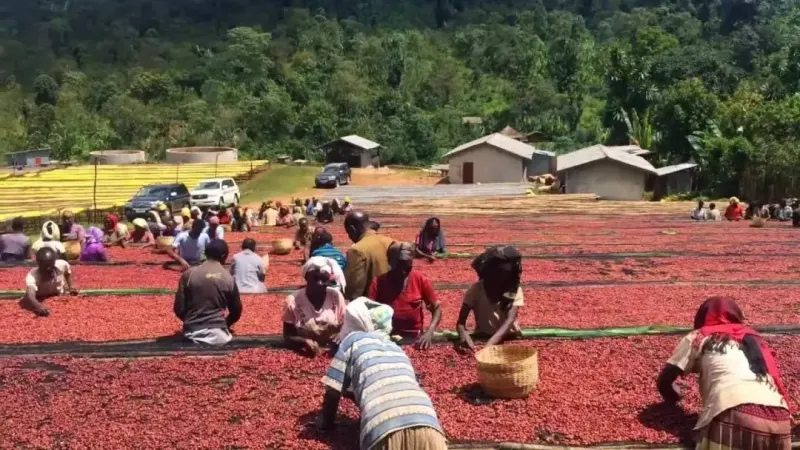
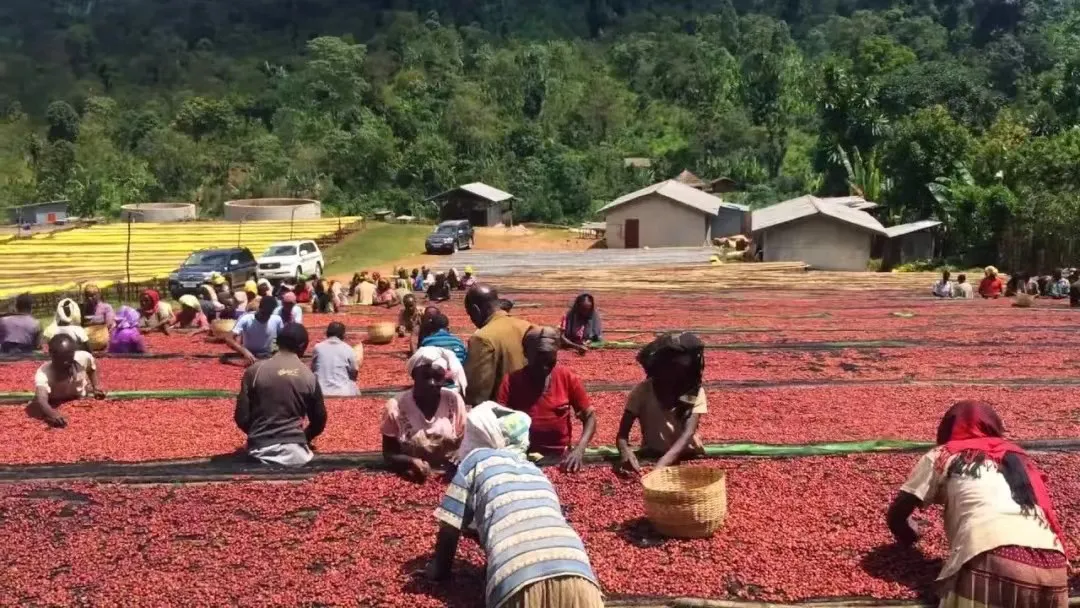
First, this Dutch green bean trader invited all Ethiopian farms to produce small batches of about 1,500 to 3,000 kilograms of beans for it, and required that these beans be made from 100% hand-picked ripe red cherries. It then purchased them at prices several times higher than the market. In this way, although more manpower and funds were needed for harvesting, sorting, and processing, the farmers' income increased accordingly, and the price of green coffee beans also rose. However, not all green beans would be bought by Trabocca at a high price. Trabocca would further screen them, and they had to pass the cupping standards of both its Ethiopian and Dutch offices. Overall, by raising the purchase price of high-quality green coffee beans, the Red Cherry Project incentivizes coffee farmers to carefully complete every step, including coffee cherry harvesting and processing, thereby producing coffee beans of better quality and taste while gaining market recognition and obtaining relatively higher purchase prices. At present, the main producing regions of the Red Cherry Project include Yirgacheffe, Sidamo, Bonga Forest, Lekempti, Kembata, Harrar, and Limu.
The Ethiopian Yirgacheffe Red Cherry coffee beans sourced by Front Street Coffee are sun-dried and light-roasted. Front Street uses a V60 at a 1:15 ratio and a water temperature of 92°C for brewing. It smells of slight fermented fruit, and on the palate presents fresh citric acidity with berry and strawberry flavors, offering a refreshing mouthfeel.
The above content is compiled by CoffeeHunters, a coffee news website.


