








How Does the V30 Dripper Deliver Full Bodied Coffee at Small Doses?
The V30 is a 30-degree conical dripper from Japan's Tarachine Conical, built for doses under 15 grams. Its narrow cone, 6cm across and 11cm tall, and small 1.5cm outlet slow the flow so a thin coffee bed still yields a concentrated cup. The key is a finer grind, gentle pours and a filter folded to fit the narrower shape.
Standard V60 doses run 15 to 20 grams, so a small dose in a large dripper lets water channel through and leaves the cup weak. Two clockwise spiral ridges inside the V30 lengthen the water path, which helps build body. Front Street Coffee compared the V30 against a small V60 using a fruity-acidic coffee, a medium-dark roast and three medium roasts, giving any coffee enthusiast a starting point for small-dose brewing.
Small doses in pour-over brewing often cause headaches: the coffee bed becomes thin, water tends to channel straight through, and the resulting cup is easily weak and bland. The 30-degree conical dripper from Japan's Tarachine Conical, known in coffee circles as the "V30," is designed specifically for doses under 15 grams. How does it differ from the classic V60? How should the filter paper be folded? Front Street Coffee tested a fruity-acidic coffee, a medium-dark roast, and three medium-roast beans, comparing the extraction performance of the V30 against the small V60. This article will explain the V30's structural features, filter folding method, brewing parameters, and suitable roast levels, helping you brew a concentrated, full-bodied cup even with a small dose.

When it comes to the Hario V60, everyone is familiar with the 01 and 02 models. The 02 has a larger capacity and holds more coffee, easily brewing 4–5 servings at once. Taking the 01 as an example, Front Street Coffee typically recommends keeping the dose between 15 and 20 grams.
In practice, though, you always run into little surprises: you have less than 15 grams of beans left, or you just want to drink less today, so the dose gets reduced. When brewing a small dose in a large dripper, the coffee bed becomes thin, water passes through more easily, and water control becomes more demanding—the resulting coffee also tends to taste thin with weaker aroma.
To address this need, single-serving drippers emerged. This 30-degree conical dripper from Japanese equipment brand Tarachine Conical is said to handle doses under 15 grams perfectly, and people have taken to calling it the "V30."
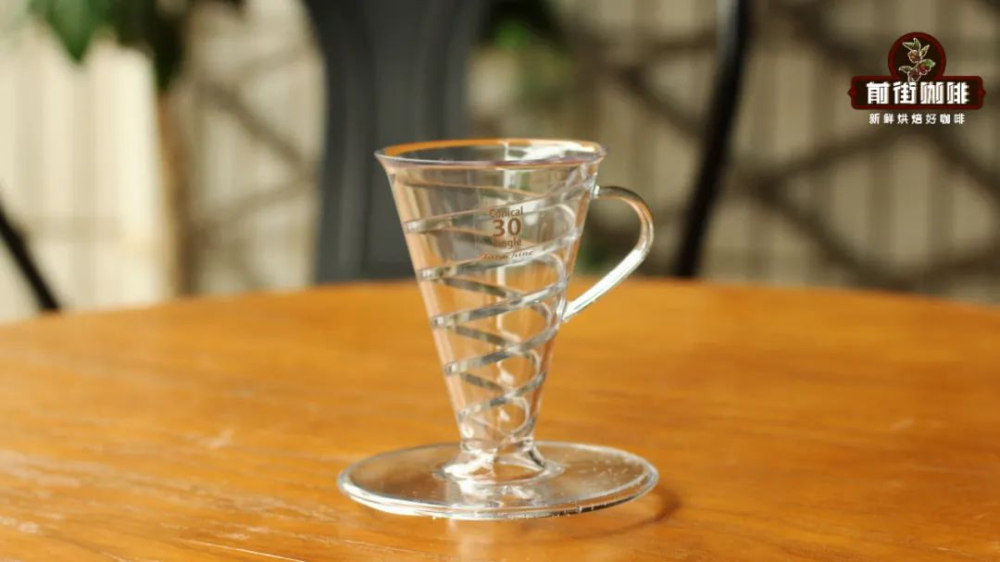
The V30 Front Street Coffee has on hand is made of transparent resin—compact and lightweight, shaped much like a spinning drill bit. Its biggest difference from the classic V60 is a cone angle of only 30°, with a cross-section diameter of just 6cm. To accommodate the coffee and leave room for the bed to rise, the body height reaches 11cm.
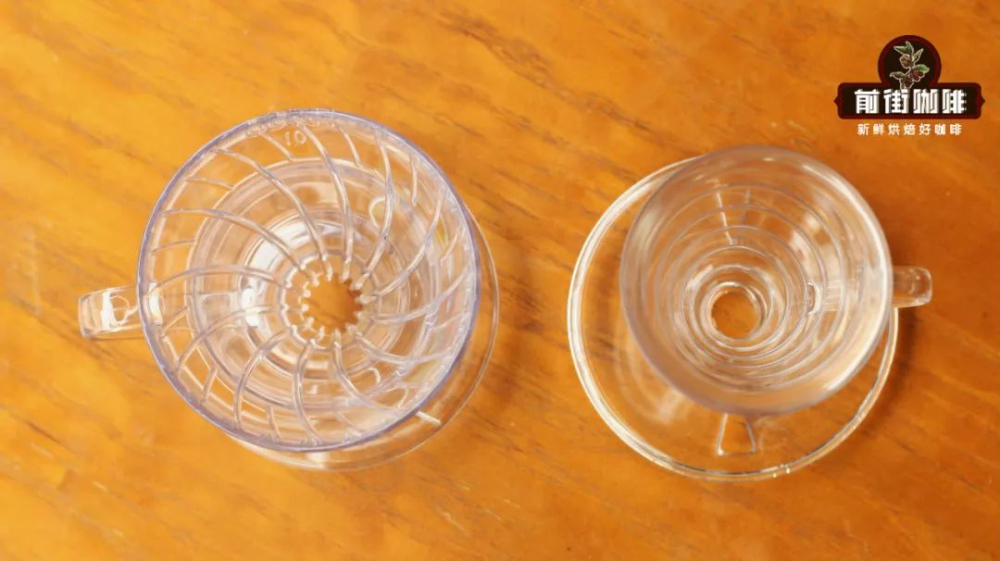
Looking from above, the V30's outlet hole is relatively small—a circle about 1.5cm in diameter (the V60 01 is 2cm). The interior guiding grooves are two clockwise spiral ridges running parallel toward the bottom, designed to lengthen the hot water extraction path and produce a fuller body.
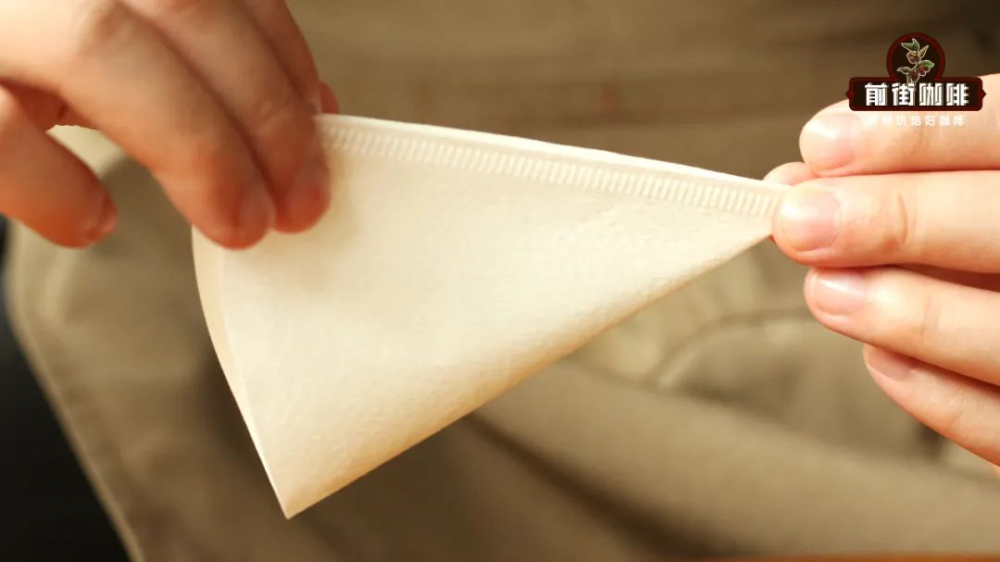
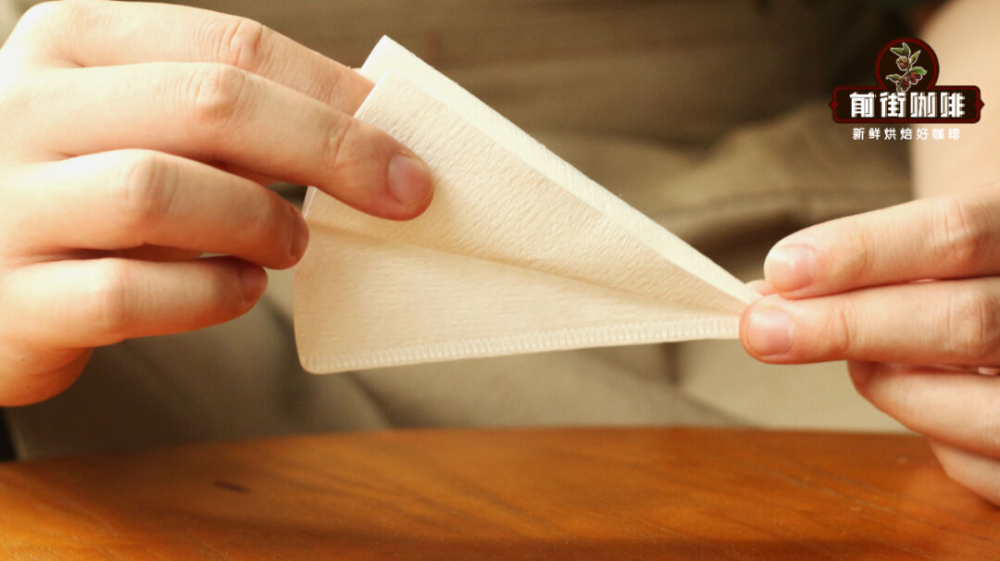
As for filter paper, besides the official matching version, Tarachine also suggests substituting commercially available large Hario filters: fold along the fan's center line, then unfold one side, and it fits into the single-serving dripper. However, folding a large filter creates one single-layer side and one triple-layer side; the difference in thickness causes uneven extraction across different parts of the coffee bed. Here, Front Street Coffee references a folding method summarized by a fellow coffee enthusiast for your reference.
First, align the two radii of the filter paper and fold it in half.
Fold the unconnected radius down to align with the center line, and pinch lightly to hold it.
Do the same on the other side, just like folding a paper airplane.
Finally, open the filter along the folded rib from the middle, and place it into the dripper aligned with the cone angle.
Once the dripper arrived, Front Street Coffee first picked a coffee bean known for its fruity acidity to see how it brewed.
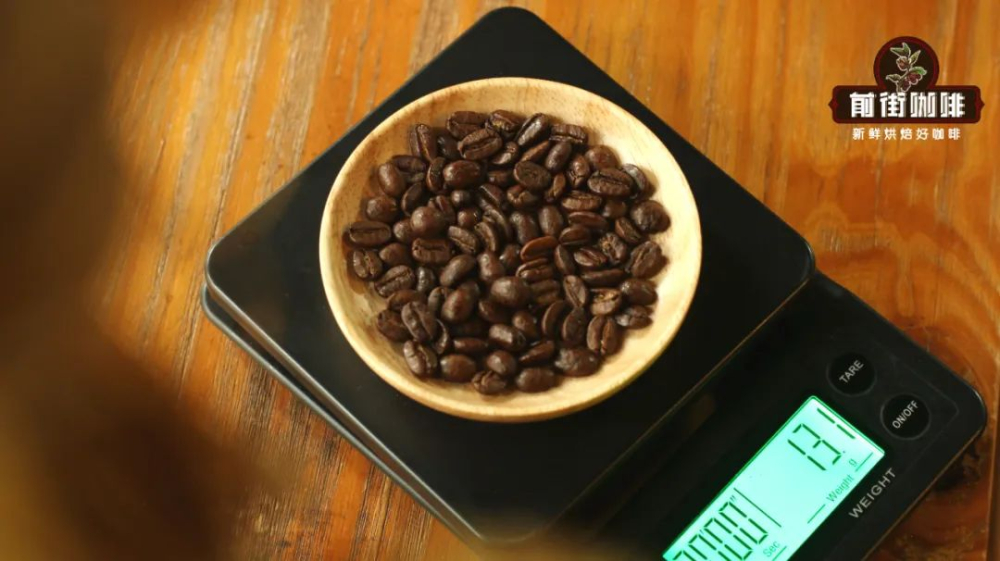
Coffee beans: 13g (Kenya·Asalia) Ratio: 1:15 Water temperature: 92℃ Dripper: V30 Grind: EK43s setting 10 (80% pass rate on No. 20 standard sieve)
Three-pour: 25g, 75g, 95g
During pouring and stirring, the coffee bed piled up at the bottom, the overall flow rate was slow, and there was slight clogging at the final stage—the liquid didn't finish dripping until 2 minutes 23 seconds. The coffee had a strong acidic entry, mainly berry and black tea notes, but the overall aroma was faint and the body was average.
Front Street Coffee suspects the dripper's structure deepened the water level, and combined with this lighter-roasted fruity-acidic bean's denser internal structure and weaker water absorption, the coffee bed was hard to lift with the water stream. The poor flavor was mainly caused by the final stage steeping too long. Next, Front Street Coffee tried a medium-dark roast known for its rich body and sweet aftertaste.
Coffee beans: 13g (Jamaica·Blue Mountain No. 1) Ratio: 1:15 Water temperature: 88℃ Dripper: V30 Grind: EK43s setting 10.5 (75% pass rate on No. 20 standard sieve)
Three-pour: 25g, 75g, 95g
Compared to the first group, the Blue Mountain drained noticeably more smoothly, finishing extraction in nearly 2 minutes, with a very even coffee bed distribution. Compared to the KONO dripper Front Street Coffee usually uses, the Blue Mountain brewed with the V30 had a softer, smoother texture, slightly less body and solidity, but with a clear dark chocolate aroma on entry and a very distinct sweet aftertaste.
For a more intuitive comparison, Front Street Coffee selected three medium-roast coffees (Colombia·Sidra & Guatemala·New Oriente Geisha & Honduras·Litchi Orchid), brewing each with the V30 and the small V60 using a small dose (13g) and otherwise identical parameters.
The three V30 brews all finished dripping in 2:00–2:10, while the V60 group finished in about 1:50. Comparing the spent drippers side by side, the coffee bed formed by the V30 was noticeably deeper. With a small dose, the Sidra, Litchi Orchid, and New Oriente Geisha all showed better flavor complexity and mouthfeel viscosity than with the small V60.
After extensive brewing comparisons, Front Street Coffee found that at the same dose, the V30 forms a thicker (deeper) coffee bed and drains more slowly; with a strong pour, the bed rises quickly, increasing immersion extraction. Additionally, the interior guiding grooves allow coffee grounds to degas and give the water stream a longer extraction path, further enhancing the overall flavor concentration of the brew.
Given all this, this dripper is well suited for brewing small doses of medium or darker roasts, fully showcasing round fruit acidity and rich sweetness—notes like caramel, dried fruit, apricot, and fermented wine aromas. Note, however, that to prevent the water level from exceeding the dripper's peak (overflowing), Front Street Coffee recommends keeping the dose between 8 and 15 grams when using the V30, using a small stream in tight circles, pouring in even stages—this yields an extraction rhythm at a moderate pace.
- END - Front Street Coffee
No. 10 Baoqian Street, Yandun Road, Dongshankou, Yuexiu District, Guangzhou, Guangdong Province
The above content is compiled by CoffeeHunters, a coffee news website.


