







How Does El Niño Threaten the Colombian Coffee Crop?
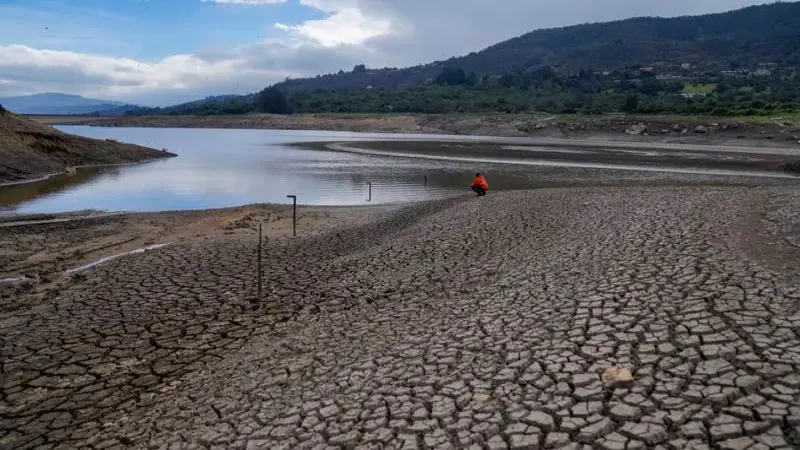
El Niño has kept Colombia in a natural disaster state since January, with the nationwide average reservoir level falling to 29.96 percent of normal, close to the 27 percent critical mark. Bogotá has imposed water restrictions and nationwide rationing is possible. About 70 percent of the country's water goes to crops including coffee, bananas, and flowers.
The rainy season was expected from mid-to-late April, but coffee industry insiders warn that heavy rainfall and low temperatures under La Niña could affect coffee growth, so farmers are advised to prepare early. Although Colombia holds Latin America's most abundant freshwater resources, low agricultural water efficiency and severe pipeline leakage leave the colombian coffee crop exposed when reservoirs run low.
Affected by the El Niño phenomenon, Colombia has been in a state of natural disaster since the beginning of this year. The drought that lasted until April caused the average water storage level of reservoirs nationwide to drop to 29.96% of normal, approaching the critical threshold of 27%, impacting both water supply and power generation. Although the country is rich in freshwater resources, problems such as low agricultural water efficiency and severe pipeline leakage are prominent, with 70% of the nation's water resources used for crops such as coffee, bananas, and flowers. The capital, Bogotá, has already implemented water restrictions, and the government has not ruled out nationwide water rationing. Fortunately, the rainy season is expected to arrive in mid-to-late April, but coffee industry insiders warn that the subsequent heavy rainfall and low temperatures brought by La Niña may affect coffee growth, and coffee farmers need to prepare in advance.
Colombia is located in the equatorial tropics, and December to February is normally the dry season, but the emergence of the El Niño phenomenon has worsened the drought.
In January of this year, Colombian media already reported that the country was experiencing severe drought due to El Niño, and President Pedro declared a state of natural disaster on January 24.
After entering April, the drought had still not eased, but instead continued to worsen, and the water shortage problem became increasingly prominent. Water levels in multiple reservoirs continued to decline, affecting both water supply and power generation. EPM, one of Colombia's largest public suppliers of electricity, water, and natural gas, said it would reduce water supply in the Santander and Antioquia regions.
Recently, the Colombian government published a nationwide overview of reservoir levels. The average reservoir level has dropped to 29.96% of normal, less than 30% of normal levels and only one step away from the 27% critical point. Previously, the capital Bogotá had already implemented water restrictions, and the government will decide whether to implement nationwide water rationing based on future rainfall.
In fact, Colombia is rich in freshwater resources, but some government departments have failed to use them effectively. Some experts point out that Colombia is the country with the most abundant water resources in Latin America, and also the country with the most severe water waste, especially in crop cultivation and maintenance. Agriculture is an important pillar of Colombia's economy, with major agricultural products including coffee, bananas, and flowers. These crops all require large amounts of water during cultivation, and 70% of the country's water resources are used for agriculture.
In addition, the Chingaza reservoir system in the central part of the country currently has an effective storage level of only 45.27%, which limits current water usage. Many experts are calling on agricultural industries such as coffee and bananas to adopt more efficient irrigation technologies to optimize water use rather than wasting it arbitrarily.
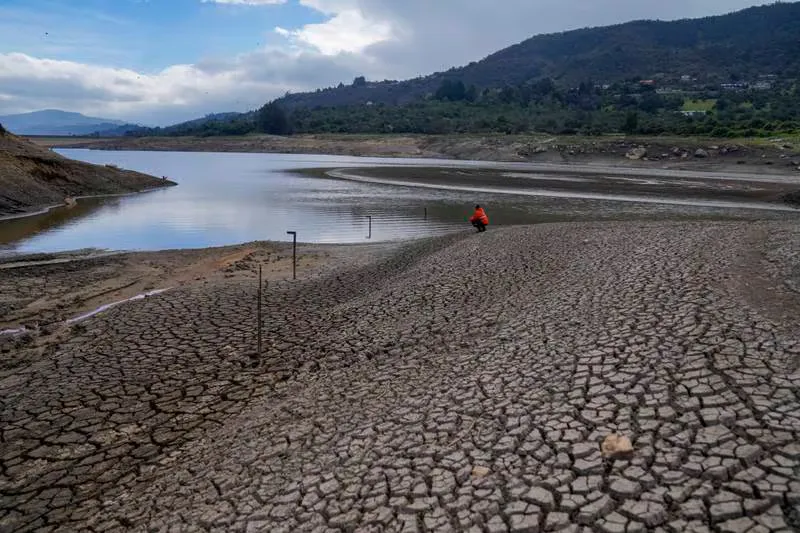
According to data from Colombia's National Planning Department (DNP), 4 out of every 10 liters of water in the country are lost due to tank overflow or leakage, deteriorating pipeline networks, illegal connections, or measurement errors. At the same time, problems such as water pollution and deforestation are also very serious.
In response, the Colombian president earlier posted on social media that he had ordered "major reforms" to ensure that people across the country will have access to clean water over the next 30 years.
However, there is also good news. Colombia's Ministry of Environment and the Institute of Hydrology, Meteorology and Environmental Studies (IDEAM) pointed out that the rainy season will begin in mid-to-late April, and rain will arrive soon, which is expected to alleviate the current drought. But afterward, La Niña is very likely to occur, bringing weather such as heavy rainstorms. Coffee industry insiders say that although heavy rainfall can alleviate the drought, excessive rainfall and low temperatures in the follow-up will affect coffee growth, and coffee farmers need to prepare to cope. Front Street Coffee reminds that coffee-producing regions in Colombia need to pay close attention to weather changes and take drainage and cold-protection measures in advance to safeguard coffee quality and yield.
The above content is compiled by CoffeeHunters, a coffee news website.


