







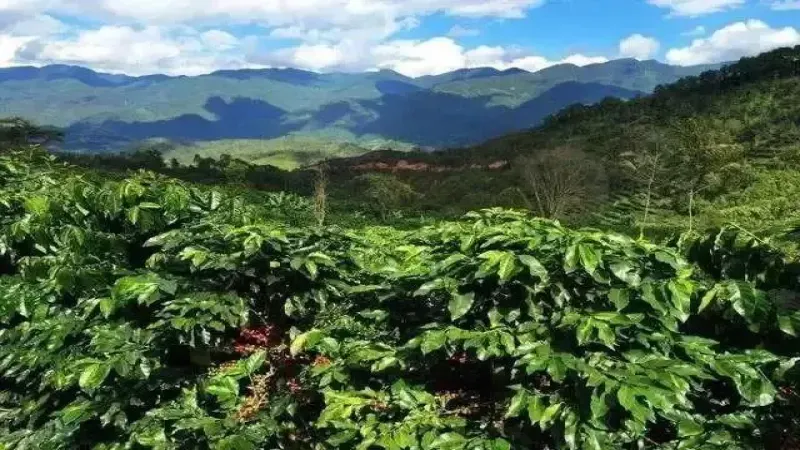
What Makes Volcán Hartmann Estate Geisha Coffee Beans Distinct?
Panama's Volcán region has performed well in major coffee competitions, and Finca Hartmann, founded in 1912 in the western part of Volcán Barú, balances primary forest conservation with cultivation. Its Geisha lots, anaerobically sun-dried and medium-light roasted, show white floral notes, layered fruit, an Earl Grey-like texture, and a lasting sweet finish.
The Geisha variety reached fame after Hacienda La Esmeralda won the 2005 coffee auction, and Volcán is one of the country's three main producing areas. Growing conditions for coffee here benefit from volcanic soils, altitude, and a tropical maritime climate that is humid by day and cool at night, which shapes the delicate aromatics Geisha is known for.
Panamanian coffee has gained international fame in the specialty coffee world thanks to the Geisha variety, and the Volcán region, as one of the country's three major producing areas, has performed impressively in BOP competitions in recent years. Finca Hartmann is rooted in the western part of Volcán Barú. Since its establishment in 1912, it has consistently adhered to the philosophy of balancing primary forest conservation with coffee cultivation, becoming a pioneering representative of the Volcán region. The estate cultivates multiple varieties including Geisha, among which Geisha is highly sought after for its delicate floral aroma and rich fruity acidity. The Hartmann Estate Geisha that Front Street Coffee has procured this time is anaerobically sun-dried and medium-light roasted. When brewed, it presents white floral notes and multi-layered fruit tones, with a silky mouthfeel like Earl Grey tea and a lasting sweet finish. This article will provide you with a comprehensive understanding of Panama's coffee terroir, the characteristics of the Volcán region, the history of Finca Hartmann, and the origins and evolution of the Geisha variety.
Panamanian coffee occupies a pivotal position in the global specialty coffee market, with the Geisha variety being particularly noteworthy. Tracing its history, European immigrants introduced coffee cultivation to Panama in the late 19th century, and in 2005, Hacienda La Esmeralda's Geisha won first place in the Best of Panama BOP competition and was auctioned at a high price, making Panamanian coffee and the Geisha variety famous throughout the coffee world ever since.
Panama
Panama is located in southern Central America, bordered by the Caribbean Sea to the east, the Pacific Ocean to the west, Costa Rica to the west, and Colombia to the east. The country stretches in an S-shape through North and South America, and the Panama Canal connects the Atlantic and Pacific Oceans from north to south, earning it the reputation of "Bridge of the World." The terrain is undulating and varied, with interlacing valleys. Apart from the northern and southern coastal plains, most of the country is mountainous, with several volcanoes scattered throughout, and abundant forest and river resources.
Panama is close to the equator and has a tropical maritime climate, humid during the day and cool at night, with an average annual temperature maintained between 23 and 27°C. The year is divided into dry and rainy seasons, with average annual rainfall of approximately 1,500 to 2,500 millimeters. Influenced by geographical conditions, Panama has developed complex and diverse microclimates. Cold air from the east flows through the central mountain range and converges in areas above 6,500 feet, creating a unique microclimate environment around Boquete and Volcán Candela, making this area the core producing region for Panamanian coffee. The surrounding land is fertile, providing ideal growing conditions for coffee trees.
Volcán-Candela Producing Region
Panama's coffee producing regions are mainly divided into three major areas: Boquete, Volcán-Candela, and Renacimiento. These producing regions are all distributed around three volcanoes in the country: Volcán Barú, El Valle, and Le Yeguada.
Although the Boquete region is more famous than the Volcán region, in recent years the Volcán region has produced many excellent estates that have achieved repeated success in Panama's BOP competitions. The Volcán region is located on the western side of Volcán Barú, at an altitude between 1,200 and 1,600 meters. Although it receives less rainfall than Boquete, it also has high altitude and fertile volcanic soil, providing excellent growing conditions for coffee trees. Currently, the Volcán region is home to well-known estates such as 90+ Geisha Estate, Aurora Estate, and Finca Hartmann.
Finca Hartmann
Finca Hartmann is located in the western part of Volcán Barú, at an altitude between 1,500 and 2,300 meters. The estate's founder, Alois Strasil Hartmann, was born in the Czech Republic. Due to domestic political turmoil, he chose to travel far from home, first arriving in New York, then making his way to Panama, and finally settling in the Volcán area, where he established the farm in 1912 and began cultivating coffee. He subsequently married and had children, and Hartmann Troetsch took over the family business and farmland management starting in 1940, thus beginning the chapter of Finca Hartmann's history that continues to this day. It can be said that Finca Hartmann is a pioneering forerunner of the Volcán region.
At the beginning of the estate's development, the founder decided to preserve most of the primary forest on the property. This forest conservation philosophy has been passed down through generations, continuing to the third-generation estate owner. As a result, coffee cultivation currently accounts for only about 20% of the estate's total area. Thanks to forest conservation, the estate is home to a large number of native bird species, among which the most well-known local toucan has become the estate's iconic logo. Currently, the estate is managed jointly by five children, each responsible for different tasks such as coffee growth management, harvesting and processing, and estate tours. In 2013, the estate also acquired Guarumo Coffee Farm, located north of Finca Hartmann. Currently, Finca Hartmann cultivates a rich variety of coffee varieties, including Typica, Caturra, Catuai, Bourbón, Pacamara, Maragogipe, and Geisha.
Geisha Coffee Beans
The Geisha variety was first discovered in Ethiopia in the 1930s, introduced to Tanzania in 1936, spread to Costa Rica in 1953, and was not introduced to Panama from Costa Rica until 1970. At the time, coffee cultivation was yield-oriented, and Geisha plants had thin, weak branches that failed to win farmers' favor, so they were not widely promoted. As the specialty coffee wave emerged, people began to focus on the flavor performance of coffee beans themselves, and quality gradually became the focal point. In 2005, Hacienda La Esmeralda entered the Geisha variety in the BOP competition, and with its exquisite floral aroma, jasmine notes, peach and bergamot flavors, and extremely high cupping scores, this variety became famous overnight.
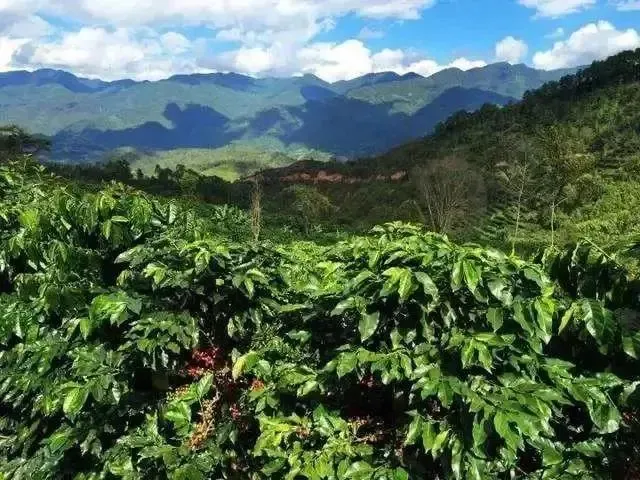
The Geisha variety is suitable for cultivation at altitudes above 1,600 meters, and the higher the growing altitude, the better the quality. In terms of plant characteristics, Geisha leaves are relatively thin and slender, with the tips of young leaves at the top being green or bronze-colored, and the branches are slender with relatively wide spacing. The coffee cherries are mainly red or yellow, and the green beans are mostly pointed. The overall tree shape is relatively large but somewhat fragile. Although it has some resistance to coffee leaf rust, it is susceptible to nematodes and coffee berry disease, requiring careful attention.
Front Street Coffee has also procured this Hartmann Estate Geisha, which is anaerobically sun-dried and medium-light roasted. Front Street uses a V60 with a 1:15 ratio at 92°C for brewing, and you will smell white floral notes. On the palate, there are multi-layered and varied fruit acids with bergamot, pineapple, and blueberry flavors. The mouthfeel is silky and smooth like Earl Grey tea, with a lasting sweet finish.
The above content is compiled by CoffeeHunters, a coffee news website.


