







Why Are Robusta Coffee Beans Approaching the $4,000 Mark?
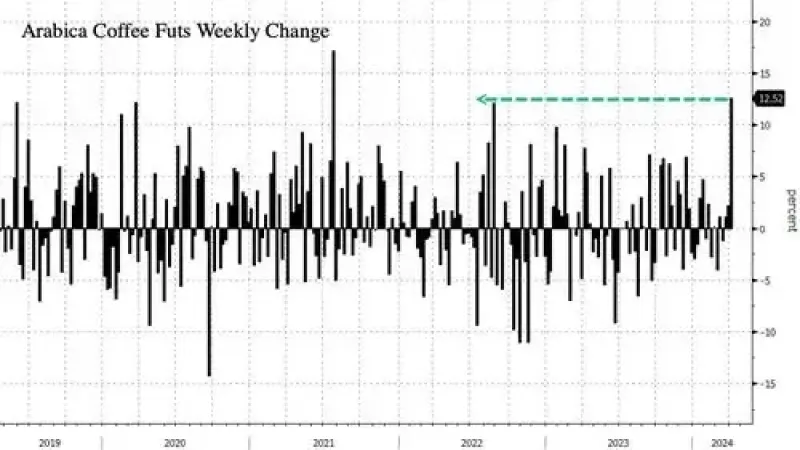
The July 2024 Robusta contract briefly touched $3,975 per tonne, near the $4,000 threshold, before closing at $3,949, up 2.52 percent. Arabica hit an 18-month high of 226.85 cents per pound after earlier gaining 12.5 percent. Drought in Brazil and Vietnam tightened supply while Israel-Iran tensions added freight uncertainty.
Vietnam coffee remains under drought and high temperatures, with local readings 1 to 3 degrees Celsius above last year. The Vietnam Coffee and Cocoa Association expects output to fall 20 percent from 1.84 million tonnes and exports to drop 20 percent from 1.67 million tonnes. Vietnamese purchase prices passed 110 million dong per tonne, and Brazilian Robusta spot broke 1,000 real for the first time.
The global coffee market is once again experiencing price fluctuations. Arabica and Robusta coffee futures have rebounded after a brief decline, with the July 2024 Robusta contract briefly touching $3,975 per tonne, approaching the psychological threshold of $4,000. Behind this rally lies not only tightening supply caused by ongoing drought in Brazil and Vietnam, the two major producing countries, but also a potential new threat from La Niña weather, while tensions between Israel and Iran add further uncertainty to transportation costs. Local traders in Vietnam are accelerating their rush to buy coffee beans, with purchase prices having soared to over 110 million Vietnamese dong per tonne, while Brazilian Robusta spot prices have also broken through the 1,000 real mark for the first time. With multiple factors intertwined, coffee prices may continue to face pressure in the short term.
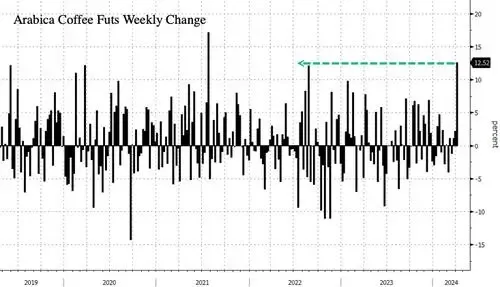
Previously, both Arabica coffee futures and Robusta coffee futures underwent a round of significant gains. Arabica futures prices once climbed 12.5%, setting a record high since October 2022.
However, coffee prices saw a slight pullback a few days ago before resuming their upward trend. Arabica coffee prices hit a fresh 18-month high of 226.85 cents per pound. Robusta coffee also touched a historic high, with the July 2024 forward contract rising to as much as $3,975 per tonne, just a step away from the $4,000 integer mark, before pulling back somewhat and closing at $3,949 per tonne, a gain of 2.52%.
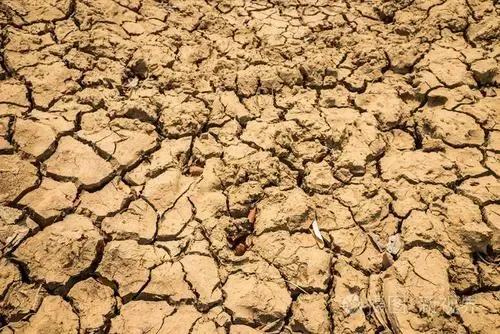
This price increase stems partly from disruptions in logistics and partly from drought conditions in Brazil and Vietnam, the largest coffee-producing countries, with coffee supply currently tightening and inventory levels low.
According to data released by the Vietnam Coffee and Cocoa Association, Vietnam remains under the impact of drought and high temperatures, with local temperatures 1 to 3 degrees Celsius higher than last year. The coffee industry is facing challenges such as water shortages and shrinking land resources. Based on this, Vietnam's coffee output may decrease by 20% from the previous year's 1.84 million tonnes, and exports will also decline by 20% from 1.67 million tonnes in the same period last year.
According to data from the U.S. government's Climate Prediction Center and other institutions, following El Niño, the probability of a La Niña phenomenon occurring in August in the second half of this year is approximately 60%. Typically, La Niña strengthens convective activity in Southeast Asia, leading to abnormally frequent storms and rainfall, which can easily trigger flooding disasters.
Brazil has also been affected by weather. Cumulative rainfall in Brazil's Robusta coffee-producing regions in 2023 hit a ten-year low. Although rainfall recovered somewhat in early 2024, it was still insufficient to make up for the losses caused by the previous year's drought. The upcoming La Niña weather may bring reduced rainfall and lower temperatures to southeastern Brazil, while the northeast may see increased rainfall and higher humidity. Cold weather will cause temperatures in coffee-producing areas to plummet, potentially triggering frost disasters that could damage coffee output for the current season and even future seasons.
Vietnam's coffee harvest period runs roughly from October to January of the following year. If La Niña arrives as expected, it will severely impact Vietnam's new-season output. Therefore, local coffee traders in Vietnam are recently actively increasing their purchasing efforts to build up their inventories, and purchase prices have consequently soared to 110 million to 113 million Vietnamese dong per tonne. Meanwhile, Brazilian traders are also stepping up their purchases of Robusta coffee beans, pushing Brazil's domestic Robusta spot price up to 1,025 reais per bag (60 kg), breaking through the 1,000 mark for the first time.
In addition, another potential risk currently exists, namely the conflict between Israel and Iran. On the evening of April 13, 2024, Iran launched dozens of missiles and drones at Israeli targets. Subsequently, the Israeli President stated that Israel does not seek "war with Iran," but the attack "must be responded to."
Iran is one of the world's major oil producers, and the Middle East is the world's most important source of oil supply. If the conflict between Iran and Israel continues to escalate, the market fears that future oil sanctions against Iran may be further tightened, leading to reduced oil supply, which in turn could trigger a surge in oil prices and deal a negative blow to the global transportation industry. For the coffee trade, which relies on rail and shipping, transportation costs will be further pushed up, and coffee prices will rise accordingly.
The above content is compiled by CoffeeHunters, a coffee news website.


