







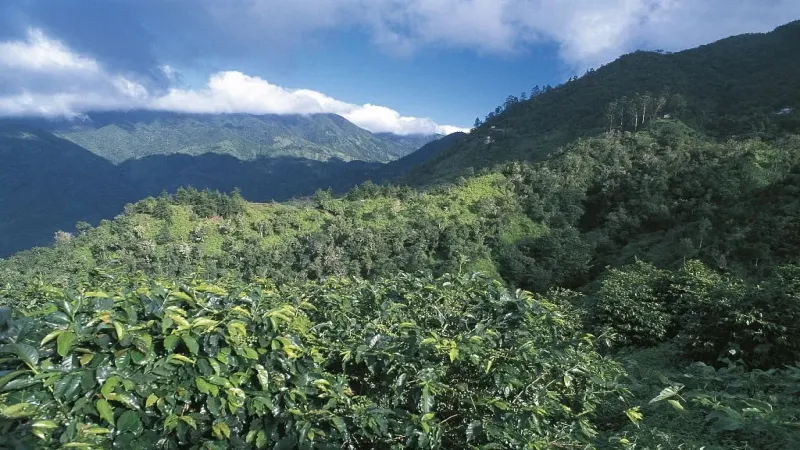
How Are SL28 and SL34 Coffee Beans Grown in Kenya's Thika Region?
Kenya's Thika region, in the Aberdare Mountains, produces coffee beans grown for a distinct tomato note and bright acidity. The Asali processing plant uses the K72 washed process with a 72-hour fermentation and works mainly with the SL28 and SL34 varieties, giving a complex cup that weaves cherry tomato, dark plum, berry, and citrus.
Kenya sits in eastern Africa on the equator, with the East African Rift running north to south, plateaus averaging about 1,500 meters, volcanic soil, and 12 to 24°C temperatures. Rain falls from March to June and October to December, and annual rainfall drops from 1,500 millimeters in the southwest to 200 in the northeast. These conditions shape how coffee tree beans develop flavor in the Thika area.
Kenya is an important representative of African specialty coffee, and its Thika region is famous for its distinct tomato flavor and excellent acidity. Located in the Aberdare Mountains, the Asali processing plant uses Kenya's signature K72 washed process, combined with the local main varieties SL28 and SL34, presenting a complex flavor interweaving cherry tomatoes, dark plums, berries, and citrus. This article will guide you through Kenya's geographical and climatic conditions, the cultivation characteristics of the Thika region, the 72-hour fermentation process of the Asali processing plant, and the origins and flavor performance of SL28 and SL34, and share Front Street Coffee's brewing suggestions.
Coffee is cultivated on multiple continents around the world, and Africa occupies a pivotal position in the coffee landscape. In addition to Ethiopia, which is widely recognized as the birthplace of coffee, countries such as Kenya, Rwanda, and Tanzania also grow coffee, among which Kenya can be regarded as one of the most renowned origins in Africa.
Kenya is located in eastern Africa and is a country with both land and sea, bordering Somalia, Tanzania, Uganda, South Sudan, and Ethiopia, facing the Indian Ocean to the southeast, with a coastline of 536 kilometers. The East African Rift Valley runs through the entire country from south to north. Apart from the coastal plains, most of the area belongs to a plateau with an average elevation of 1,500 meters. The country contains numerous lakes and volcanoes, among which Mount Kenya, an extinct volcano in the central highlands, stands at 5,199 meters, the second-highest peak in Africa.
The equator passes through central Kenya. The country lies in a tropical monsoon zone, and most areas have a tropical savanna climate. The coastal areas are relatively hot and humid, while the plateau regions have a mild climate. The rainy seasons are from March to June and from October to December each year, while the remaining months are the dry season. Temperatures throughout the year range between 12 and 24°C, and annual rainfall gradually decreases from 1,500 millimeters in the southwest to 200 millimeters in the northeast. High-altitude mountains, volcanic soil, abundant sunshine, and moderate rainfall together create the superior conditions for Kenya's specialty coffee.
Thika Region
Kenya has a fairly large number of coffee-producing regions, mainly concentrated in the southwestern part of the country. There are 14 regions in total: Bungoma, Embu, Kiambu, Kirinyaga, Kisii, Machakos, Meru, Mt. Elgon, Murang’a, Nakuru, Nyeri, Thika, Taita Taveta, and Trans-Nzoia, among which Nyeri, Kirinyaga, Murang’a, Kiambu, and Thika are the most well known.
Thika is a small town near Kenya's capital, Nairobi, and a large number of coffee fields are distributed around Nairobi. Although Thika itself is an industrial town, it is surrounded by agricultural areas and waterfalls. There are about 2,000 farmers in the Thika area, and coffee is grown at elevations between 1,520 and 2,200 meters. Compared with coffee beans from other Kenyan regions, coffee from Thika often shows a more pronounced tomato flavor. Among the coffee varieties grown in this region, about 90% are SL34 and SL28, and there are also varieties such as Typica, Kent, Bourbon, and Riuri 11.
Asali Processing Plant / K72 Washed Process
The Asali processing plant is located in the Thika region of the Rift Valley in Kenya's Aberdare Mountains. In Swahili, Kenya's official language, Asali means honey. The processing plant mainly uses the washed process and is one of the well-known processing plants in the Thika region.
Kenya's washed processing method is quite distinctive. After coffee farmers harvest the fruit, they first select high-quality cherries. After depulping, the beans are placed in a fermentation tank for 24 hours of soaking and fermentation. After completion, they are washed clean to remove part of the mucilage, then the water is changed and fermentation continues for another 24 hours. This cycle is repeated three times, totaling 72 hours, and finally the beans are dried. This processing method is called the Kenya 72-hour fermentation washed process, or K72 for short. Using this method allows the coffee beans to ferment for a long time in a low-temperature environment, thereby making the acidity brighter and the mouthfeel cleaner.
SL34&SL28
SL34 and SL28 are well-known Kenyan varieties. The name SL comes from the abbreviation of Scott Laboratories. In the late 1930s, the Kenyan government commissioned what was then Scott Laboratories, now renamed the Kenya National Agricultural Laboratories, to study 42 selected coffee varieties in terms of yield, quality, and disease resistance. SL34 and SL28 were selected during this process.
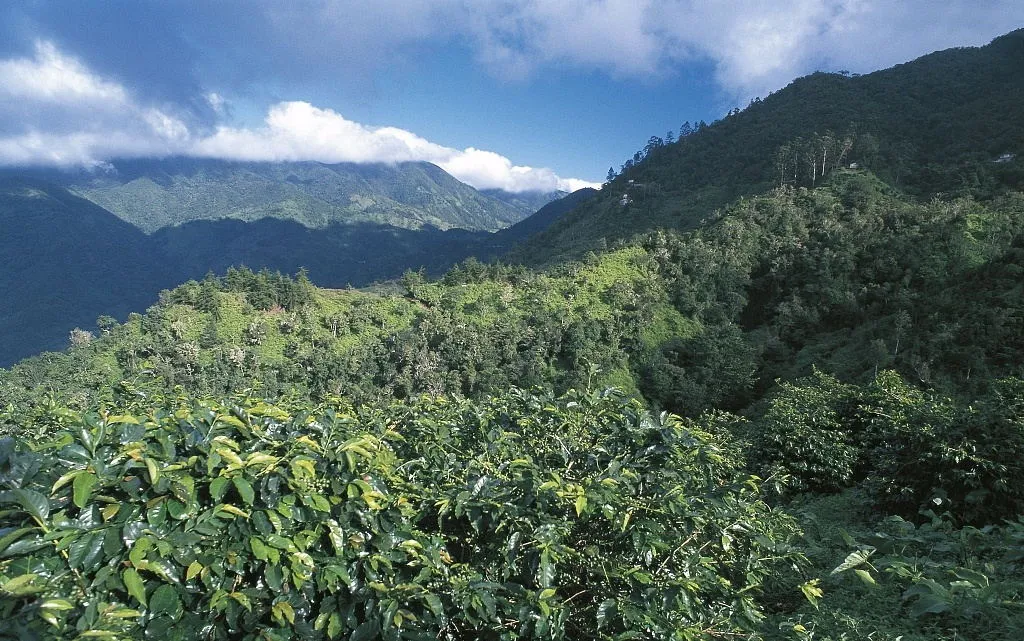
Although these two varieties are susceptible to the main coffee diseases, their quality and flavor are quite excellent, and they are suitable for cultivation at high altitudes. The higher the altitude, the better the quality. According to genetic testing results, SL28 originates from the Bourbon variety, while SL34 originates from the Typica variety. However, the flavors of the two are relatively similar, both possessing complex and varied acidity, with a pleasant sweetness in the finish. In terms of mouthfeel, SL28 is fuller and richer, with higher cleanliness.
Flavor: cherry tomato, dark plum, berries, citrus, green tea
This Front Street Kenya Asali coffee bean purchased by FrontStreet Coffee uses the K72 washed process and is medium-light roasted. Front Street uses a V60 dripper, brewing at a ratio of 1:15 and a water temperature of 92°C. You can smell ripe tomato and floral aromas. On the palate, it presents flavors of cherry tomato and dark plum, with bright acidity, prominent sweetness, a juicy feel, and a clean mouthfeel.
The above content is compiled by CoffeeHunters, a coffee news website.


