







What Makes Kilimanjaro Coffee From Tanzania Distinct?
Kilimanjaro coffee comes from Tanzania's high-altitude growing region, where volcanic soil and snowmelt water shape beans with a distinctive profile. Tanzania is one of Africa's Big Three coffee producers alongside Ethiopia and Kenya. The Kilimanjaro area grows classic typica coffee, and a washed lot brewed in a V60 shows citrus, berry, honey, and nut notes with a soft, balanced body.
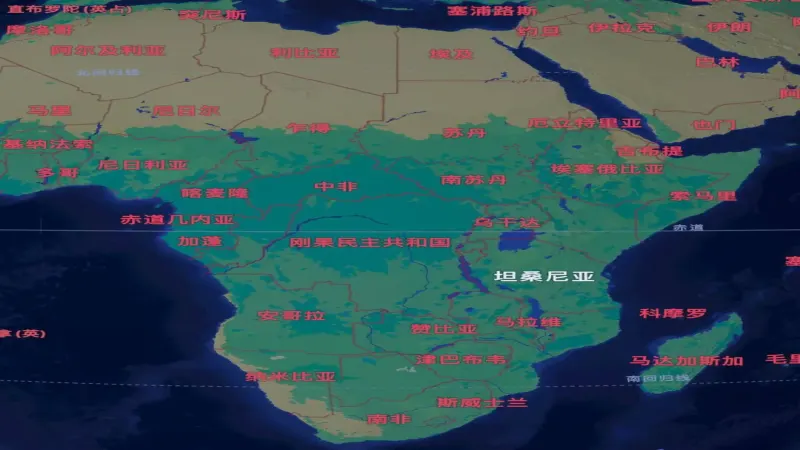
Tanzania lies in East Africa south of the equator and borders the Indian Ocean and eight countries. The eastern coast and inland lowlands have a tropical savanna climate, while the western plateau is tropical mountain climate at 21 to 26°C. Rainfall is modest, with 80% of the country receiving under 1,000 millimeters a year, yet rivers and lakes support abundant hydropower. The terrain and elevation help define cup quality.
Tanzania is one of Africa's Big Three coffee producers. Its Kilimanjaro growing region, with its high altitude, volcanic soil, and pure snowmelt water, nurtures coffee beans with a distinctive flavor profile. This article systematically outlines Tanzania's geography and climate as well as its main coffee-growing regions, with a focus on the growing conditions and variety composition of Kilimanjaro, and analyzes the characteristics of the classic Typica variety. Finally, Front Street Coffee presents a washed coffee bean from the Kilimanjaro region, brewed via V60 to reveal layers of citrus, berry, honey, and nut notes, with a soft mouthfeel and overall balance—ideal for enthusiasts who enjoy a tea-like coffee.
FrontStreet Coffee Growing Region · Tanzania
Africa is home to no shortage of well-known coffee-producing countries, including Ethiopia, Kenya, Rwanda, and Tanzania, and Tanzania is even hailed as one of Africa's Big Three coffee producers. Tanzania, officially the United Republic of Tanzania, is located in East Africa south of the equator and comprises two parts—mainland Tanganyika and the Zanzibar archipelago—making it a country with both land and sea territory. It borders the Indian Ocean to the east and shares boundaries with eight countries, including Kenya, Uganda, Burundi, and Rwanda, covering a total area of 945,000 square kilometers.
Tanzania is one of the cradles of humankind and also one of the world's least developed countries. Its economy is dominated by agriculture, while its mineral and tourism resources are quite abundant. In terms of terrain, it is high in the northwest and low in the southeast. The eastern coast is lowland, while the western plateau accounts for half of the country's total area. The East African Rift splits into eastern and western branches at Lake Malawi, running north to south through the country, and Africa's highest peak, Mount Kilimanjaro, is located here.
Tanzania's eastern coast and inland lowlands have a tropical savanna climate, while the western inland plateau has a tropical mountain climate, with average annual temperatures ranging from 21°C to 26°C. Although rainfall is relatively low—80% of the country receives less than 1,000 mm of annual precipitation—there are numerous rivers and lakes, and hydropower resources are very abundant.
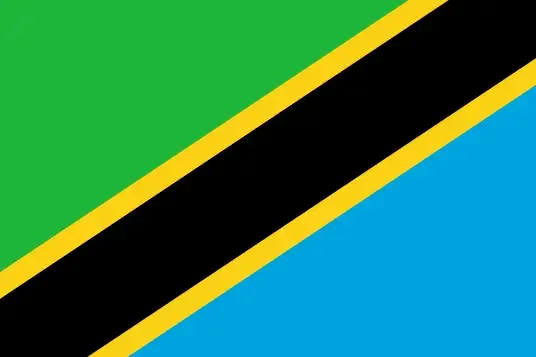
The flag of Tanzania consists of four colors—green, blue, black, and yellow. In the upper left and lower right are right triangles of green and blue, respectively, while a broad black band edged in yellow runs diagonally from the lower left corner to the upper right corner. Green symbolizes the land and faith in Islam, blue represents rivers, lakes, and sea areas, black refers to Black Africans, and yellow signifies abundant minerals and wealth.
Coffee-Growing Regions
Ninety percent of Tanzania's coffee comes from 450,000 smallholder farmers, while the remaining ten percent is produced by larger estates. The country is currently divided into nine growing regions, among which the better known include Kilimanjaro, Arusha, Ruvuma, Mbeya, Tarime, and Kigoma.
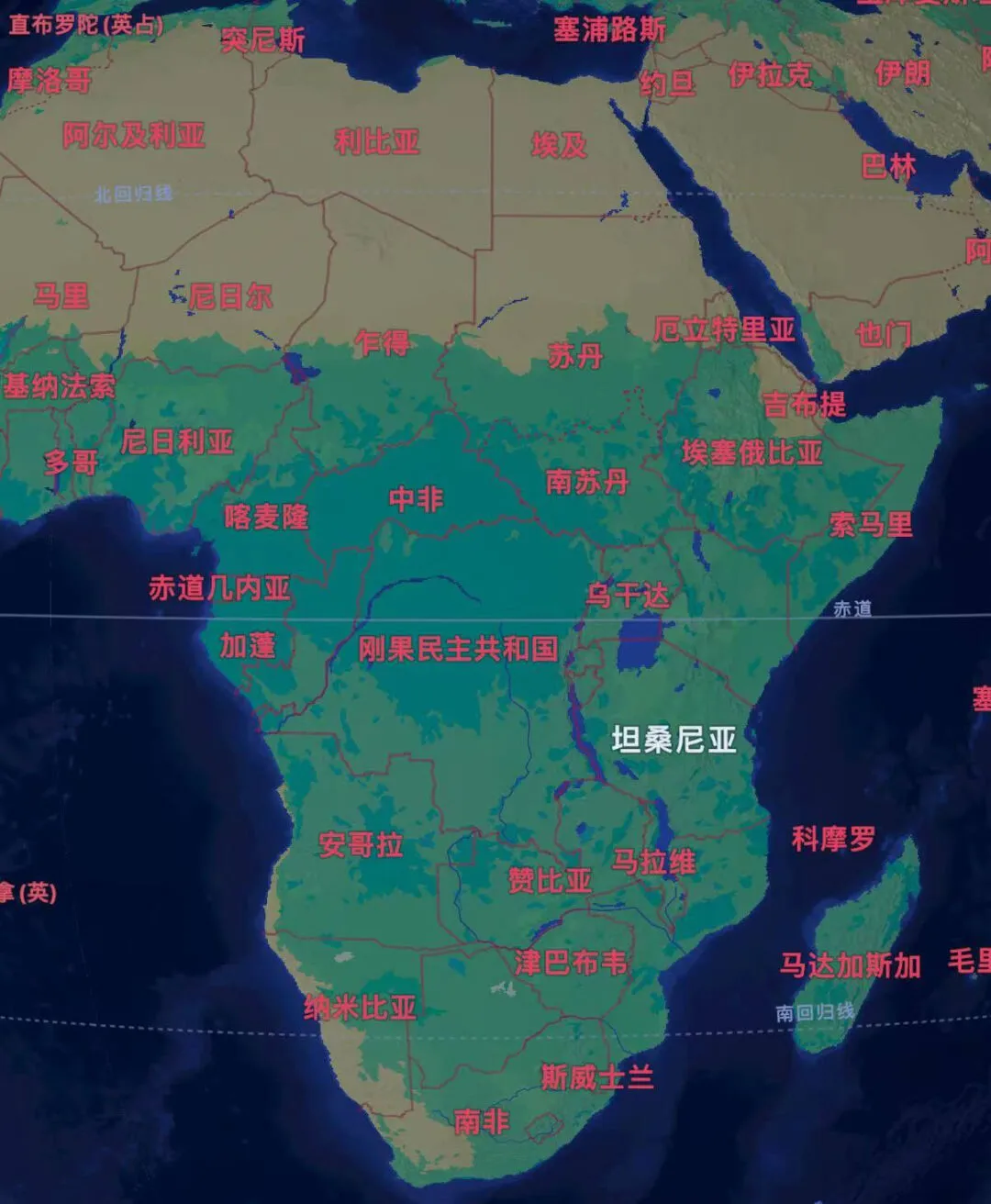
Kilimanjaro: Mount Kilimanjaro is located in northeastern Tanzania and is the highest peak on the African continent, at 5,895 meters above sea level. Its summit is snow-capped year-round, and it is mainly composed of three extinct volcanoes—Kibo, Mawenzi, and Shira. Coffee-growing areas are distributed between 1,050 and 2,500 meters above sea level. The high altitude, volcanic soil, and pure snowmelt water provide excellent conditions for coffee cultivation. The coffee harvest in the Kilimanjaro region is concentrated from July to December each year, and the main planted varieties are Bourbon, Typica, and Kent.
Arusha: Arusha is adjacent to the Kilimanjaro growing region, and the two areas are quite similar in many respects, sharing volcanic soil as well. However, the altitude in this region is only between 1,100 and 1,800 meters, and the harvest period is likewise from July to December each year.
Ruvuma: This region is located at the southernmost tip of Tanzania and is named after the Ruvuma River. It is regarded as a region with potential for producing high-quality coffee. In the past, development was hindered by a lack of funding. The altitude ranges from 1,200 to 1,800 meters, and the harvest period is from June to October.
Mbeya: Located around Mbeya city in southern Tanzania, this is an important region for growing coffee, tea, cocoa, and spices. The altitude ranges from 1,200 to 2,000 meters, and the harvest period is likewise from June to October.
Tarime: Located at the northernmost tip of Tanzania, close to the Kenyan border. The region has limited international recognition and grows both Arabica and Robusta varieties. The altitude ranges from 1,500 to 1,800 meters, and the harvest period is from July to December.
Kigoma: This region is named after the capital city of Kigoma and is located in northwestern Tanzania, adjacent to Burundi. The local coffee industry is still in its early stages. The altitude ranges from 1,100 to 1,700 meters, and the harvest period is from July to December.
Coffee Varieties · Typica Typica
Typica and Bourbon are among the oldest coffee varieties still in existence, both originating in southwestern Ethiopia. The leaves of the Typica coffee tree are ridged, with pointed tips, and tend toward green or bronze in color. The spacing between fruit-bearing nodes is relatively long, the fruit is mainly red, the coffee beans are somewhat elongated, and the plant as a whole is relatively tall. This variety is suitable for cultivation at high altitudes, where quality is better, but yields are low, and it is highly susceptible to leaf rust, nematodes, and berry disease. Most coffee plantations in South and Central America once grew Typica; however, due to low yields and susceptibility to disease, it was gradually replaced by other varieties, though it is still grown in countries such as Peru, Tanzania, and Jamaica.
This Front Street Tanzania coffee bean from the Kilimanjaro region on Front Street's bean list is washed and medium-roasted. Front Street uses a V60 dripper, brewing with a 1:15 coffee-to-water ratio and a water temperature of 92°C.
After brewing, Front Street Tanzania Kilimanjaro coffee has a gentle acidity on entry, presenting flavors of citrus, berry, honey, and nuts, with a soft mouthfeel, a tea-like lean, and an overall balanced performance.
The above content is compiled by CoffeeHunters, a coffee news website.


