








Which coffee producing regions matter in Costa Rica?
Costa Rica has seven coffee producing regions, and Tarrazu stands out for high altitude and consistent quality, accounting for roughly 35% of national output. Volcanic soil and varied microclimates support washed Caturra and Catuai, the two varieties examined here. The guide covers each region's geography and climate, then profiles Tarrazu flavor and brewing parameters for readers new to the origin.
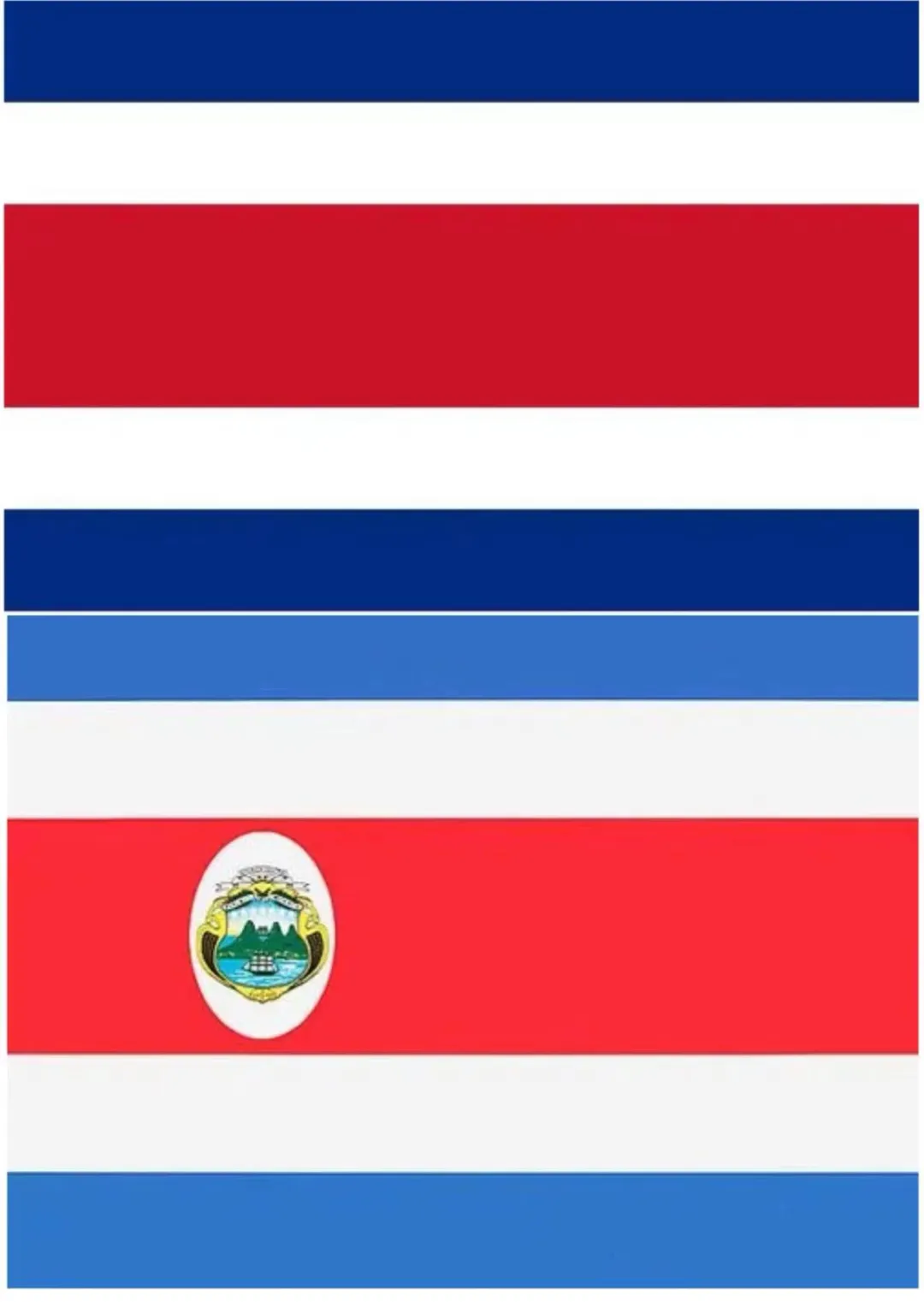
Caturra and Catuai are compact, high-yielding plants suited to the country's coffee cultivation, and washed processing gives Tarrazu beans a clean cup with balanced sweetness. Costa Rica abolished its military while keeping social stability and prosperity, and about 30% of its land sits in parks or reserves. Forest coverage reaches 52.38%, and the national flag carries blue, white and red bands.
Costa Rica, with its exceptional volcanic soil and microclimates, has become an important representative of specialty coffee in Central America. Among the seven major producing regions, Tarrazu stands out with its high altitude and consistent quality, accounting for about 35% of the country's production. This article will systematically review Costa Rica's producing regions, geographical and climatic features, and provide an in-depth interpretation of the botanical characteristics and cultivation performance of the two major varieties, Caturra and Catuai. At the same time, using Tarrazu washed coffee beans as an example, it introduces their flavor profile and brewing parameters, providing coffee enthusiasts with a complete introductory reference.
Costa Rica Costa Rica
There is a country in Latin America that was the first in the world to abolish its military, yet still maintains social stability and economic prosperity, and is even called the "Switzerland of Central America." This is Costa Rica (The Republic of Costa Rica).
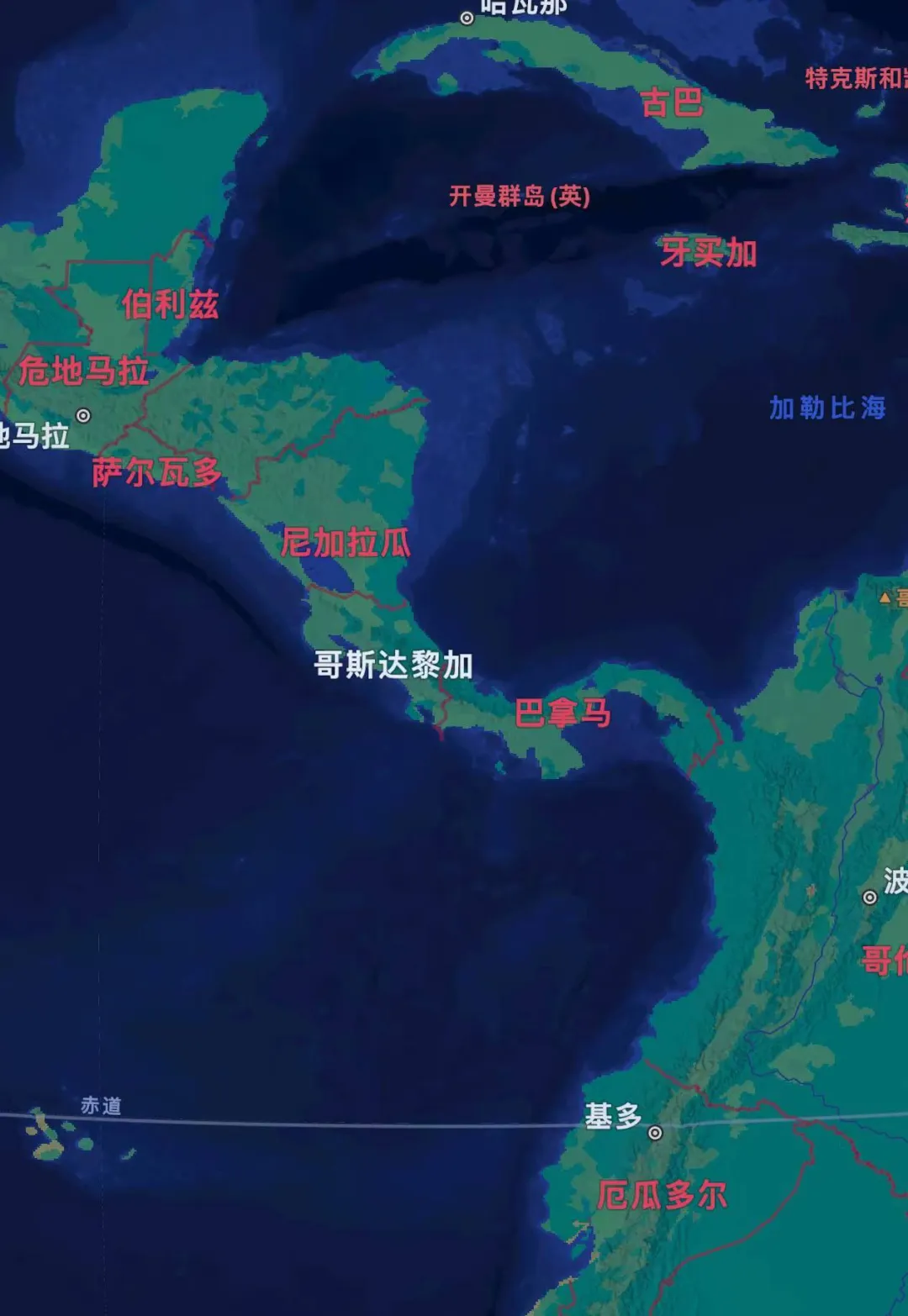
Costa Rica is located in the Central American isthmus, belonging to the North American continent. It borders the Caribbean Sea to the east, faces the Pacific Ocean to the west, is adjacent to Nicaragua in the north, and connects with Panama to the southeast, with a total land area of about 51,100 square kilometers. The country's name comes from Spanish, meaning "rich coast." Its national flag consists of five parallel horizontal bands in blue, white, red, white, and blue, with the red band twice as wide as the blue and white bands, symbolizing passion and the blood shed for independence; the blue and white colors continue the color system of the former Federal Republic of Central America, with blue symbolizing the sky, opportunity, idealism, and perseverance, and white representing peace, wisdom, and happiness. The national coat of arms is depicted on the left side of the red section and is used exclusively by government institutions.
Costa Rica is one of the countries with the richest biodiversity in the world, home to nearly 5% of the world's species. About 30% of the country's land is designated as national parks or nature reserves, and forest coverage is as high as 52.38%. The coastal areas are mainly plains, while the central region is divided by rugged mountains. The climate overall shows tropical and subtropical characteristics, with the rainy season from April to December each year and the dry season from December to April of the following year. The Central Valley area has a mild climate, with temperatures year-round between 15 and 26°C. There are more than 200 volcanoes in the country, and volcanic ash injects rich minerals into the soil. Combined with suitable temperatures and abundant rainfall, this makes Costa Rica's agriculture highly developed, making it an important global exporter of pineapple, bananas, and coffee.
Coffee Producing Regions
Costa Rica is divided into seven coffee producing regions: Valley Central Occidental, Valley Central, Tarrazu, Tres Rios, Orosi, Brunca, and Turrialba. These producing regions are basically distributed along the central mountain range.
Valley Central: The Central Valley is the region with the longest coffee-growing history in Costa Rica and the heart of the country's coffee industry, accounting for about 15% of national production. The producing region has an altitude of 1,200 to 1,600 meters and a tropical highland climate, with annual rainfall reaching 3,000 millimeters. Temperatures are more comfortable than in lower-altitude areas, and the coffee season runs from November to March of the following year. The producing region is home to three high-altitude volcanoes, Irazu, Barva, and Poas, which provide surrounding coffee cultivation with fertile volcanic ash soil rich in minerals, giving the area superior geographical and climatic conditions for coffee growing.
Valley Central Occidental: The Western Valley is located on the medium-slope terrain of the central mountain range, with a growing altitude of 1,000 to 1,200 meters, and accounts for 25% of national production. There is a volcano on each side of the producing region, east and west, so the soil is fertile. Because it is close to the coastline and affected by Pacific air currents, the average annual humidity is as high as 81%, with abundant rainfall, but the rainy and dry seasons are clearly distinct. The dry season has ample sunshine, allowing this producing region to use natural sun-drying for drying (other regions mainly rely on machine drying). The coffee season is from November to March of the following year.
Tres Rios: Tres Rios is the smallest coffee producing region in Costa Rica, with an altitude between 1,000 and 16,000 meters. Similar to the Central Valley, it also benefits from the fertile soil environment provided by Irazu Volcano. The Tres Rios area has produced many world-renowned coffees and is praised by coffee enthusiasts as the "Bordeaux" of coffee origins. The season is from December to March of the following year.
Orosi: The Orosi producing region has an altitude of 900 to 1,200 meters and is located in a narrow valley east of San Jose. Coffee cultivation there has a history of more than a century. The coffee season is from September to December.
Brunca: Brunca's growing altitude is 800 to 1,200 meters. Its coffee flavor appears relatively ordinary compared with famous producing regions, but it is still an important producing region in Costa Rica. The season runs from August to January of the following year, and coffee production accounts for about 20% of the country's total output.
Turrialba: The Turrialba producing region has an altitude of 600 to 900 meters. Here, the distinction between dry and wet seasons is not obvious enough, and coffee trees show multiple flowering periods, causing considerable trouble for coffee picking. Such geographical and climatic conditions are not ideal for cultivation and development, so high-quality coffee is relatively rare in this area.
Tarrazu: The Tarrazu producing region is located south of San Jose, the capital of Costa Rica. It is the country's most famous producing region and one of the world's major coffee origins, contributing 35% of national coffee production. Tarrazu has an altitude range of 1,200 to 1,900 meters, making it the highest-altitude producing region in Costa Rica. The climate here is humid with abundant rainfall, and surrounding volcanoes provide fertile volcanic ash soil, making it an exceptionally favorable place for coffee cultivation. The coffee season is from November to March of the following year. At present, FrontStreet Coffee has multiple Costa Rican coffee beans. Mozart, Bach, Strawberry Candy, and the Costa Rica introductory selected coffee beans are all produced in the Tarrazu producing region.
Caturra and Catuai
Caturra is a variety of Bourbon and was discovered between 1915 and 1918 on a plantation in Minas Gerais, Brazil. The name Caturra comes from Guarani and means "small." On the coffee plant, the leaves are green, the berries are tightly arranged, the internodes are shorter, and the fruit is mainly red. The coffee beans are uniform in size and oval, but slightly larger than those of Catuai. The overall tree shape is relatively short, so it is suitable for dense planting and has high yield. However, its production cycle is shorter than that of other varieties. It is suitable for high-altitude cultivation but is susceptible to leaf rust, nematodes, and berry disease.
Catuai (Catuai) was developed by the São Paulo Agronomic Institute ( IAC ) in Campinas, Brazil, and is a hybrid between Mundo Novo Mundo Novo and Caturra Caturra . On the Catuai coffee plant, similar to Caturra, the branches fork less, the leaves are green and slightly curled, the fruit is tightly arranged and mainly red, and the coffee beans are uniform in size and oval, but smaller than those of Caturra. The overall tree shape is relatively short, so it is suitable for dense planting. Its yield performance is good, and it is suitable for high-altitude cultivation, but it is likewise susceptible to leaf rust, nematodes, and berry disease.
FrontStreet Coffee Costa Rica Introductory Selected Tarrazu Coffee Beans Region: Tarrazu Producing Region Altitude: 1,500 meters Varieties: Caturra, Catuai Processing Method: Washed Flavor: Sweet Orange, Nuts, Honey, Toffee
FrontStreet Coffee's Tarrazu coffee beans are washed processed and medium roasted. FrontStreet uses V60 , a 1:15 ratio, and 92°C water temperature for brewing. The cup has a slight fruity acidity, presenting flavors of sweet orange, nuts, and honey, accompanied by a toffee-like sweetness, with a soft and smooth mouthfeel.
The above content is compiled by CoffeeHunters, a coffee news website.


