







Why does the iced americano vs hot americano benefits question matter?
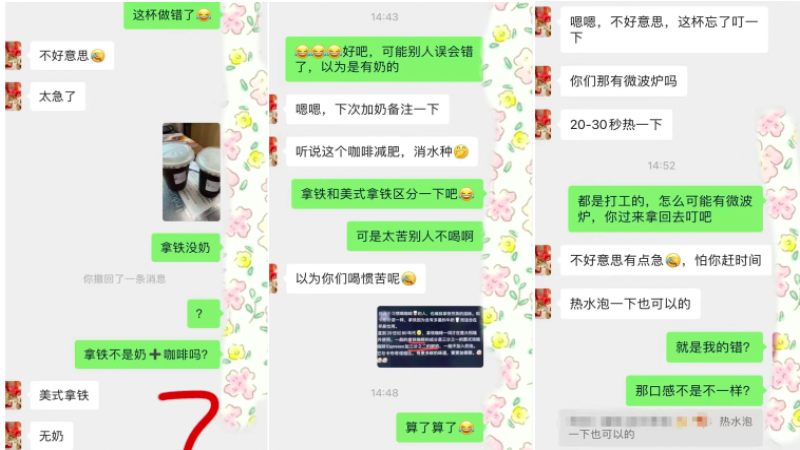
A customer ordered two iced lattes and one hot matcha latte by delivery, but received two iced Americanos and one iced matcha latte. When questioned, the shop said an Americano latte has no milk. For the iced matcha latte it suggested reheating the drink in a microwave or hot water. The exchange spread on social media and raised doubts about basic drink knowledge.
In Italian, latte simply means milk, and a latte combines espresso with steamed milk, so the shop's explanation contradicts standard practice. The mix-up points to the training gap behind the counter, where staff may not distinguish drink categories. It also shows why the iced americano vs hot americano benefits debate, and other menu basics, deserve clear answers for customers.
A customer ordered two iced lattes but received two iced Americanos. When the customer complained, the shop actually told them that "Americanos and lattes have no milk"—this absurd scene recently sparked heated discussion on social media. Even more laughably, for the incorrectly made iced matcha latte, the shop suggested the customer microwave it themselves. This exchange left the customer exclaiming how "ignorant" they were, and made netizens question: if you can't even distinguish basic drink categories, how can you run a coffee business well? In today's fiercely competitive coffee industry, where exactly lies the professional threshold for practitioners? This article walks you through the incident and explores the basic qualities a barista should possess.
▲
Click to follow | Daily specialty coffee culture magazine Coffee Workshop
If you order two iced lattes and end up with two iced Americanos, most consumers would immediately contact the merchant and try to negotiate a proper solution through communication. However, recently, after receiving the incorrectly made iced Americanos, one customer was completely stunned during their exchange with the shop.
According to this consumer's account, they ordered two iced lattes and one hot matcha latte on a food delivery platform, but what arrived was two iced Americanos and one iced matcha latte—nothing matched the original order at all. Seeing this, the customer immediately contacted the shop to explain the situation.
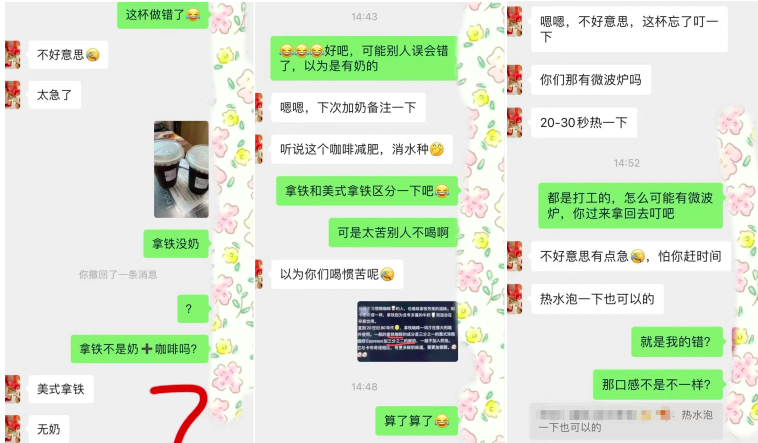
Faced with such a mistake, the merchant first apologized and explained that the drinks were made incorrectly because they were "too rushed." But when the customer pressed, "Lattes have no milk? Isn't a latte milk plus coffee?" the shop actually replied, "Americano latte, no milk." This statement left the customer utterly shocked and unable to resist mocking themselves for apparently encountering some new category of coffee.
As for the iced matcha latte that was also made incorrectly, the shop's solution was to have the customer heat it up in a microwave, or soak it in hot water, manually turning the iced drink into a hot one. For this consumer, the entire communication process felt like opening a door to a new world, and they could only mock themselves for being "ignorant."
The shop's solemn nonsense also left netizens dumbfounded. In Italian, latte does originally mean "milk," but in the vast majority of domestic coffee shops, latte refers to latte coffee. Yet this shop owner actually explained their own coffee as "Americano latte, no milk." As netizens joked, this is like plain rice without rice, or bubble tea with neither pearls nor milk—both confusing and hilarious.
As for the incorrectly made iced drink, the merchant's suggestion to put it in the microwave to heat it up made people feel it was even more perfunctory and amateurish. Some netizens pointed out that since the shop made the mistake, it should bear the loss caused to the customer, rather than spouting nonsense with a straight face when the customer raised questions, and fobbing them off with such an unserious and unprofessional suggestion.
On the other hand, many people felt puzzled after learning what happened: how did a shop that can't even distinguish between different coffee drinks get into the coffee business?
Nowadays, whether chain coffee brands or independent coffee shops, all are mired in fierce involutionary competition, each coming up with tricks to grab consumers' attention and goodwill. Therefore, in the eyes of most consumers, under such an involuted environment, the threshold for entering the coffee track should only rise, not fall, and the requirements for the baristas responsible for production should also rise accordingly.
But reality is exactly the opposite: many young people who know only a little about coffee dare to enter the coffee industry, resulting in being unable to answer when customers ask coffee-related questions, and even trying to mislead customers with solemn nonsense—in consumers' eyes, this is clearly extremely irresponsible behavior.
Netizens generally believe that if a shop wants to sell a certain product, it should have a sufficiently deep understanding and awareness of it, and possess the corresponding knowledge reserve and professional competence, rather than knowing nothing when customers ask and appearing even more amateurish than the customer.
Image source: Xiaohongshu
Disclaimer: Some images in this article are from the internet. For some content on the website, such as images, we will respect the original author's copyright and indicate the source. However, due to the large volume, some images and text may not have been credited in time. Please forgive us. If the original author has any disputes, they can contact the website for handling. Once verified, we will correct it immediately. Compiled and edited by "Coffee Workshop." Please indicate the source when reposting. If there is infringement, please inform us for deletion. Thank you~!
The above content is compiled by CoffeeHunters, a coffee news website.


