







What makes Geisha coffee beans from Nuevo Oriente distinct?
Guatemala Nuevo Oriente Geisha coffee beans come from the country's youngest coffee region, where high altitude, volcanic soil and 2,000 to 3,000 millimeters of annual rainfall shape the cup. Honey-processed and medium-light roasted, the beans brewed in a V60 show white floral notes, sweet orange, bergamot and toffee sweetness, with a soft honey-like body and evolving layers.
Guatemala is the world's ninth-largest coffee producer and is known for high-grown Strictly Hard Bean. Coffee usually grows between 1,300 and 1,800 meters above sea level, where temperatures stay mild at roughly 18°C to 28°C. The Geisha variety's botanical traits and Nuevo Oriente terroir together explain the lively acidity and clean mouthfeel behind the guatemala coffee beans taste.
Guatemala is the world's ninth-largest coffee producer, known for its high-grown Strictly Hard Bean. Among its eight well-known regions, Nuevo Oriente is the youngest, yet its high altitude, volcanic soil, and abundant rainfall nurture a richly layered cup profile. This article will walk you through Guatemala's coffee-growing conditions, the unique terroir of the Nuevo Oriente region, and the history and botanical characteristics of the Geisha variety. Meanwhile, Front Street Coffee's Guatemala Nuevo Oriente Geisha coffee beans are honey-processed and medium-light roasted; brewed with a V60, they present white floral notes, sweet orange, bergamot, and toffee-like sweetness, with a soft, smooth, honey-like mouthfeel and richly evolving layers.
Coffee is grown across many continents and countries worldwide, and Central America has no shortage of origins, such as Guatemala, Panama, Costa Rica, and Honduras. Among them, Guatemala stands out with high-quality high-grown Strictly Hard Bean and is now the world's ninth-largest coffee producer.
Guatemala
Guatemala is located in southern North America, bordered by Mexico, Honduras, Belize, and El Salvador, with the Caribbean Sea to the east and the Pacific Ocean to the south. Two-thirds of the country consists of mountains and highlands, with the Cuchumatanes range in the west and the Sierra Madre in the south, both within a volcanic belt; the country has 37 volcanoes in total.
Guatemala has a tropical climate: the northern and eastern coastal areas have a tropical rainforest climate, while the southern highlands have a subtropical climate. The wet season runs from May to October each year, and the dry season from November to April of the following year. Coffee is usually grown in highland areas, where the zone from 1,300 to 1,800 meters above sea level has mild temperatures year-round, ranging between 18°C and 28°C; January and February tend to be cooler, and annual rainfall in the northeast can reach 2,000 to 3,000 millimeters. High altitude, volcanic soil, pronounced day-night temperature differences, ample rainfall, and diverse microclimates together give Guatemalan coffee an elegant, lively acidity, a clean mouthfeel, and clearly layered flavors.
Nuevo Oriente Region
Guatemala has 22 departments in total, 20 of which grow coffee. Eight regions are relatively well known and can be divided into five volcanic regions and three non-volcanic regions, with coffee generally grown above 1,500 meters. The non-volcanic regions include Huehuetenango, Coban, and Nuevo Oriente, while the volcanic regions include Atitlan, Antigua, Acatenango, Fraijanes, and San Marcos. Among them, Huehuetenango and Antigua are the more famous; Front Street Coffee has a washed Guatemala Huehuetenango coffee bean that serves as an entry-level selection, with mild fruit acidity, citrus, berry, and nut flavors, a smooth sweet finish, and a tea-like aftertaste.
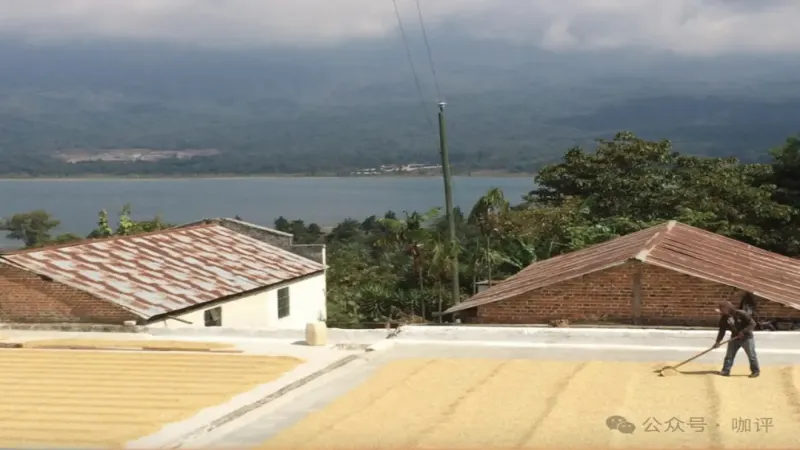
The Nuevo Oriente region is located in eastern Guatemala, near Honduras, and is the youngest coffee-producing region, having only begun growing coffee in the 1950s. The area receives abundant rainfall year-round and sits at a high altitude, between 1,500 and 2,050 meters, so it is always shrouded in fine mist, with shorter sunshine hours and more humidity than other regions. Nuevo Oriente was once one of Guatemala's poorest and most isolated areas; in ancient times it was a volcanic zone, and for this reason the soil is rich in minerals, which, combined with ample rain and high altitude, makes the flavor of the coffee beans produced here highly complex and variable.
Geisha Variety
In the 1930s, the Geisha variety was discovered in Ethiopian forests. Because it could tolerate coffee leaf rust, it was introduced to several countries along the way, and was eventually discovered by the owner of Hacienda La Esmeralda in Panama, who entered the Geisha variety in the 2005 Best of Panama (BOP) competition. With its delicate floral notes, jasmine-like aroma, peach and bergamot flavors, and an exceptionally high score, Geisha won the championship and also broke the coffee auction price record at the time, selling for more than $20 per pound; Geisha coffee beans thus became famous. This move attracted countless countries to introduce Geisha for local cultivation, and Guatemala was one of them.
In terms of the coffee tree's botanical characteristics, the Geisha variety has relatively thin and slender leaves, with green or bronze tips on the young leaves at the top; its branches are slender and widely spaced, and the coffee cherries are mainly red or yellow. The green beans are mostly pointed beans, and the tree overall is relatively large but rather fragile. Although it has some resistance to coffee leaf rust, it is susceptible to nematodes and coffee berry disease, and is suited to being grown above 1,600 meters; the higher the growing altitude, the better the quality.
Front Street Coffee Guatemala Nuevo Oriente Geisha Coffee Beans Region: Nuevo Oriente Altitude: 1,500-2,050 meters Variety: Geisha Processing Method: Honey Process Flavor: White floral, sweet orange, bergamot, honey, toffee
Front Street Coffee's Nuevo Oriente Geisha is honey-processed and medium-light roasted. Front Street uses a V60 with a 1:15 ratio and 92°C water for brewing, allowing you to smell delicate white floral notes; on the palate there is mild fruit acidity, bringing sweet orange and bergamot flavors, along with toffee-like sweetness and a soft, smooth, honey-like mouthfeel, with a richly layered overall experience.
The above content is compiled by CoffeeHunters, a coffee news website.


