







Why higher delivery fees squeeze coffee in hand sellers
Food delivery platforms in China have raised their commission and delivery fee agreements, and coffee merchants say the increase has pushed up menu prices and cut order volumes. Some owners report that a 25-yuan fast food order can return as little as 1.24 yuan, and a few see negative income. Managers told merchants the adjustment was applied uniformly, not aimed at any single shop.
The result is a squeeze: raising prices loses customers, while holding prices means absorbing the cost. Owners who asked for lower fee rates were told they could stop operating if they did not accept. Experienced merchants suggest using platform traffic to move online buyers into offline stores through loyalty point cards, and studying promotion rules rather than following account managers blindly.
Recently, the rise in delivery fees on food delivery platforms has sparked heated discussion among coffee merchants. Some shop owners report that after Meituan's delivery fee agreement was adjusted, the increase in delivery fees led to higher overall prices, and order volumes subsequently declined, trapping them in a vicious cycle where raising prices loses customers and not raising prices means losing money. Merchants tried to negotiate with their account managers to lower other fee rates, but without success—they were told they could "stop operating if they don't accept it." Some merchants complain that the platform's commission is too high—a 25-yuan fast food order yields only 1.24 yuan, and some even see negative income. Facing this dilemma, experienced merchants suggest changing one's approach: leveraging the delivery platform's traffic advantage to channel online customers to offline stores through activities like loyalty point cards, while rationally studying the rules of these activities and avoiding blindly following advice. Front Street Coffee reminds merchants that they need to judge whether platform strategies are applicable based on their own circumstances.
▲
Click to follow | Daily specialty coffee culture magazine Coffee Workshop
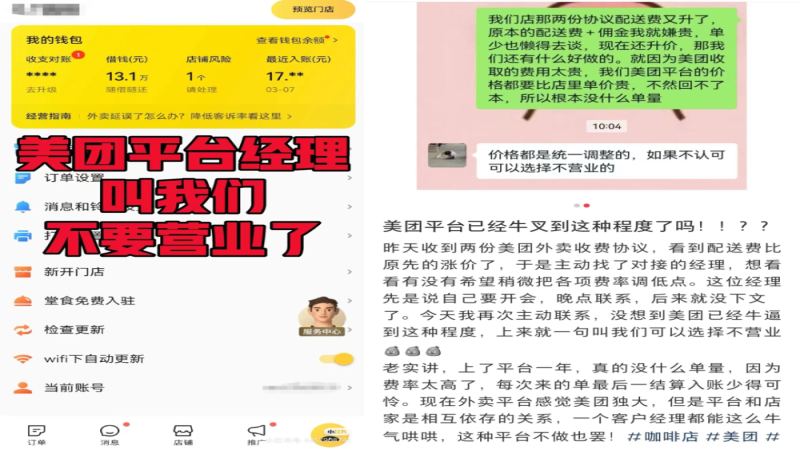
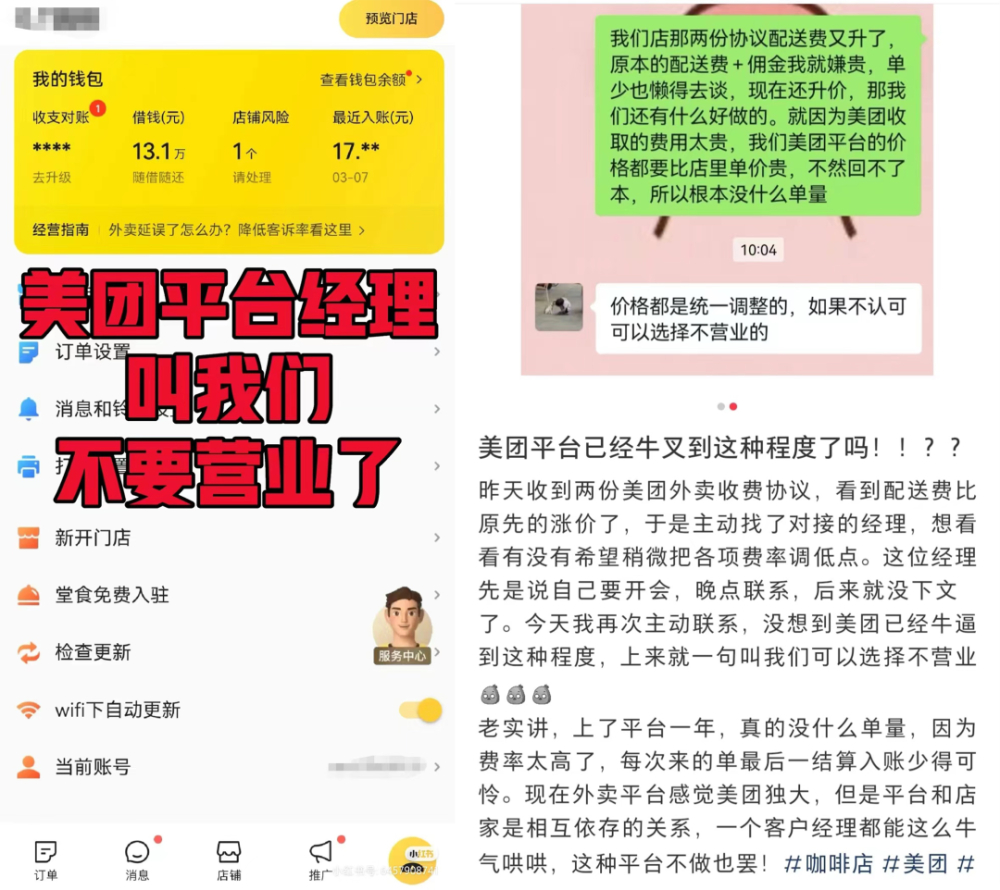
Recently, a coffee shop owner posted on social media revealing that they had received two consecutive Meituan delivery fee agreements and noticed that the delivery fees for orders had been raised. Considering that higher delivery fees would push up overall delivery prices and thereby reduce the store's delivery order volume, the owner proactively contacted their account manager to ask whether other fee rates on the platform could be lowered—this way, they could reduce their own losses while consumers could maintain the original prices.
During the communication, the owner felt that Meituan's platform fees were too high. To reduce losses, the store could only raise product prices, but once prices went up, order volumes would drop again—trapping them in a cycle where profitability seemed impossible no matter what they did. Therefore, they hoped the platform could appropriately lower its fee rates.
In response to the merchant's request, the account manager replied that the prices were adjusted uniformly and were not targeted at any particular merchant. If delivery merchants did not accept this platform price adjustment, they could choose to stop operating.
This response left the shop owner at a loss. Since joining the delivery platform a year ago, their store's order volume had always been low, and now with platform fees being so high, the actual income each delivery order brought to the merchant was minimal. Under these circumstances, perhaps as the account manager said, only by withdrawing from the delivery platform could they cut their losses in time.
Merchants similarly "struggling" on delivery platforms deeply resonate with this. One merchant helplessly complained that selling a 25-yuan fast food meal through the platform ultimately yielded only 1.24 yuan in actual take-home pay; another merchant said their delivery orders sometimes even resulted in negative income—not only did they not recoup costs, but they also had to cover delivery fees and packaging costs out of pocket, essentially paying to treat customers to a meal.
Merchants mock themselves, saying that on the surface they appear to have income on the platform, but in reality after all that hustle they haven't earned a penny—they're like pitiful tenants working for their landlord, paying out every single day.
However, some merchants believe that while platform fees have indeed been rising continuously—which is genuinely unfavorable for merchants—rather than complaining that delivery is too hard and the platform is too exploitative, it's better to change one's approach and seize the delivery platform's characteristics of "high traffic and many customers" by including loyalty point cards and similar activities in delivery orders, converting traffic from the delivery platform into a stable offline customer base.
Merchants who primarily rely on delivery sales reveal that if shop owners spend some time studying the various activity rules and manage their business diligently, things won't turn out as badly as some claim—that "you'll lose everything by joining a delivery platform." As for the account manager's suggestions about participating in promotional activities and issuing discount coupons to increase order volume, merchants should judge whether these are applicable based on their own circumstances rather than blindly following them.
Additionally, some people believe that if delivery platforms comprehensively adjust their fee rates, then coffee shop owners hoping their account managers can help coordinate are asking too much. After all, the account manager is just an employee without enough authority to change platform decisions, and within this manager's scope of ability, perhaps the only advice they could give the shop owner was to "stop operating."
Image source: Xiaohongshu
Disclaimer: Some images in this article are from the internet. For content on the website such as images, we will respect the original creator's copyright and indicate the source. However, due to the large volume, some images and text may not have been attributed in time. We ask for your understanding. If the original creator has any disputes, please contact the website for handling. Once verified, we will immediately correct it. Compiled and edited by "Coffee Workshop." Please indicate the source when reposting. If there is any infringement, please notify us for removal. Thank you~!
The above content is compiled by CoffeeHunters, a coffee news website.


