








What does a raw coffee bean taste like in iced drip brew?
Drip bags are pre-ground coffee sealed in non-woven filter bags, working like a portable pour-over: the two paper ears replace the dripper and hang on the cup rim. Two methods produce iced coffee at home. Japanese-style iced pour-over raises the water temperature, reduces water volume, and adds ice for a concentrated drink that is not watered down.
The second method is cold brew immersion, mixing grounds with room-temperature water and refrigerating overnight before filtering. Specific coffee-to-water-to-ice ratios and bean recommendations are given for fruity, floral, or full-bodied profiles. What does a raw coffee bean taste like before roasting? Grassy and soft rather than sweet, which is why the roasted, ground beans in drip bags carry the flavor instead.
When the weather heats up and you're craving iced coffee but too lazy to go out, drip bags are the easiest option. Essentially, they're a portable pour-over—pre-ground coffee sealed in a non-woven filter bag. The two paper ears on either side replace the dripper; just hang it on the rim of your cup and brew directly. This article covers two ways to make iced coffee at home: first, drawing on Japanese-style iced pour-over—by raising the water temperature, reducing the water volume, and adding ice cubes, you quickly get a well-concentrated, refreshing iced drip bag that isn't watered down. Second, using cold brew immersion—mix the coffee grounds with room-temperature water in a ratio, refrigerate overnight, and filter the next day. The article also provides specific coffee-to-water-to-ice ratios, brewing steps, and bean recommendations. Whether you prefer fruity, floral notes or rich, full-bodied flavors, you'll find a corresponding Front Street drip bag recommendation.

Have you noticed? After that thunderstorm a couple of days ago, the temperature is quietly creeping up—the days of gulping down iced coffee are back!!! But here's the thing: you want the coffee, you just don't want to leave the house. So is there a way to easily make a delicious iced coffee at home? Of course there is! The ever-versatile Front Street has pulled this out of its pocket:
"Drip Coffee Bags"
Today, join Front Street to see how to easily make delicious iced coffee with drip bags!
What Is Drip Coffee?
As usual, let's briefly talk about drip coffee! Put simply, drip coffee is a portable, easy-to-use "pour-over coffee"! Coffee beans are pre-ground, sealed in specially made non-woven filter bags, making it convenient to carry and brew.
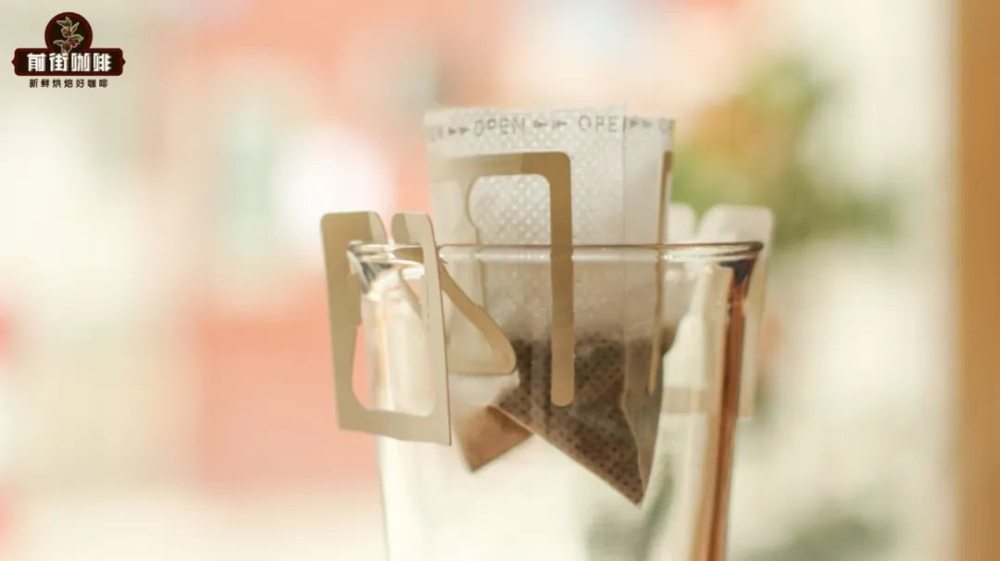
The filter bag acts as the filter paper here, blocking the coffee grounds after brewing; the two paper ears on either side of the bag serve the role of the dripper. Just hook these two "ears" onto the rim of your cup, and the filter bag stands up on its own, allowing you to brew coffee directly on top—which is why people call it a "drip bag."

Drip coffee can be as casual or as precise as you like. If you want to be particular, follow the pour-over method with accurate parameters to brew a fully flavored black coffee; if you want convenience, just eyeball the water temperature and pouring—which actually suits the portable nature of drip bags even better.
How to Make a Delicious Iced Coffee with Drip Bags?
It's actually not hard. There are two paths to iced coffee: one is the drip method you can drink right away, and the other is the immersion method that requires some waiting. Either way, the process is simple. Let Front Street explain below.
Drip coffees fall roughly into two categories: light to medium roasts with acidity, floral notes, and fruity qualities; and medium to dark roasts that lean bitter, with nutty, chocolatey, full-bodied flavors. If you like refreshing flavors, try Front Street Fruit Ding Ding Drip Bags or Front Street Flower Chief Drip Bags; if you want something rich and intense, go for Front Street Mandheling Drip Bags or Front Street Brazil Cerrado Drip Bags.
1. Making It as Iced Pour-Over
That's right—applying the iced pour-over approach from pour-over coffee is the fastest way to get a cup of iced drip coffee. A standard iced pour-over adjusts to a finer grind on top of the hot brew to increase extraction, then enlarges the coffee-to-water ratio to boost concentration, and finally drops in ice cubes to cool and dilute—resulting in a delicious iced pour-over.
But the grounds in a drip bag are already pre-ground, so you can't increase extraction efficiency by adjusting to a finer grind. That means you need a different approach—using other parameters to raise extraction efficiency. For example: raising the water temperature.
The reason we need to increase extraction is that we want to reduce the water volume and raise the coffee concentration, leaving enough room for dilution by the ice. This way, when the ice melts and rapidly cools the coffee, it won't become weak and thin. The standard brewing temperature is 92°C (light roast beans) / 88°C (dark roast beans); just add 2°C on top of that. If you don't have a thermometer on hand, boil water and let it sit for about 1 minute (if pouring into another kettle, you can extend that by another 30 seconds).
Generally, a drip bag contains about 10g of coffee. The coffee-to-water-to-ice ratio for iced pour-over is 1:10:6, which translates to 10g coffee, 100ml hot water, and 60g ice for a drip bag. The brewing steps are as follows:
① First, bloom with a small amount of hot water—just enough to cover the coffee grounds, about 20ml at this point. (Using a scale is still recommended.)
② Next, pour in the remaining 80ml of hot water using a slow stream in small circles. If you don't have a small-mouthed kettle at home, you can use a regular hot water kettle to pour, then stir 10 circles with a small spoon or stick.
③ Once the coffee has finished dripping through, pour the drip bag coffee into a container with ice cubes and mix—a refreshing cup of iced drip coffee is ready!
2. Making It as Cold Brew
Cold brew is much simpler. Find any sealable container, tear open the drip bag, and pour the coffee grounds in with room-temperature water in the specified ratio (keep the empty drip bag—don't throw it away). The coffee-to-water ratio is 1:10, meaning 10g of coffee grounds to 100ml of room-temperature water.
Front Street recommends using several bags at once for extraction, because one drip bag yields only about 80ml of coffee (the grounds absorb water). Then refrigerate overnight to extract, and the next day use the drip bag to filter out the coffee grounds.
After filtering, taste the concentration first. If it's right, no need to add ice; if it's too strong, just add ice cubes to dilute.
(Short cups are prone to soaking, so it's best to use a tall cup.)
The above content is compiled by CoffeeHunters, a coffee news website.


