







Does Hot Pour-Over Beat Japanese Iced Coffee for Flavor?
Hot pour-over brings out a bean's full flavor better than Japanese-style iced pour-over, which is why cafes often recommend it first. A typical hot recipe uses 15g of coffee at a coarse-sugar grind, 92°C water and a 1:15 ratio, finishing in about two minutes, so the cup shows the bean's complete character.
Iced pour-over, brewed by dropping hot coffee over ice, is cleaner and more refreshing but narrows the flavor range. Grind size, water temperature and coffee-to-water ratio all shift between the two methods. Beans such as Geisha, Huakui, Golden Mandheling and Queen's Estate suit different tastes, so a good way to brew mandheling coffee depends on whether clarity or depth matters more.
Pour-over coffee, with its efficient and convenient characteristics, has become the signature offering of many cafés. With the same bean, hot brewing and iced brewing deliver completely different experiences. Starting from everyday inquiries at Front Street stores, this article analyzes the differences between hot pour-over and Japanese-style iced pour-over in terms of grind size, water temperature, coffee-to-water ratio, and other parameters, explaining why hot brewing has the edge when pursuing complete flavor, while also acknowledging the strengths of iced pour-over in cleanliness and refreshingness. At the end, based on flavor preferences, it compiles pour-over bean recommendations suited to different tastes, including Front Street Geisha, Huakui, Strawberry Candy, as well as PWN Golden Mandheling, Queen's Estate, and Bird of Paradise, helping enthusiasts choose according to their needs.
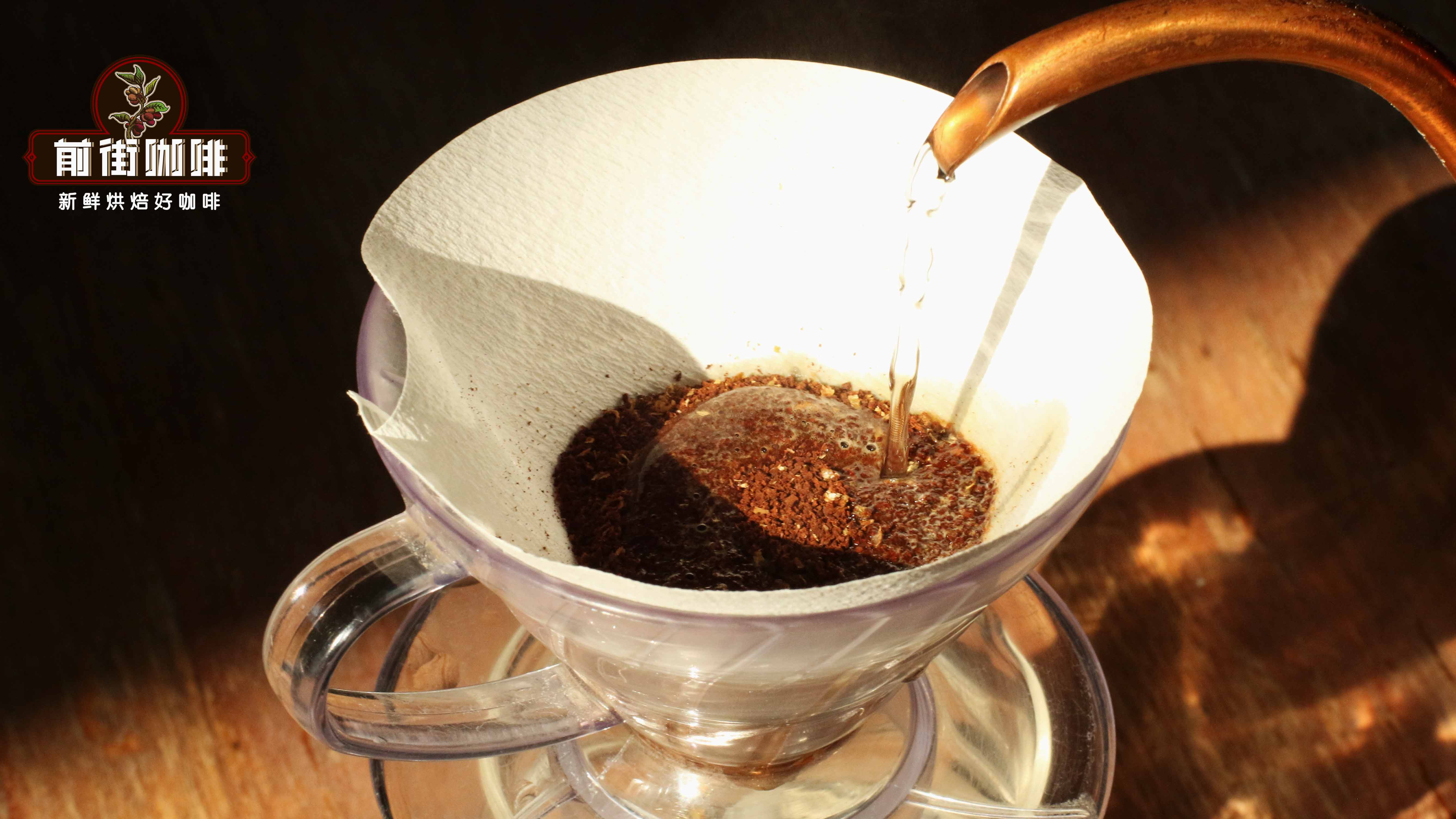
Pour-over coffee is now widely recognized as a brewing method that balances quality, efficiency, and convenience, bringing out a bean's personality to the fullest in just a few minutes. In many coffee shops, the best-selling single-origin offerings are precisely pour-overs.
At Front Street stores, after guests pick a pour-over bean, staff usually ask first: hot or cold? If the guest wants to taste the bean's own flavor, Front Street generally recommends hot brewing. Many guests find this puzzling—does wanting flavor mean you have to drink it hot? Can't it be iced?
Why is hot brewing the first choice when you want flavor?
This question isn't hard to understand. As long as the underlying logic of the two brewing methods is made clear, you'll see why hot pour-over is the choice when pursuing flavor expression.
Like most espresso, pour-over first existed as hot brewing before iced brewing was derived from it. Among the many iced pour-over methods, the most widely spread is Japanese-style iced pour-over, namely the now-common ice-cooling method. It was itself improved from hot pour-over as its blueprint. Below is a comparison of the two brewing parameters, using Front Street's brewing of a light-roast bean as an example:
Hot pour-over parameters: 15g coffee; coarse-sugar grind (Ek43 setting 10; 80% passing through a No. 20 sieve); water temperature 92°C; coffee-to-water ratio 1:15 (15g coffee with 225ml hot water); brewing time about 2 minutes.
Iced pour-over parameters: 15g coffee; fine-sugar grind (Ek43 setting 9.5; 75% passing through a No. 20 sieve); water temperature 92°C; coffee, water, and ice ratio 1:10:6 (15g coffee with 150ml hot water and 90g ice); brewing time about 1 minute 30 seconds.
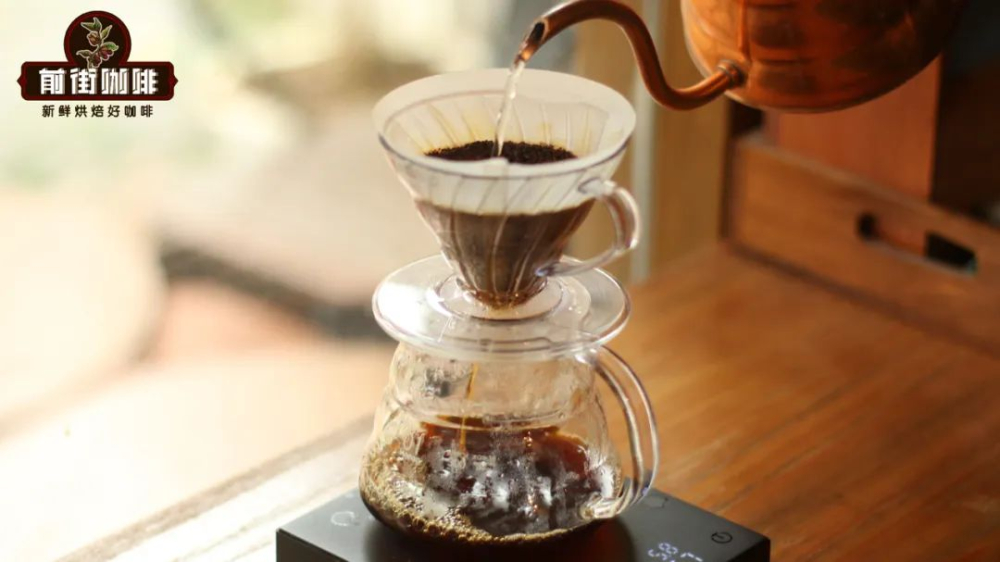
As can be seen, the parameters used for hot brewing conform to the golden ratio of Golden Cup extraction, allowing the coffee's flavor compounds to be extracted relatively completely. By contrast, iced brewing uses a finer grind, adds ice, and uses less hot water, so the brewing time is noticeably shorter.
The purpose of these differences is just one: to cool the coffee quickly. But if you still brew according to the original ratio and then add ice, the coffee-to-water ratio gets compressed, and the coffee's concentration gets diluted.
So the Japanese adopted the approach of high concentration with low extraction, increasing extraction efficiency by adjusting to a finer grind and raising the coffee-to-water ratio, first obtaining a cup of relatively high concentration, then adding an appropriate amount of ice to dilute it, ultimately arriving at an iced pour-over with a concentration comparable to hot brewing.
However, this approach is essentially piling up concentration. If you want the coffee's flavor compounds to be released as completely as possible, sufficient water and time are both indispensable. Even if the grind is finer and extraction efficiency is higher, too little hot water will still prevent brewing from reaching the later stages. Without the support of later-stage compounds, flavor and finish will naturally be somewhat compromised.
So iced pour-over will be weaker than hot pour-over in flavor expression. If you want to taste the bean's complete flavor, hot pour-over is the optimal solution. Hot pour-over's strengths aren't just complete flavor—its aroma is also more prominent; moreover, from about 70°C right after extraction to gradually cooling down, the taste and flavor keep changing throughout, and during this time you can experience rich layering, which is also a major charm of hot pour-over.
Of course, Front Street isn't saying iced brewing is inferior to hot brewing—it's just that when it comes to presenting a bean's flavor, hot pour-over has the upper hand. Iced pour-over also has many advantages: although discarding the later-stage compounds makes its flavor, layering, and finish fall short of hot brewing, precisely because there's less intervention from the later stages, it drinks cleaner and its sweetness is more pronounced. Most importantly, the refreshingness brought by low temperature—having a cup in summer is truly delightful.
In addition, Front Street has noticed that many friends love both the rich layering of hot coffee and the refreshing cleanliness of iced coffee, so they often ask whether there's a bean that can brew a full-flavored cup both hot and cold. The answer is yes, and below are recommendations in two categories.
If you prefer coffee rich in floral and fruity notes, you can give priority to these three pour-over beans beloved by home users: Front Street Geisha (passion fruit, grape, apricot), Front Street Huakui (guava, cream strawberry), and Front Street Strawberry Candy (rose, raisin, berry);
If you don't like acidity, Front Street suggests starting with medium-dark roast beans: for completely non-acidic, choose Front Street PWN Golden Mandheling; for a touch of acidity accompanied by nutty aroma, Front Street Queen's Estate and Front Street Bird of Paradise are recommended.
The above content is compiled by CoffeeHunters, a coffee news website.


