








What Does Java Coffee Origin Really Mean?
Java coffee origin covers three separate things. It can mean Java Island in Indonesia, the country's second-largest coffee-producing region after Sumatra, which supplies about 60 percent of national output. It can also mean the Java variety, a selection made in Ethiopia and later planted elsewhere, or serve as a broad generic term in coffee.
Coffee reached Java in the 17th century, when the Dutch planted Typica there, and cultivation later shifted from Arabica toward Robusta. The Java variety was not discovered on the island at all; it came from Ethiopia and spread through other growing regions. Long-berry and short-berry Java also differ in appearance, so Java coffee is not always Java variety.
The term Java in the coffee world actually encompasses three distinct references: it can denote a producing region in Indonesia, serve as the name of a coffee variety in the cup, or be used as a broader generic term. This article, from the perspective of Front Street, begins by introducing the geography and historical background of Java Island as Indonesia's second-largest coffee-producing region, then traces the Dutch introduction of Typica to Java and the subsequent shift from Arabica to Robusta. It then focuses on clarifying the true origins of the Java variety—it was not discovered locally in Indonesia but rather a local variety selected in Ethiopia and later introduced elsewhere—and distinguishes between the appearances of long-berry and short-berry Java. After reading, you'll understand: Java variety can be called Java coffee, but Java coffee is not necessarily Java variety.

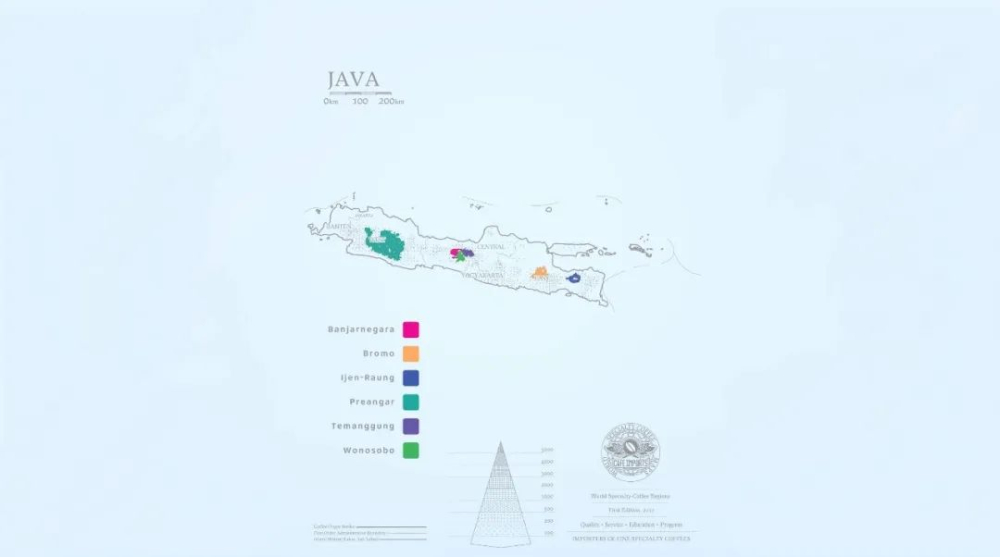

Friends familiar with Front Street's content should recall that the word "Mocha" has three references in coffee contexts: the Yemeni port of Mocha, the Mocha variety exported from that port, and the chocolate milk coffee made to imitate Mocha flavors. The recently popular "Java" is much the same—it can simultaneously refer to a producing region, a bean variety, and serve as a generic term. Below, Front Street will clarify these three meanings in order, starting with the producing region.
Java Island
Java is an island in Indonesia, situated between Bali and Sumatra, and ranks fifth in area among Indonesia's islands. To its south lies the Indian Ocean, and to its north the Java Sea. It is also one of the most densely populated islands in the world.
At the same time, Java is Indonesia's second-largest coffee-producing region, surpassed only by Sumatra, which accounts for 60% of the nation's total output. If just mentioning Java Island doesn't conjure a clear image, try another angle—the volcano featured in Lonely Planet magazine is one of Java's iconic landmarks.
(Image sourced from the internet)
Java Coffee
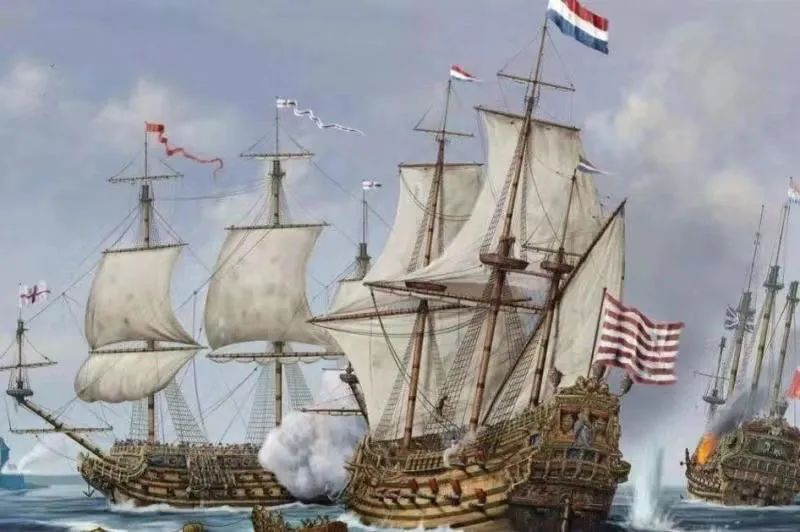
Coffee cultivation on Java Island dates back to the 17th century. At that time, the Dutch, known as the "sea coachmen," planted Typica plants they had seized by force on the Indonesian island of Java, which they had also occupied militarily. This single act not only transformed Java but also set the global coffee industry truly in motion.
Java Island's superior climate and ideal coffee-growing conditions made Typica cultivation there naturally successful. The Dutch amassed great wealth from the coffee harvest and, while trading coffee, spread it worldwide, significantly diminishing Yemen's control over coffee. It is precisely for this reason that Java holds an indispensable place in world coffee history.
These coffee varieties planted on Java Island, due to their distinct flavor characteristics, came to be collectively known as "Java coffee." Initially, Arabica was predominantly grown on Java, but as waves of pests and diseases struck, the defenseless Arabica plants fell one after another. Consequently, not only Java but all of Indonesia began switching to Robusta with Robusta genes, or even pure Robusta.
Java Variety
Finally, let's discuss the Java variety. Many might guess: since this variety is named after an island, it must have been discovered locally or named after some transplanted mutation, right? The answer: neither. Java is not a locally discovered genetic mutation in Indonesia but an Ethiopian landrace selected in Ethiopia and later introduced to Indonesia.
In 1928, botanist P.J.S. Carmer brought coffee varieties he had selected in Ethiopia to Indonesia, naming them the "Abyssinia series." One of these varieties, with strong disease resistance and good flavor, was quickly widely planted in Java and subsequently introduced to producing regions in Africa and Central America. When it later reached Cameroon, people named it "Java" after the island.
The Java variety also has long-berry and short-berry types. Long-berry Java has an elongated shape, pointed yet plump at both ends, with a prominent flavor reminiscent of Geisha, often leading to comparisons with Geisha. Short-berry Java is oval, full, and plump, resembling Typica in appearance. Farmers growing Java often mistakenly believe it belongs to the Typica family, largely due to its physical characteristics.
According to Mr. Han Huaizong in "The Fourth Wave of Specialty Coffee," people in the past did not understand this history (Java's migration from Ethiopia) and mistakenly thought Java was a Typica variety. Only in recent years, through genetic identification, was it confirmed to actually be an Ethiopian landrace. Besides fruit appearance, Java's plant characteristics are another factor that easily causes misunderstanding.
Java plants are typically taller than average Arabica but yield relatively much less. Its young top leaves are bronze-colored, similar to Typica plants. Additionally, the first Arabica introduced to Indonesia for large-scale planting was Typica, and combined with short-berry Java's appearance, this led people to mistakenly believe Java was part of the Typica family.
In recent years, Java brought from Indonesia to Nicaragua has returned this variety to prominence due to its exceptional flavor. But remember: Java variety can be called Java coffee, while Java coffee does not necessarily refer to the Java variety.
The above content is compiled by CoffeeHunters, a coffee news website.


