







How Does Conflict in Ethiopia Affect the Coffee Industry?
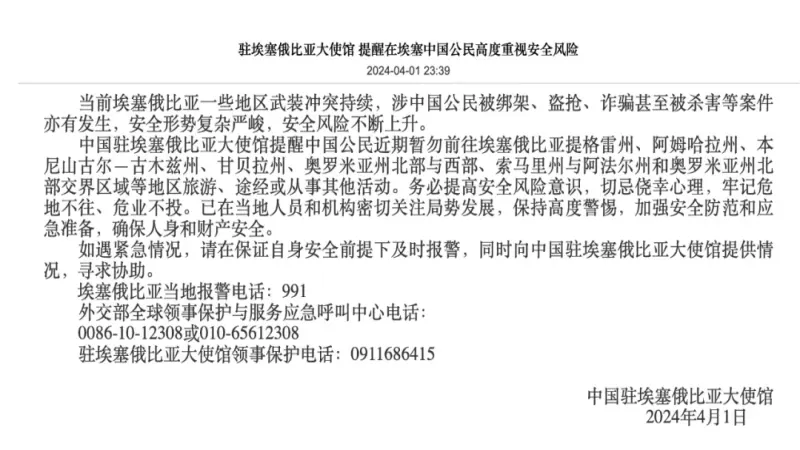
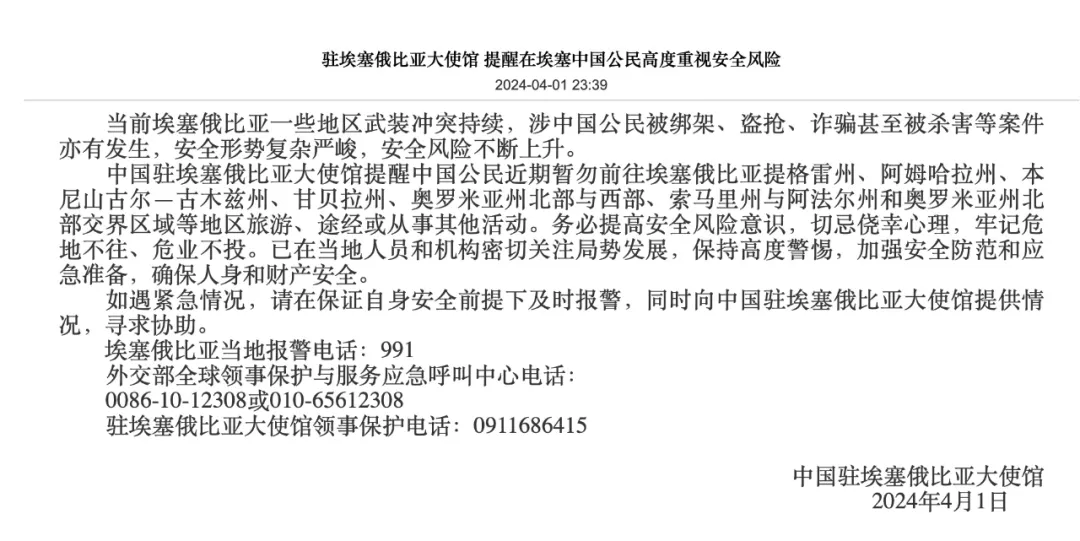
The Chinese Embassy in Ethiopia has issued a notice urging Chinese citizens to temporarily avoid travel to high-risk regions including Tigray, Amhara, Benishangul-Gumuz, Gambela, parts of Oromia, and the Somali and Afar regions. The advisory cites ongoing civil war and local armed conflict, which also disrupt an economy underpinned by coffee and agriculture.
The civil war between the Tigray People's Liberation Front and Ethiopian government forces has continued for years, and although a peace agreement was reached in 2022, violent incidents persist. For coffee countries, and for Ethiopia as the birthplace of coffee, the insecurity affects the itineraries of coffee traders and bean hunters, and it weighs on tourism and agricultural exports.
Recently, the Chinese Embassy in Ethiopia issued a notice reminding Chinese citizens to temporarily avoid traveling to several high-risk areas, including Tigray and Amhara. The country's long-running civil war and local armed conflicts continue to spread, not only creating security risks but also severely impacting an economy and tourism sector underpinned by coffee and agriculture and animal husbandry. As the recognized birthplace of coffee, Ethiopia's turbulent situation also affects the itineraries of coffee traders and bean hunters. This article reviews the background of the conflict, its impact on the economy and the coffee industry, and reiterates the embassy's safety advice, reminding those planning to travel to the country to heighten their vigilance and ensure their personal and property safety.
Recently, the Chinese Embassy in Ethiopia issued a notice reminding Chinese citizens to temporarily avoid traveling to, passing through, or engaging in other activities in areas of Ethiopia including Tigray, Amhara, Benishangul-Gumuz, Gambela, northern and western Oromia, and the Somali and Afar regions. It is essential to raise awareness of security risks; personnel and institutions already in the area should closely monitor the development of the situation, maintain a high level of vigilance, strengthen safety precautions and emergency preparations, and ensure personal and property safety.
It is understood that this is mainly a civil war between the Tigray People's Liberation Front (TPLF) and the Ethiopian government forces. The TPLF is a left-wing party composed of people from the Tigray region in northern Ethiopia. Because it defied orders from the Ethiopian authorities and insisted on holding regional elections, relations between the two sides deteriorated, leading to the outbreak of civil war. The civil war has lasted for years, and although the two sides reached a peace agreement in 2022, violent incidents have continued to occur.
Ethiopia then entered a period of development, but long-standing land disputes evolved into prolonged violent conflict, leading to large-scale protests and demonstrations across the country. Eventually the ruling party was dissolved, and the new democratically elected government clashed with the TPLF, ultimately triggering another civil war.
During this period, in order to prevent local armed conflicts, the Ethiopian federal government decided to build a strong federal army and incorporated the local armed forces of the country's 11 states into the federal forces. However, this move drew protests from nationalists in Amhara, who, because the state lies between the capital and Tigray, believed the Ethiopian government was weakening Amhara's power and undermining the state's regional security. As a result, clashes between the state's Fano forces and the federal government also broke out in August 2023. These conflicts have continued to this day and have spread southward and to surrounding areas.
The current conflict situation has severely affected Ethiopia's economy, with the country's agricultural industry and tourism sector hit the hardest. Ethiopia's economy depends mainly on agriculture and animal husbandry, with income coming primarily from exports of agricultural products such as leather, gold, and coffee. However, Ethiopia is a landlocked country, relying on a port in neighboring Djibouti for both exports and imports. Yet armed attacks occur along the routes to the port, severely affecting the country's transportation industry, and the necessary routes have been designated "dangerous areas." A reduction in imports and exports will greatly affect the country's economy, leading to inflation and economic recession.
In addition to affecting agricultural exports, it has also affected the country's tourism industry. In Ethiopia's Amhara region, the ongoing war has worsened the severe economic crisis in the historic town of Lalibela. The area has long depended mainly on tourism for income, but due to the war and other impacts, the number of tourists has continued to decline. This has left hotels, cafes, and shops in the area with no customers and forced to close, and many employees have chosen to leave the area or emigrate to other countries.
Moreover, Ethiopia is recognized as the birthplace of coffee and is home to more than ten thousand coffee varieties, which attracts many coffee traders and bean hunters to the country. Although the conflict is taking place north of the capital, several kidnapping and other incidents have recently occurred near the capital, posing potential dangers even to traders heading south. Therefore, in accordance with the embassy's advice, do not travel to high-risk areas of Ethiopia for tourism or other activities in the near term. Personnel and institutions already in the area should closely monitor the development of the situation, remain vigilant, strengthen safety precautions and emergency preparations, and ensure personal and property safety. In case of an emergency, call the police promptly and also report to the embassy to seek assistance.
The above content is compiled by CoffeeHunters, a coffee news website.


