







What Makes Huila Coffee and Geisha Beans Stand Out?
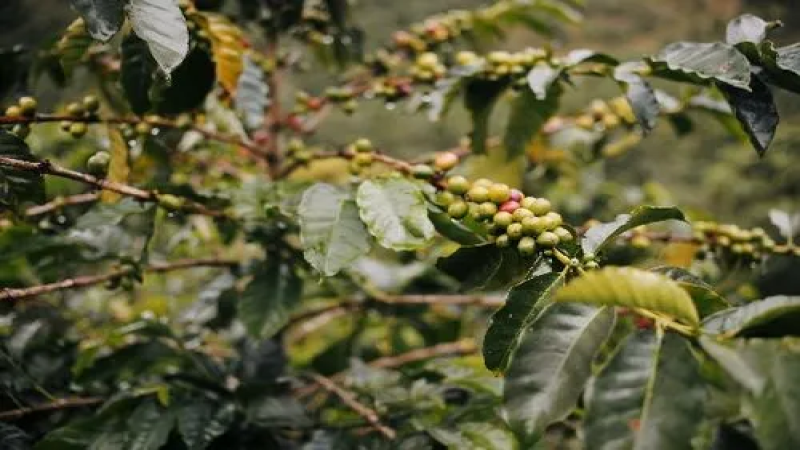
Colombia ranks as the world's third-largest coffee producer and the leading exporter of Arabica coffee bean, and its southern Huila Province is one of the country's core specialty regions. Finca El Diviso, a small estate in Huila, grows Geisha coffee beans at high altitude on volcanic soil, giving the variety a distinctive floral and fruity profile.
Colombian coffee grows mainly in the Andes, where temperatures sit near 18°C and rainfall reaches 2,000 to 3,000 millimeters a year, allowing near year-round harvests. Huila coffee benefits from stepped mountain terrain and varied microclimates. The article also covers El Diviso's processing method and Front Street Coffee's brewing parameters.
Colombia, as the world's third-largest coffee producer and the largest exporter of Arabica, nurtures exceptional coffee thanks to the high altitudes, volcanic soils, and diverse microclimates of the Andes. The southern Huila Province is recognized as a core specialty coffee region, and Finca El Diviso is one of the area's most representative small estates. This article systematically reviews Colombia's coffee-growing advantages, the terroir characteristics of the Huila region, and focuses on the development history of Finca El Diviso along with the variety, processing method, and brewing performance of its Geisha coffee beans, while also presenting Front Street Coffee's specific recommendations and brewing parameters for this bean.
Colombian coffee enjoys an excellent reputation in the international market. The country is the world's third-largest coffee producer after Brazil and Vietnam, and firmly holds the top spot in global Arabica coffee bean exports. Thanks to its unique geographical and climatic conditions, Colombia possesses inherent advantages for producing high-quality coffee.
Colombian Coffee
Colombia is located in northern South America, a country with both maritime and land borders. To the east, it borders Venezuela and Brazil; to the southwest, it connects with Ecuador and Peru; the northwest corner adjoins Panama; to the west, it faces the Pacific Ocean; and to the north, it faces the Caribbean Sea. Its terrain can be broadly divided into two major regions: the mountainous west dominated by the Andes, and the eastern Orinoco and Amazon plains.
Because it lies in the tropics, Colombia's climate varies markedly with altitude. The eastern plains and Pacific coast have a tropical rainforest climate, the mountainous areas between 1,000 and 2,000 meters above sea level exhibit a subtropical climate, and the northwestern region has a tropical savanna climate. Coffee cultivation is mainly concentrated in the Andes, where the year-round temperature is around 18°C and annual rainfall ranges from 2,000 to 3,000 millimeters. The tropical location combined with the stepped mountain terrain creates a rich diversity of climatic zones, allowing coffee to be harvested almost year-round. High-altitude mountains, volcanic soil, and varied microclimates together provide ideal conditions for coffee cultivation.
Huila Huila Production Region
Most of Colombia's coffee-growing areas are distributed along the Andes. Differences in mountain terrain and microclimate lead to significant variations in coffee flavor across regions. Currently, well-known producing regions include Antioquia, Sattainder, Huila, and Narino, among others.
Huila Province is located in southern Colombia, in the southern section of the Central Cordillera. It is formed by the Central and Eastern Cordilleras of the Andes, with most of its area belonging to the Magdalena River Valley, making it Colombia's most renowned specialty coffee region. Surrounded by mountains, the region's coffee is grown at altitudes between 1,200 and 1,800 meters, with temperatures typically maintained between 17°C and 23°C. The combination of high altitude, volcanic soil, abundant water, and a unique climate gives the coffee produced here a clean, balanced, and soft taste. FrontStreet Coffee has a washed Colombian Huila coffee bean that serves as an entry-level representative, featuring slight fruit acidity, along with black chocolate, nut, and caramel flavors, and a sweet, refreshing aftertaste.
Finca El Diviso Finca El Diviso
In the 19th century, Colombia experienced civil war. After the war ended, the government, in order to revitalize the coffee industry, began consolidating wasteland and dividing it into small plots, selling them to farmers at extremely low prices to encourage them to grow coffee and other crops. From then on, Colombia developed a pattern dominated by small coffee estates.
Finca El Diviso is one of the better-known small estates among them, covering only 14 hectares and located in the Huila producing region. Founder Jose established the estate in 1996, and it is now managed by his grandson Nestor. Nestor is passionate about coffee cultivation and research, continuously improving cultivation and processing practices. This also attracted Australian competitor Anthony, who chose Finca El Diviso's Sidra coffee beans to compete in the 2022 World Barista Championship WBC and won the championship, making Finca El Diviso and its Sidra coffee beans famous overnight. At present, the estate mainly grows traditional varieties such as Caturra and Bourbon, while also introducing emerging rare varieties such as Geisha, Pink Bourbon, Sidra, and Castillo.
FrontStreet Coffee Colombian Finca El Diviso Geisha Coffee Beans Region: Huila Producing Region Estate/Processing Plant: Finca El Diviso Altitude: 1,700 meters Variety: Geisha Processing Method: Washed Flavor: Jasmine, Red Pomelo, Citrus, Black Tea
This FrontStreet Coffee Finca El Diviso Geisha coffee bean is washed and medium-roasted. FrontStreet uses a V60 , at a ratio of 1:15 , and brews with 92℃ water. Jasmine aroma can be smelled, and on the palate it presents red pomelo, bergamot, and tropical fruit flavors, with citrus-like acidity and a soft mouthfeel reminiscent of black tea.
The above content is compiled by CoffeeHunters, a coffee news website.


