







What Hit the Blue Mountain Coffee Industry in Jamaica?
Heavy rains and earthquakes have struck Jamaica's main coffee regions, loosening soil and triggering repeated mudslides and landslides during the new-season harvest. Production is expected to fall about 25 percent versus the same period last year, with harvesting roughly 30 percent complete. The government has announced a five-year crop recovery and establishment plan backed by billions of dollars, meant to revive Blue Mountain and High Mountain varieties and reach more than 5,000 growers.
Mavis Bank and the surrounding mountains are a key base for Blue Mountain coffee cultivation, and the Jamaica Agricultural Society chairman said the disasters caused large economic losses. Growers there point to climate change as a leading worry, alongside road and infrastructure conditions that need attention. For a coffee industry built on scarce, high-reputation output, a quarter less volume in one season tightens supply well beyond the island.
Jamaican Blue Mountain coffee has long been regarded as a gem of the coffee world, winning the favor of countless enthusiasts with its scarce production and outstanding flavor. However, Jamaica's main coffee-producing regions have recently suffered multiple blows from heavy rains and earthquakes, with frequent mudslides and landslides, causing the new season's coffee bean production to be expected to decline by about 25% compared with the same period last year. Facing this severe situation, the Jamaican government has announced that it will invest billions of dollars to launch a crop recovery and establishment plan, aiming to revitalize the production of Blue Mountain and High Mountain coffee varieties within five years, benefiting more than 5,000 coffee growers. This article will sort out the causes of this production reduction, its impact, and the specific contents of the official revival measures.
Jamaican Blue Mountain coffee enjoys an extremely high reputation in the specialty coffee field. Because of its scarce production, outstanding quality, and unique flavor, it once became a prized item that many coffee lovers rushed to obtain.
But according to a recent CCTV Finance report, it is currently the harvesting stage for local new-season coffee beans, and harvesting progress is about 30% complete. However, Jamaica has recently been hit by extreme weather one after another, and production in all major producing areas is not optimistic. Preliminary estimates show that total coffee bean production this season will decrease by 25% compared with the same period last year.
It is reported that the small town of Mavis Bank and the surrounding mountainous areas are one of the important bases for Jamaican Blue Mountain coffee cultivation. Over the past few months, heavy rains and earthquakes have occurred frequently in the region, causing the soil structure to become loose. Mudslides and landslides have occurred many times in the mountainous areas, seriously interfering with coffee cultivation and harvesting. The chairman of the Jamaica Agricultural Society said that the disasters have caused huge economic losses. In the Blue Mountain area, climate change has become one of their most worrying problems, while road conditions and infrastructure conditions also urgently need attention.
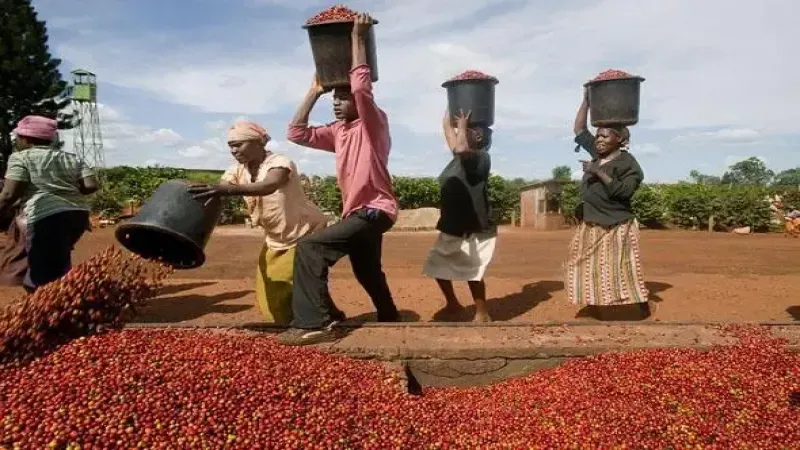
In addition, in Jamaica's Blue Mountain coffee-producing areas, Blue Mountain coffee trees need 8 to 10 months from flowering and pollination to fruit ripening, and the growing conditions are extremely demanding. Because the bean variety is relatively fragile, it is susceptible to diseases and pests. For many years, Blue Mountain coffee beans have always relied on manual picking. This method can accurately select ripe red cherry fruits and avoid mixing unripe or overripe fruits together during mechanical harvesting. However, many coffee plantations in the Blue Mountains are not connected by roads, and picking and transport depend entirely on workers walking back and forth along rugged trails. The mudslides and landslides caused by recent heavy rains happened to damage the access routes up the mountain, further delaying harvesting progress.
On the other hand, rainy weather has also interfered with the coffee trees' earlier flowering and fruiting. Heavy rain knocks flowers and fruits to the ground, ultimately causing reduced production. According to statistics, losses have currently reached 50,000 barrels, with each barrel containing 32 kilograms of coffee beans.
However, Jamaica's Minister of Agriculture and Fisheries previously revealed at the Jamaican Blue Mountain Coffee Festival that the Crop Recovery and Establishment Plan, CREP, will be launched within Jamaica's fiscal year (April 1 each year to March 31 of the following year). The plan is expected to benefit more than 5,000 coffee farmers in Jamaica while promoting coffee production and exports.
This CREP plan will invest billions of dollars. Its contents cover strengthening and building new coffee plantations, and replanting coffee plants within five years to produce Jamaica's Blue Mountain varieties and High Mountain varieties. In addition, the plan also includes training farmers, improving their production capacity, and finding ways to attract new investors and young people to join the coffee industry. The ultimate goal is to increase overall productivity and achieve an annual production scale of 450,000 barrels, with each barrel containing 32 kilograms of coffee beans.
The above content is compiled by CoffeeHunters, a coffee news website.


