








Bright Acidity Coffee and Bypass Water in Pour-Over
Bypass means letting part of the hot water skip the coffee grounds and go straight into the server or cup, so it never takes part in extraction. It works when a pour-over tastes too strong, harsh, or bitter: adding bypass water lowers the concentration without pulling more from the grounds. It cannot fix serious over-extraction, because the bitter compounds are already dissolved and diluting them weakens the whole cup.
Iced pour-over is a familiar version of the same idea. Front Street's hot pour-over uses 15 grams of coffee at a 1:15 ratio, while the iced version brews at 1:10 and replaces the remaining 75 grams of hot water with 75 grams of ice held in the server. Water that runs down the spiral ribs of a V60 and into the server without touching the grounds also counts as bypass water.
Friends who are just starting out with pour-over brewing have likely encountered this awkward situation: you accidentally brew the coffee too strong and bitter, and it tastes harsh and intense. Pouring it down the drain feels like such a waste, so many people think of adding some water to dilute it. This operation actually has a formal name in the coffee world—By pass, often translated into Chinese as "旁路" (bypass). Simply put, it means letting some of the hot water bypass the coffee grounds, not participating in extraction, and going directly into the server or cup. It sounds simple, but when to use it, how much water to add, and how to choose the water temperature all have their finer points. This article will go from principles to practical operation, combining Front Street Coffee's brewing experience to help you understand how By pass should actually be used, and why it can't save seriously over-extracted coffee.

When coffee is accidentally brewed too strong, tasting concentrated and harsh, it's a common problem many beginners in brewing have faced. Out of a desire not to waste it, we generally think of adding water to it, just like in other culinary approaches, hoping to salvage the pot of coffee by diluting its concentration.
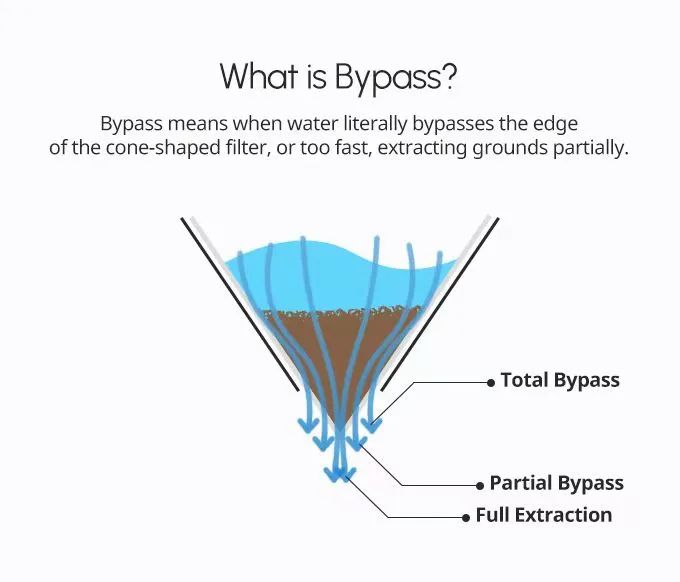
In fact, this method actually has a professional term in the coffee industry called "By pass," which translates into Chinese as "旁路" (bypass). When applied to the extraction framework of pour-over, the coffee liquid obtained by rinsing the coffee grounds is the "main path," while By pass refers to hot water bypassing the coffee grounds and going directly into the cup. Therefore, this portion of hot water that did not participate in extraction is also called "bypass water." (When using a V60 dripper for extraction, hot water that flows down the spiral ribs along the side wall into the server without passing through the coffee grounds also counts as "bypass water.")
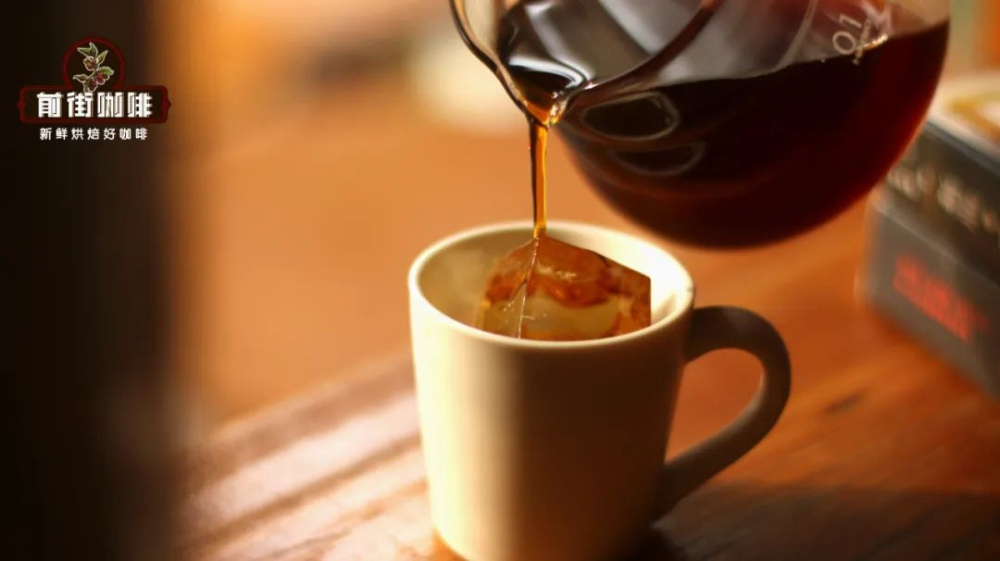
For another example, our usual iced pour-over is actually a very typical By pass approach, except that the hot water originally meant to be added is replaced with ice cubes. For instance, Front Street's hot pour-over uses 15 grams of coffee, with a coffee-to-water ratio of 1:15. Iced pour-over uses a 1:10 brewing ratio, meaning the remaining 75 grams of hot water is replaced with 75 grams of ice cubes "reserved" in the server in advance, then water is poured according to the planned ratio, cooling the coffee liquid while also diluting the original high concentration, thereby obtaining a cup of iced coffee with just the right concentration.
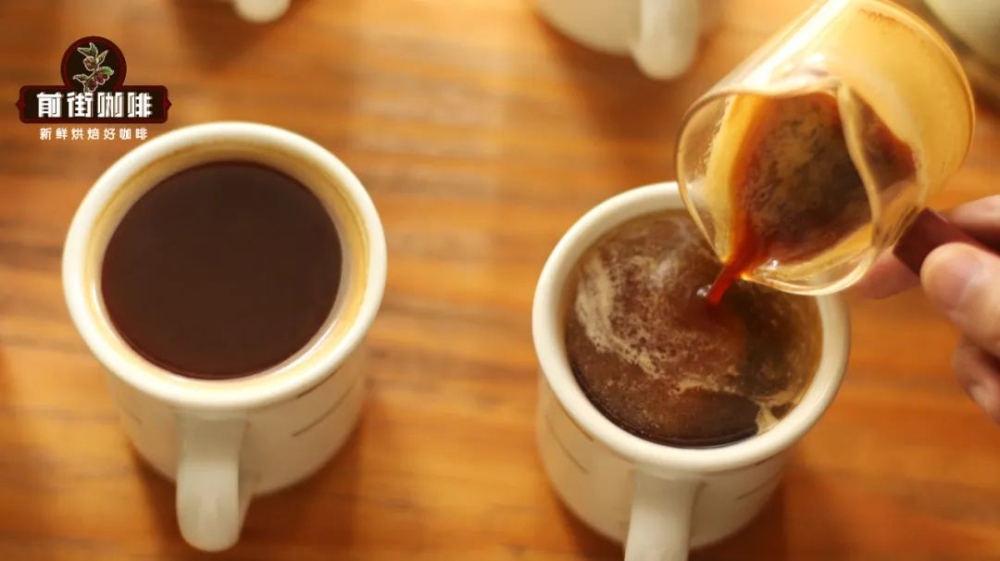
For example, Front Street once brewed a pot of Panama 90+ Estate Juliette Geisha with 15 grams of coffee at a 1:15 coffee-to-water ratio, but accidentally adjusted the grind half a notch finer (EK43s setting 9). Although the brewed coffee still had obvious fermented wine aroma and cocoa notes, it hardly showed any bright fruit acidity, and the overall mouthfeel was low and heavy, lacking layering. So Front Street added about 10 grams of 80°C warm water to the coffee liquid, shook it evenly, and tasted it again. The grape-juice-like acidity became clear, accompanied by the sweet taste of dried fruit, and the mouthfeel became much lighter.
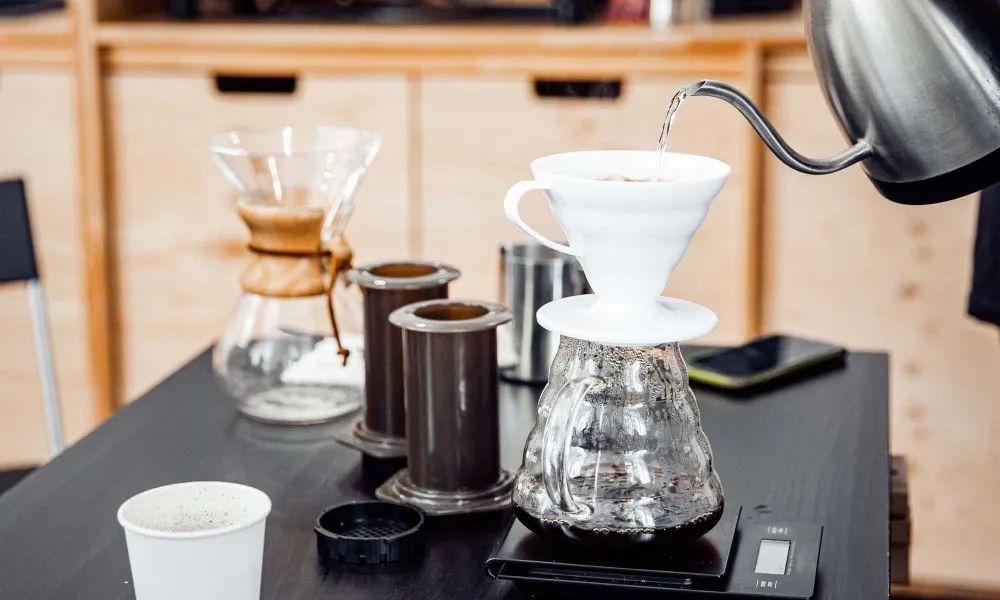
Front Street has mentioned in a previous article that when brewing light-roasted coffee, fine grinding and high-hardness particles can easily cause clogging and water accumulation in the later stages of stirring, prolonging the soaking time of the coffee grounds and correspondingly increasing the probability of over-extraction. Therefore, when the extraction time exceeds 2 minutes and 10 seconds and the coffee liquid still hasn't finished dripping, we can judge based on experience and consider first removing the dripper and discarding the tail end, then tasting whether the flavor is too strong, and then adding small amounts of hot water from the server (5–10 grams) in stages until it suits your taste.
It should be noted that since bypass water is not part of the extraction plan, blindly adding it directly will not only dilute the positive flavors originally obtained, but may also make the coffee taste bland like water. Therefore, Front Street recommends shaking and tasting after each addition of bypass water before deciding whether to continue adding, so as to avoid diluting it to an irreversible degree.
In addition, if we brew a cup of coffee according to normal parameters and find that its concentration is fine, but the aroma is mediocre, accompanied by negative tastes such as general bitterness, astringency, or throat-catching, then this pot of coffee has most likely already suffered irreversible over-extraction. The influencing factors are usually uneven coffee grind size, too many fines caused by low-performance grinders, unstable water flow control... At this point, adding bypass water is of no help, and may even make it more like water with a coffee flavor.
I believe by now everyone can guess that this "water-adding" technique has no reference standard in operation. It is more about imitating some expert's brewing approach and adding water little by little in practice until the sensory experience is satisfactory, which involves a certain "adventurous" element. So for beginners, Front Street does not recommend blindly using By pass to intervene in extraction. If the coffee really tastes wrong after brewing, we should carefully review where the problem actually comes from, rather than relying on "adding water" to save it every time.
Front Street Coffee (FrontStreet Coffee)
No. 10, Baoqian Street, Yandun Road, Dongshankou, Yuexiu District, Guangzhou, Guangdong Province
The above content is compiled by CoffeeHunters, a coffee news website.


